

Weigh, Don't Guess: Brew Loose Leaf Tea at Home with 1 g/50 mL
The best cup comes from four controllable variables: fresh filtered water, the correct temperature for your tea type, an accurate leaf-to-water ratio measured by weight, and a timed steep you stop on purpose. Measure your leaves, heat water to the right temperature, pour it over the leaves, time the steep with a timer, then remove the leaves immediately. This tea preparation sequence aligns with the standard guidance most tea guides and brewing charts teach.
TL;DR:
- Using a precise leaf-to-water ratio of about 2 grams per 8-ounce cup significantly improves tea strength without risking bitterness from over steeping.
- Heating water to the right temperature for each tea type, rather than boiling all water, helps preserve delicate flavors and prevents scalding leaves.
- Re-steeping high-quality teas like oolong or pu-erh can provide up to five infusions with balanced flavor, unlike bagged teas that mostly lose strength after the first brew.
- Measure tea by weight or consistent teaspoons and always set a timer to avoid oversteeping and bitterness.
- Keeping tea in an airtight, cool, and dark place extends freshness, with green and white teas lasting 6 to 12 months for optimal flavor.
Table of Contents
- What You Need for Loose Leaf Tea Brewing
- Step-by-Step Loose Leaf Tea Steeping With a Ratio Chart
- Brewing Loose Leaf Tea Without an Infuser
- How Many Times You Can Re-Steep Loose Leaf Tea
- Common Loose Leaf Tea Brewing Mistakes and Quick Fixes
- Storing Loose Leaf Tea So It Stays Fresh
- What The J Coffee Collection Brewers Have Learned
- A Small Habit That Improves Every Cup
- Ready to Put This Into Practice?
- Sources
- FAQ
What You Need for Loose Leaf Tea Brewing
You don’t need much to start. A kettle, fresh water, a cup or teapot, some kind of infuser or strainer, your loose leaf tea, and a timer will get you a genuinely good cup.
A few upgrades make the process easier and more consistent:
- Variable-temperature kettle: lets you hit 175°F for green tea without guessing or waiting for a full boil to cool.
- Kitchen scale: measuring in grams removes the guesswork that measuring spoons introduce, especially with fluffy white teas or tightly rolled oolongs.
- Teapot with a removable infuser basket: makes it simple to pull leaves the moment the steep is done.
- Gaiwan: a lidded brewing bowl that gives you more control for multiple short infusions, popular in gongfu-style brewing.
Water quality matters more than most people assume. Fresh, cool water from the tap or a filter contains more dissolved oxygen than water that’s been reboiled, and that oxygen helps carry the tea’s aroma and flavor into the cup. Pre-warming your teapot or cup with a splash of hot water before brewing keeps the water at temperature through the whole steep instead of losing heat to cold ceramic.
Step-by-Step Loose Leaf Tea Steeping With a Ratio Chart
Start with weight, not spoons. A reliable baseline is about 1 gram of tea per 50 milliliters of water, which works out to roughly 2 grams per 8-ounce cup. If you don’t own a scale, 1 teaspoon per 6 to 8 ounces is a workable substitute, though volume measurements vary a lot depending on how tightly the leaves are rolled.
Here’s the method, whether you’re brewing a single mug or a full pot:
- Weigh your leaves (or measure by the teaspoon if you’re working without a scale).
- Heat water to the temperature that matches your tea type. Don’t just boil everything and hope.
- Warm your teapot or cup with a rinse of hot water, then empty it.
- Pour the water directly over the leaves, not around them, so every leaf gets soaked evenly.
- Start a timer the moment water hits the leaves.
- Remove the infuser or strain the leaves out the second the timer goes off.
That last step is the one people skip, and it’s the one that separates a good cup from a mediocre one. Leaves left sitting in the water keep releasing tannins, which is what turns a bright, balanced tea bitter.
These temperature and timing ranges are starting points, not laws. If your first cup tastes weak, don’t leave it steeping longer next time. Add more leaf instead. Increasing the tea dose rather than the steep time gives you a stronger, fuller cup without dragging out the bitter compounds that a longer steep pulls from the leaves. Want to go deeper on why temperature and dose interact the way they do? The extraction principles at play are the same ones that govern coffee extraction, just applied to tea leaves instead of grounds.
Brewing Loose Leaf Tea Without an Infuser
No infuser in the house? None of these methods require one.
- Drop-and-strain: Toss the leaves loose into a mug or small pot, let them steep, then pour through a small mesh sieve or a coffee filter set over your cup. This works for any tea type and gives you full control over timing.
- Grandpa-style: Drop whole leaves directly into a tall glass or travel mug, top with hot water, and drink around the leaves as they settle to the bottom. This suits large, whole-leaf greens and some white teas that hold up well to extended contact with water. Top off with more hot water as you go for a second and third round.
- Improvised filter: Set a paper coffee filter inside a funnel over your cup, add the leaves, and pour water through. It’s slower than a proper infuser, but it works in a pinch and leaves your cup completely leaf-free.
How Many Times You Can Re-Steep Loose Leaf Tea
Not all teas earn a second cup. High-quality oolongs and pu-erhs are the standouts here. Loose leaf oolong and pu-erh typically deliver the most rewarding repeat infusions, often holding flavor across four or five steeps as the tightly rolled leaves slowly unfurl. Many whole-leaf greens re-steep decently too. CTC black teas and most bagged teas, on the other hand, are cut so fine that they give up most of their flavor in the first pour and have little left to offer.
A few things make re-steeping work:
- Empty the vessel completely between infusions. Leaves sitting in leftover liquid keep extracting and will make your next cup bitter.
- Add roughly 30 to 60 seconds to each successive steep, since the leaves have less to give with each round.
- Taste each infusion before deciding on time for the next one. Rounds two and three are usually where you find the tea’s most interesting notes.
- When the color barely changes and the aroma fades, the leaves are spent. Compost them.
If you want to get more hands-on with multiple short infusions, the gongfu brewing method is built entirely around this idea and is worth trying with a good oolong.
Common Loose Leaf Tea Brewing Mistakes and Quick Fixes
Oversteeping is the number one complaint people have about loose leaf tea, and it’s almost always a timing problem, not a tea quality problem. Set a timer every single time. Guessing by eye is how a delicate green tea turns grassy and bitter in under a minute past its steep window.
Water that’s too hot is the second big culprit. Pouring boiling water straight onto green or white tea scalds the leaves and pulls out harsh, astringent compounds instead of the sweeter notes those teas are known for. Particle size affects how fast tea extracts, so finer leaves and broken pieces need extra care with both temperature and time.
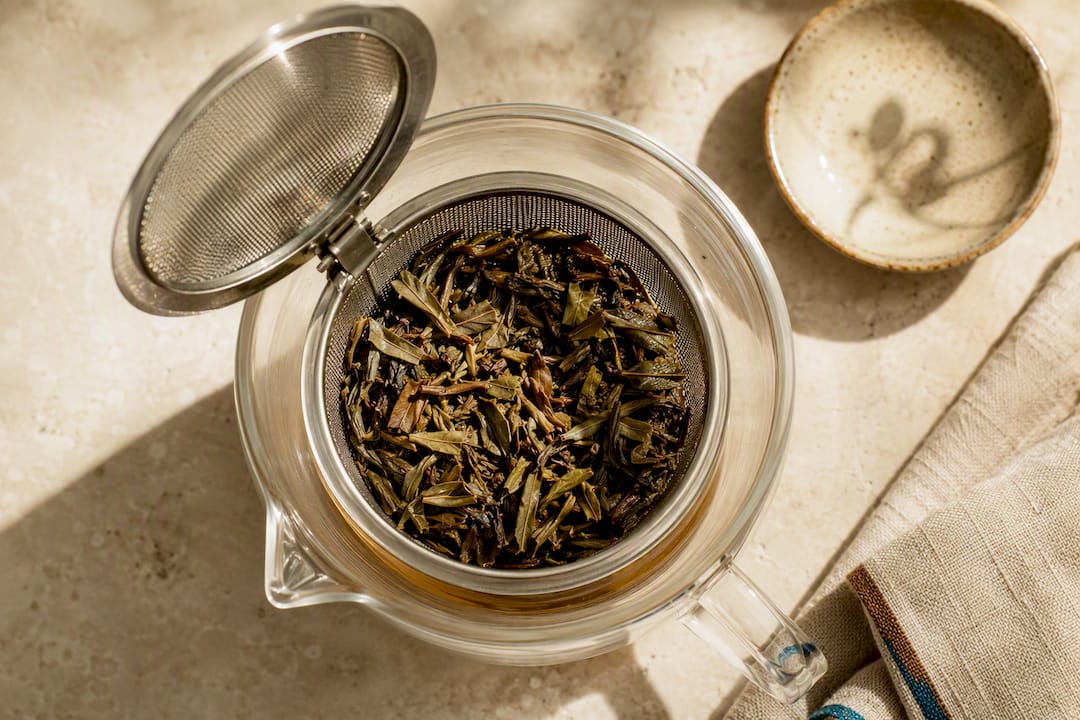
Packing the infuser too tightly is the quiet mistake. Leaves need room to expand and take on water fully. A basket infuser crammed full of tea can’t do that, and you end up with an uneven, weak brew despite using plenty of leaf.
Pro Tip: If you’ve already oversteeped a cup, don’t dump it. Dilute it with a splash of hot water to soften the bitterness, or pour it over ice for a serviceable iced tea. Either way, note the time it went wrong and shave 30 seconds off next time.
Quick fixes worth remembering:
- Always measure by weight or a consistent spoon measure, not by eye.
- Match your kettle temperature to the tea type instead of always using a full boil.
- Give leaves breathing room in a basket infuser rather than a tightly packed mesh ball.
- Never reuse water that’s already been boiled once and cooled.
Storing Loose Leaf Tea So It Stays Fresh
Keep loose leaf tea in an airtight container, away from light, heat, and moisture. A cabinet away from the stove works better than a shelf near a sunny window or above the dishwasher.
Rough shelf-life guidelines by category:
- Green and white tea: 6 to 12 months for peak flavor.
- Oolong: 12 to 18 months.
- Black tea: 18 to 24 months.
- Pu-erh: ages well and can improve for years when stored properly, unlike most other categories.
- Herbal blends: 12 months, since dried fruit and flower pieces lose aroma faster than tea leaves.
If a tea smells flat or tastes like not much of anything, it’s stale rather than unsafe. Old leaves still make decent potpourri or can go straight into the compost bin.
What The J Coffee Collection Brewers Have Learned
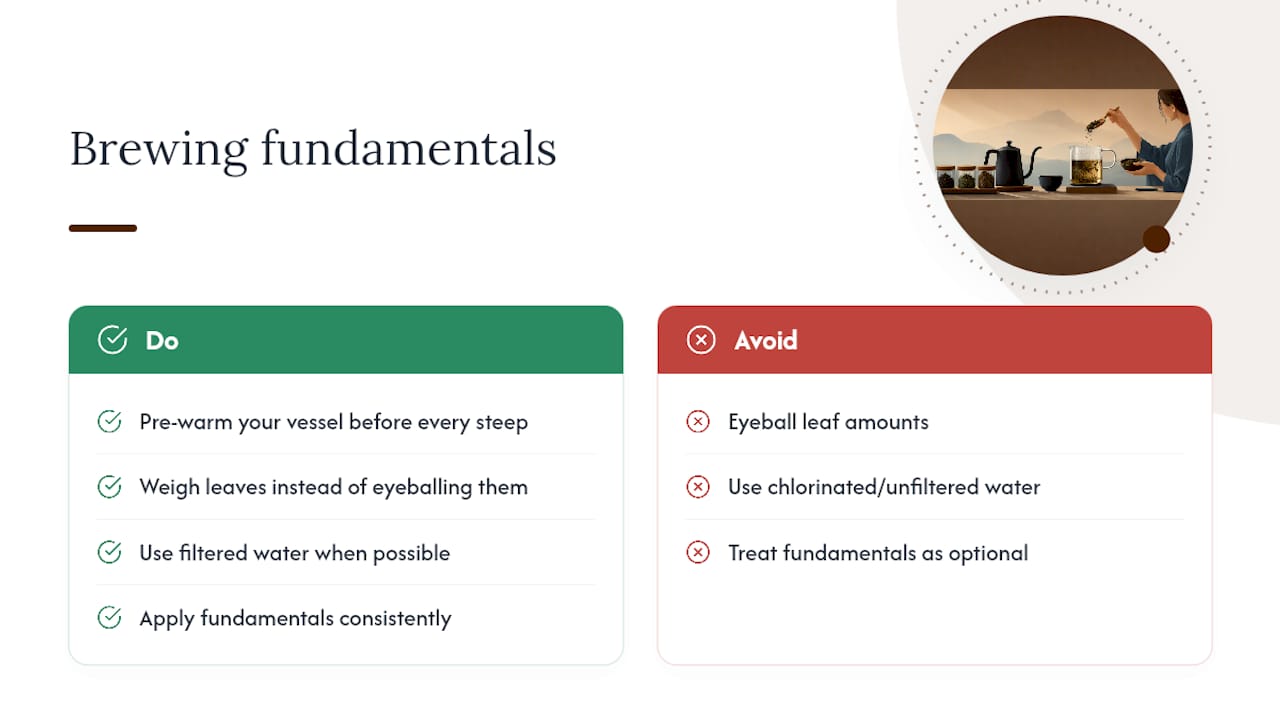
Specialty tea and coffee sourced with attention to quality support simple brewing habits like these. Pre-warm your vessel before every steep. Weigh your leaves instead of eyeballing them. Use filtered water whenever you can, since chlorine and mineral content both affect how a tea tastes in the cup.
None of these tips require special equipment or years of practice. They’re the same fundamentals taught across most serious brewing guides, applied consistently instead of occasionally. If you’re curious how caffeine content shifts with steep time and tea type, that’s worth understanding too, since it affects how strong a cup feels beyond just flavor, and it varies more between green tea styles than most people expect.
A Small Habit That Improves Every Cup
Keep a short brewing log for a week. Jot down the tea, the water temperature, the steep time, and one word for how it tasted. Patterns show up fast. You’ll notice your oolong wants an extra 30 seconds, or that your green tea has been getting bitter because the kettle runs hotter than you think. It’s a five-second habit that fixes more brewing problems than any gadget will. For readers who want to take this further, the gongfu approach to multiple infusions is a natural next step once the basics feel automatic.
— jonathan
Ready to Put This Into Practice?
Good technique only gets you so far without good leaves to start with. The J Coffee Collection’s tea collection is built around single-origin and specialty-grade options, so the ratio and temperature guidance above actually has something worth applying it to.
If you’re not sure where to start, sample packs are the lowest-risk way to figure out what you like before committing to a full tin. You get to test steep times and ratios across a few different tea types without guessing blind on a single large purchase. Head over to the tea collection page and pick one or two styles that match what you’ve been brewing, whether that’s a bright green for weekday mornings or an oolong worth re-steeping on a slow weekend.
Sources
- A step-by-step guide to making the perfect pot of loose-leaf tea
- A Complete Guide to Brewing the Perfect Cup of Loose Tea
- Is loose tea better than bagged?
- How to Brew Loose Leaf Tea - wikiHow
FAQ
What Is the Ratio of Loose Leaf Tea to Water?
A reliable starting point is about 1 gram of tea per 50 milliliters of water, or roughly 2 grams per 8-ounce cup. Without a scale, 1 teaspoon per 6 to 8 ounces works as a rough substitute.
What Are Common Mistakes When Brewing Loose Leaf Tea?
The three biggest are oversteeping without a timer, using water that’s too hot for delicate teas like green or white, and packing the infuser so tightly the leaves can’t expand. All three are fixable by measuring, timing, and giving leaves room to move.
Can I Brew Loose Leaf Tea Without an Infuser?
Yes. Drop the leaves directly into a mug or pot and strain them out through a small mesh sieve or coffee filter, or try grandpa-style brewing in a tall glass for whole-leaf greens and whites.
How Many Times Can You Brew Loose Leaf Tea?
High-quality oolongs and pu-erhs often give four or five worthwhile infusions, while most bagged and finely cut teas give up most of their flavor after just one steep.
Does The J Coffee Collection Sell Starter Tea Options?
Yes, the tea collection includes options suited to beginners who want to experiment with different steep times and ratios before buying larger quantities.