

Gongfu Tea Ceremony: A Practical Guide for Home Brewing
Gongfu tea, or gongfu cha (工夫茶), is a Chinese small-pot brewing method that uses a concentrated leaf-to-water ratio and many short, sequential infusions to draw out a tea’s full range of flavor. It is often called a “tea ceremony,” though that label can mislead — gongfu cha is primarily a skilled brewing technique, not a codified ritual like Japanese chanoyu. Think of it less as performance and more as precision.
Three things to know before you start:
- You brew in a vessel of roughly 100–120 ml, which is much smaller than a standard mug.
- The leaf-to-water ratio runs high, around 1:15 by weight as a starting benchmark.
- You pour multiple short steeps, often several, each revealing a slightly different flavor profile.
Key Takeaways
Gongfu cha is a skilled Chinese brewing method that uses small vessels, a high leaf-to-water ratio, and 6–10 short sequential infusions to reveal a tea’s full flavor arc across a single session.
| Point | Details |
|---|---|
| Start with a gaiwan | A 100–120 ml porcelain gaiwan works with any tea and is the most practical first vessel. |
| Use a 1:15 leaf-to-water ratio | Weigh roughly 1 gram of leaf per 15 ml of water as your starting benchmark. |
| Brew 6–8 progressive steeps | Begin at 15 seconds and add 5–10 seconds per steep; each infusion reveals a different flavor layer. |
| Control water temperature | Match temperature to tea type: 160°F for green teas, 200–210°F for oolongs and pu-erh. |
| Thejcoffeecollection tea selection | Browse their curated tea collection for single-origin leaves suited to gongfu’s multiple-steep method. |
Table of Contents
- What is gongfu tea ceremony, and where did it come from?
- Core features that set gongfu apart from Western brewing
- The teaware you actually need
- Water quality, temperature, and which teas work best
- How to brew gongfu tea step by step
- Cultural significance and how gongfu fits into daily life
- Your starter kit for gongfu brewing at home
- Common beginner mistakes and how to fix them
- What gongfu actually teaches you about tea
- Thejcoffeecollection has teas worth brewing this way
- Sources
What is gongfu tea ceremony, and where did it come from?
The word gongfu (工夫) translates roughly as “skill acquired through time and effort.” Applied to tea, it describes the care and practice required to brew well, not a fighting art. The martial-arts term you know from movies is romanized the same way in English but written differently in Chinese (功夫). They share a root concept — mastery through repetition — but gongfu tea is entirely its own tradition.
The practice traces back to the Fujian and Chaoshan (Chaozhou/Teochew) regions of southeastern China. Its emergence is closely tied to the Ming dynasty’s shift away from compressed cake teas toward loose-leaf drinking, which encouraged brewers to experiment with smaller, more responsive vessels. Yixing teapots from Jiangsu province became central to this shift: their unglazed zisha clay interacts with repeated use in ways that gradually season the pot and concentrate flavor.
The Chaozhou/Teochew community maintained the practice with particular continuity. Their version features named pouring steps, specific small clay pots, and a social structure around sharing tea that has been documented as an intangible cultural heritage practice in China. From Fujian and Chaoshan, gongfu methods spread to Taiwan during the 20th century, where they were refined and popularized in specialty tea culture. Today, gongfu brewing appears in teahouses across the United States, often introduced through Taiwanese oolong culture.
Core features that set gongfu apart from Western brewing
Gongfu tea is recognizable by a specific cluster of characteristics. Once you know them, you can spot the method anywhere.
- Small vessel. A gaiwan or clay teapot in the 80–150 ml range, not a 12-ounce mug.
- High leaf ratio. Roughly 1 gram of leaf per 15 ml of water, compared to the 1:50 or looser ratios common in Western steeping.
- Many short infusions. A session typically runs 6–10 steeps, sometimes more for aged pu-erh.
- Active attention. You time each steep, watch the color, and adjust. There is no “set it and forget it.”
- Sensory arc. Early steeps (1–3) tend to be bright and aromatic. The middle steeps (4–6) often carry the most body and complexity. Late steeps (7+) become lighter and sweeter, sometimes floral.
Contrast this with a standard Western steep: one infusion, a large vessel, a low leaf ratio, and a long brew time (2–5 minutes). The Western method extracts broadly; gongfu extracts in layers.
The comparison to Japanese tea ceremony is worth addressing directly. Chanoyu is a highly codified ritual with prescribed movements, specific aesthetics, and philosophical underpinnings rooted in Zen Buddhism. Gongfu cha, as specialty tea practitioners emphasize, is a pragmatic technique. When performed for guests, the same functional steps become ceremony through deliberate, careful movement — but the ceremony is an expression of the skill, not the point of it.
The teaware you actually need
Each piece in a gongfu setup has a specific job. Here is what matters and why.
Gaiwan
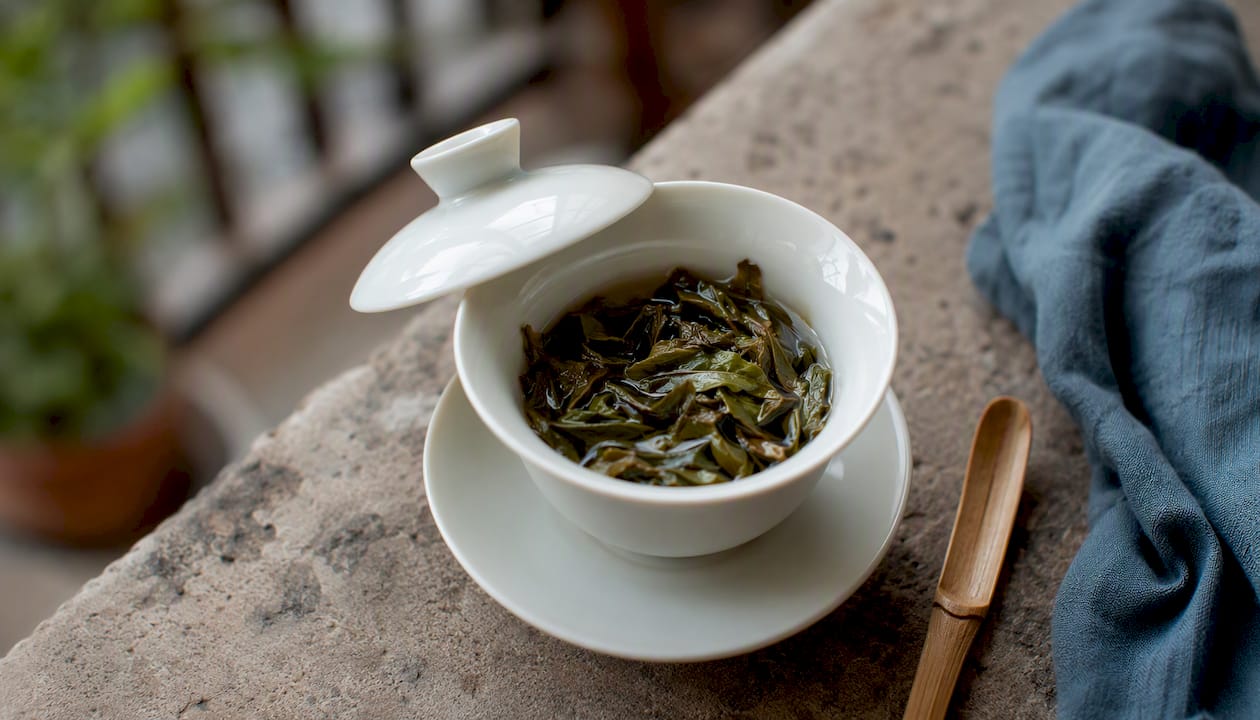
A lidded porcelain or ceramic bowl, typically 100–150 ml. The lid controls the pour and traps aroma. Gaiwans are the most versatile starting vessel: they work with any tea, are easy to clean, and let you observe leaf color and expansion. For beginners, a 100–120 ml gaiwan is the single most practical first purchase.
Yixing (zisha) teapot
Made from unglazed clay mined near Yixing, Jiangsu. Yixing clay seasons with repeated use, absorbing oils and compounds from the tea over time. This is why experienced brewers dedicate one pot to a single tea family — mixing a roasted oolong and a raw pu-erh in the same pot muddies both. A Yixing pot rewards patience and consistency; a gaiwan rewards flexibility.
Cha hai (gongdao bei / fairness pitcher)
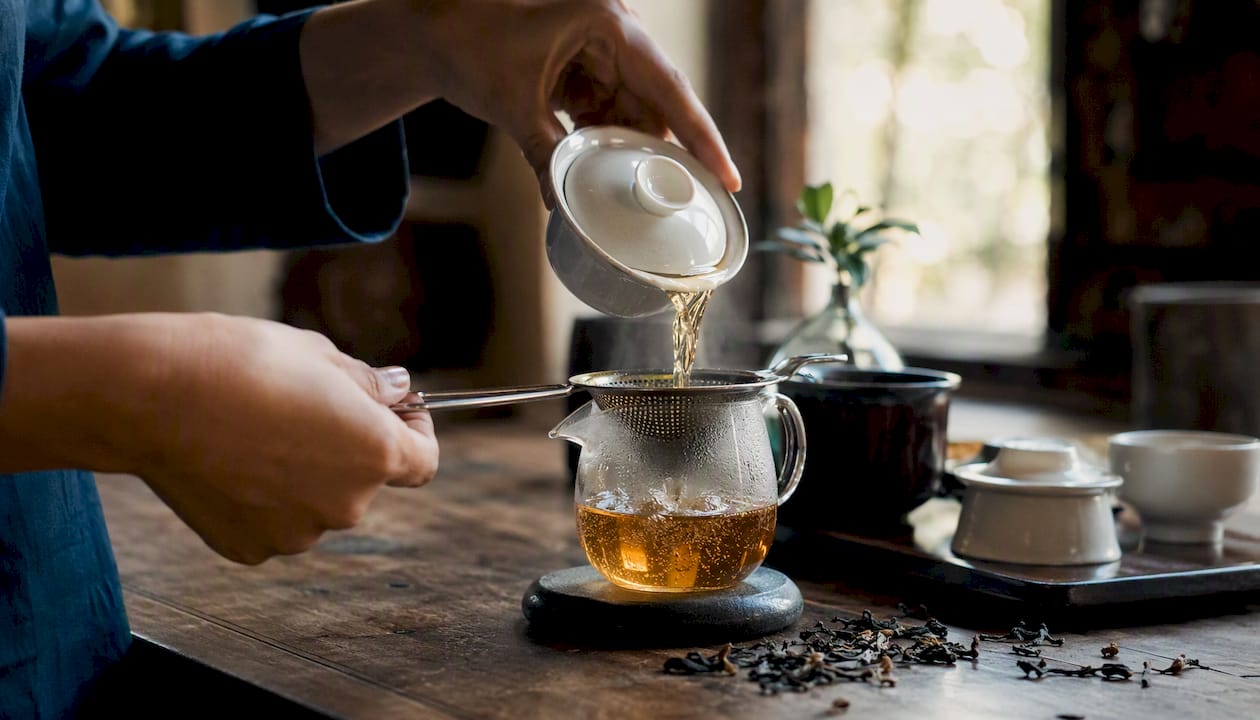
A small pitcher, usually 150–200 ml, that receives the brewed tea from the gaiwan or teapot before it is poured into tasting cups. Its purpose is to equalize the concentration across all cups so the first cup poured is not stronger than the last. Without it, you are essentially guessing at consistency.
Tasting cups (pinmingbei)
Small cups, typically 30–60 ml, designed for sipping in two or three small mouthfuls. Their size is not decorative — it keeps the tea at the right temperature for tasting and encourages slow, attentive drinking.
Tea tray (cha pan)
A slatted or recessed tray that catches rinse water, overflow, and the flash-rinse liquid. It keeps the table dry and gives the session a defined workspace. Some trays have a drainage tube; others are simply a shallow dish. Not strictly required, but practically indispensable once you start pouring.
Kettle
Temperature control matters (more on that in the next section). A gooseneck kettle with a built-in thermometer or variable temperature setting gives you the precision gongfu brewing requires. A standard kettle works if you let it cool to the right temperature, but a variable-temp kettle removes the guesswork.
Tea scoop and strainer
A bamboo or wooden scoop (cha ze) measures and transfers dry leaf without bruising it. A small fine-mesh strainer sits over the cha hai to catch any leaf fragments during the pour. Both are inexpensive and genuinely useful.
Pro Tip: Start with a 100–120 ml porcelain gaiwan before investing in Yixing clay. A gaiwan works with every tea type, is easy to clean, and lets you learn the method without committing to a single tea. Once you know which tea you want to brew regularly, then consider a dedicated clay pot.
Water quality, temperature, and which teas work best
Water is not neutral in gongfu brewing. Chlorinated tap water suppresses delicate aromatics. Very soft water tends to over-extract, producing a flat or bitter cup. Filtered water or a light spring water with moderate mineral content is the practical standard for most U.S. home brewers. Avoid distilled water — it lacks the minerals that help carry flavor compounds.
Temperature varies by tea type, and getting it wrong is one of the fastest ways to ruin a good leaf. High-oxidation teas (roasted oolongs, ripe pu-erh, black teas) tolerate and often benefit from near-boiling water. Delicate green teas and lightly oxidized oolongs need lower temperatures to avoid releasing harsh tannins.
The table below gives practical starting parameters. Adjust based on your specific leaf and taste.
A few practical water tips:
- Use filtered tap water or a light spring water as your baseline.
- Avoid water that smells of chlorine — it will show up in the cup.
- If your tea tastes flat, try water with slightly more mineral content.
- If it tastes harsh or metallic, try softer filtered water.
The leaf-to-water ratio and progressive steep timing framework is the core variable set you will adjust as you practice. Start at 1g per 15 ml, then move the ratio up or down based on how the first two steeps taste.
How to brew gongfu tea step by step
Gongfu brewing is a sequence of small, repeatable actions. The goal is consistency across steeps so you can actually learn from what you taste.
Step 1: Heat your water to the temperature appropriate for your tea (see the table above).
Step 2: Warm your vessels. Pour hot water into the gaiwan or teapot, then into the cha hai, then into the tasting cups. Discard the water. This stabilizes temperature and removes any dust or residue.
Step 3: Measure your leaf. Use a scale. For a 100 ml gaiwan, start with approximately 6–7 grams of oolong or pu-erh. Place the leaf in the warmed vessel using your tea scoop.
Step 4: Flash rinse. Pour water over the leaf, cover, and immediately pour off the liquid (5–10 seconds maximum). This rinse opens the leaf and removes any surface dust. Discard this rinse water — do not drink it.
Step 5: First steep. Pour water in a steady stream, cover, and start counting. For most oolongs and pu-erhs, the first timed steep runs 10–20 seconds. Pour the brewed tea through the strainer into the cha hai.
Step 6: Pour into tasting cups. From the cha hai, pour into each tasting cup. Sip slowly, noticing aroma, body, and finish.
Step 7: Repeat with progressive timing. Each subsequent steep adds a few seconds. The table below shows a sample progression for a typical oolong or ripe pu-erh session.
| Steep | Duration | Notes |
|---|---|---|
| Rinse | 5–10 sec | Discard; opens leaf |
| 1 | 15 sec | Bright, aromatic |
| 2 | 20 sec | More body develops |
| 3 | 20 sec | Peak complexity for many teas |
| 4 | 30 sec | Sweetness often emerges |
| 5 | 30 sec | Flavor mellows |
| 6 | 40 sec | Lighter, sometimes floral |
| 7 | 50 sec | Late-session character |
| 8 | 120 sec | Final extraction |
These timings follow the progressive steep progression that practitioners use as a starting framework — not a rigid rule. If steep 3 tastes bitter, shorten steep 4. If it tastes thin, add 10 seconds. The four variables you control are vessel size, leaf quantity, water temperature, and steep time. Change only one at a time when troubleshooting, so you can actually tell what moved.
If your cup is bitter: reduce steep time by 5–10 seconds, or lower water temperature by 5°F. If your cup is weak: add 1–2 grams of leaf, or extend steep time by 10 seconds. If flavor drops off suddenly: the leaf may be exhausted — that steep is your last.
Cultural significance and how gongfu fits into daily life
Gongfu tea is not purely a solo practice. In Chaozhou and Teochew communities, it functions as a social language — a way to welcome guests, mark occasions, and maintain relationships. Hosts invite guests to “eat tea” (qia teh in Teochew dialect), a phrase that reflects how central the practice is to communal life rather than individual ritual.
The Chaozhou tradition includes named pouring techniques such as “Guangong Patrolling City,” in which the host pours in a continuous circular motion across a triangle of cups to distribute the tea evenly and balance strength among them. These named steps give the practice a ceremonial quality without making it a ceremony in the Japanese sense. The movements are functional first; their elegance is a byproduct of doing them well.
Basic etiquette for participating in a gongfu session:
- Accept a cup with both hands or with two fingers tapping the table (a gesture of thanks with roots in Qing dynasty court custom).
- Do not pour your own cup before your host pours for guests.
- Smell the empty cup after drinking — the lingering aroma is considered part of the experience.
- Complimenting the tea is always appropriate; critiquing it openly is not.
The distinction from Japanese chanoyu is worth restating: chanoyu follows a codified script with prescribed aesthetics, seasonal themes, and philosophical intent. Gongfu cha is adaptable, regional, and personal. Two practitioners from Chaozhou and Wuyi may share the same method but use different teaware, different teas, and different timing conventions. That flexibility is a feature, not a gap.
Your starter kit for gongfu brewing at home
Getting started does not require a full tea table. Here is what actually matters for a first session, organized by priority.
Minimal kit (enough to start today):
- 100–120 ml porcelain gaiwan
- Variable-temperature kettle (or a standard kettle and a thermometer)
- 3–4 small tasting cups (30–60 ml)
- Fine-mesh strainer
- Bamboo tea scoop
- Kitchen scale (accurate to 0.1g)
Recommended additions once you know your preferred tea:
- Cha hai (fairness pitcher, 150–200 ml)
- Tea tray with drainage
- Yixing teapot dedicated to a single tea type
- Digital timer (a phone works fine)
For U.S. buyers, porcelain gaiwans and basic tasting cups are widely available through online specialty tea retailers. When evaluating a gaiwan, check that the lid fits snugly without being airtight, and that the rim flares enough to protect your fingers during the pour. For Yixing pots, be cautious of very low-priced options — authentic zisha clay from Yixing is not cheap, and many budget pots are made from blended or dyed clay that does not season the same way. Look for sellers who specify the clay type (hongni, zini, duanni) and offer return policies.
For the tea itself, start with a mid-range roasted oolong or a ripe pu-erh. Both are forgiving of minor timing errors and produce a satisfying cup even on the first attempt. Lightly oxidized green oolongs and raw pu-erh are more sensitive to temperature and timing, so save those for after you have a few sessions under your belt.
Common beginner mistakes and how to fix them
Most early gongfu problems trace back to one of four variables: temperature, leaf quantity, steep time, or vessel choice. Here is what goes wrong and what to do about it.
- Bitter cup: Water too hot, steep time too long, or both. Lower temperature by 5–10°F or cut steep time by 10 seconds. Try one fix at a time.
- Weak or watery cup: Not enough leaf, or steep time too short. Add 1–2 grams of leaf before your next session, or extend steep time by 10–15 seconds.
- Muddy or flat flavor: Often a water quality issue. Switch to filtered water, or try a different spring water with moderate mineral content.
- Flavor collapses after steep 3: The leaf may be low quality or already stale. Good-quality gongfu teas should hold flavor for 6–8 steeps minimum.
- Uneven cup strength: You are pouring directly from the gaiwan into cups without a cha hai. Add a fairness pitcher to equalize concentration before serving.
- Mixing teas in a Yixing pot: The pot will carry the flavor of both teas indefinitely. Dedicate one pot to one tea family and do not deviate.
Pro Tip: Before you use an expensive or rare tea for practice, run two or three sessions with an inexpensive oolong to learn your timing. The goal is to internalize the rhythm of the steeps — when to pour, how to hold the gaiwan, how to read the color — before the quality of the leaf matters.
The four-variable framework — vessel, leaf quantity, water temperature, and steep time — is the most practical mental model for diagnosing problems. When something tastes off, identify which variable is most likely responsible and change only that one in your next session.
What gongfu actually teaches you about tea
The thing most guides do not say plainly: gongfu brewing is not about achieving a perfect cup on the first try. It is about learning to read a tea across multiple steeps, and that takes repetition. The first time you brew a new tea, you are mostly gathering information. By the third session, you start to know it.
What surprises most people early on is how much a tea changes from steep to steep. A roasted oolong might open with toasty, woody notes, shift to stone fruit in the middle steeps, and finish with something almost milky. That arc is the point. Tasting it in a single Western-style infusion collapses all of those layers into one muddy impression.
The learning curve is genuinely short if you approach it the way the gongfu method itself suggests: count, adjust, and repeat. You do not need to memorize ceremonial steps. You need to pay attention.
Thejcoffeecollection has teas worth brewing this way
If you are ready to put a gongfu session together, the quality of the leaf matters as much as the technique. Thejcoffeecollection curates a selection of premium teas sourced for flavor complexity — exactly the kind of leaf that rewards multiple short steeps rather than a single long one. The same care that goes into their single-origin coffee sourcing applies to the tea side: meticulous selection, clear provenance, and options that suit both first-time brewers and experienced enthusiasts. If you want to compare the sensory approach of gongfu to other tasting formats, their post on the coffee cupping process draws useful parallels for anyone already thinking about extraction and flavor evaluation. Browse the tea collection and pick one tea to start with — one session, one variable at a time.
Sources
These sources cover the history, technique, and cultural context of gongfu tea at different depths. Start with the first two for background, then move to the brewing guides when you are ready to practice.
- Gongfu tea — Wikipedia
- Chaozhou tea ritual steeped in history – The China Tea Marketing Association (CTMA)
- Gongfu Brewing Guide: Method, Parameters, Setup
- Gong Fu Cha: The Art and History of the… | TeaTrade