

What Is Batch Brew Coffee? A Complete Guide
Batch brew coffee is defined as an automated drip brewing method that produces large quantities of coffee at once by controlling water temperature, brew time, and coffee-to-water ratio with machine precision. Unlike manual pour-over or French press, batch brewing relies on a dedicated machine to replicate the same extraction conditions every single time. The result is a consistent, balanced cup that scales from a single household carafe to a full café service line. For coffee enthusiasts who want reliable flavor without standing over a kettle, understanding the batch brewing process is the first step toward getting more from every pot.
What is batch brew coffee and how does it differ from other methods?
Batch brew coffee is the industry term for automated drip coffee production, where a machine heats water and disperses it evenly over coffee grounds held in a filter, allowing brewed coffee to drip into a carafe or thermal server below. The key difference from manual coffee brewing methods like pour-over or AeroPress is that the machine controls every variable. Water temperature, flow rate, and contact time are all set by the brewer’s programming, not by a human hand.
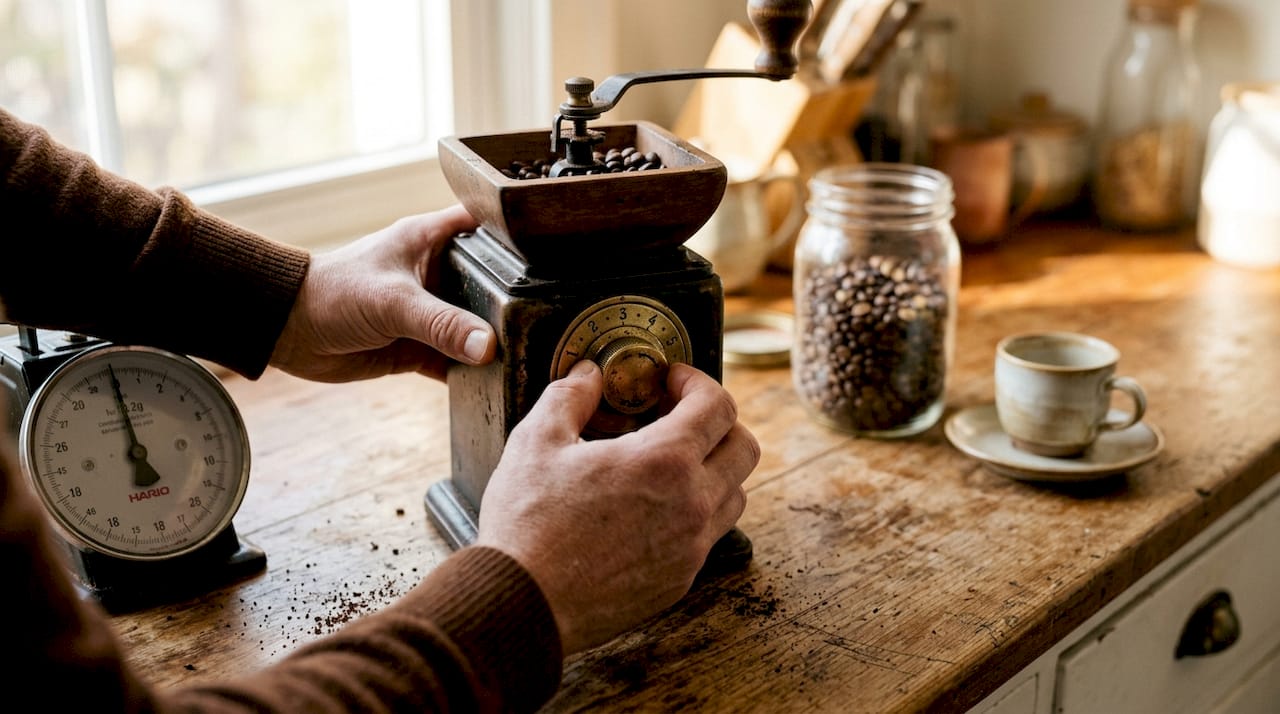
This matters more than most casual drinkers realize. Manual brewing techniques give skilled baristas room to adjust and express nuance, but they also introduce human variability. A tired barista pours unevenly. A distracted home brewer lets the kettle overheat. Batch brewing removes those failure points entirely. The method is widely used in cafés, offices, diners, and catering operations where high-volume coffee service demands repeatability over artistry.
How does the batch brewing process work?
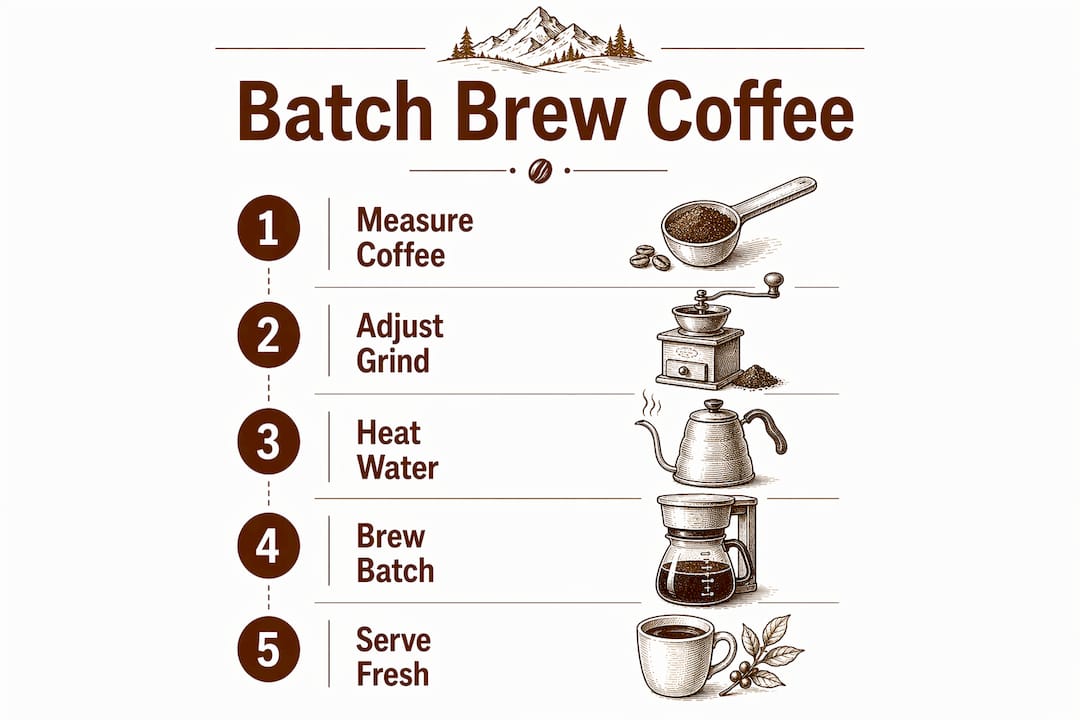
The batch brewing process follows a clear sequence that most commercial and home machines execute automatically.
- Cold water is loaded into the machine’s reservoir, either manually or through a direct water line connection.
- The machine heats the water to the target brew temperature, typically between 195°F and 205°F, which is the Specialty Coffee Association’s recommended range for optimal extraction.
- Heated water is dispersed through a showerhead or spray arm over the coffee grounds sitting in a paper or metal filter basket.
- Gravity pulls the water through the coffee bed, extracting soluble compounds including caffeine, acids, sugars, and oils.
- Brewed coffee drips into a carafe, thermal server, or airpot below, ready to serve.
The coffee-to-water ratio is the most critical variable in this process. A standard starting point is 1 gram of coffee per 15–17 grams of water, though many specialty cafés use a tighter ratio for a more pronounced flavor. Brew time for a full batch typically runs between 4 and 8 minutes depending on batch volume and machine design.
Machine size also shapes the outcome. Home batch brewers typically produce 8–12 cups per cycle. Commercial machines used in high-volume café settings can brew 64 ounces or more in a single cycle. Larger batch volumes require coarser grinds and longer brew times to avoid over-extraction.
Pro Tip: Calibrate your batch brewer every two weeks by running a TDS (total dissolved solids) meter test on the finished brew. A reading between 1.15% and 1.35% TDS signals a well-extracted batch. Anything outside that range points to a grind or ratio adjustment.
What are the benefits and drawbacks of batch brew compared to manual brewing?
Automation reduces human error by maintaining consistent temperature, brewing time, and coffee-to-water ratio across every cycle. That reproducibility is the core advantage of batch brewing over manual methods. A well-calibrated batch brewer produces the same cup on a Monday morning as it does on a Saturday afternoon.
Key advantages of batch brew coffee:
- Produces multiple cups simultaneously, saving significant time in busy environments
- Eliminates variables like uneven pouring speed or temperature drift that affect manual methods
- Requires minimal active attention once programmed, freeing up staff or home brewers for other tasks
- Delivers a consistent flavor profile that customers and colleagues can rely on
- Lower skill barrier means anyone can produce a quality cup without barista training
Where batch brewing falls short:
- Flavor control is less nuanced than manual methods like pour-over or Chemex, which allow real-time adjustments
- Coffee sitting in a carafe degrades quickly, losing freshness within 20–30 minutes
- Machine limitations prevent the kind of single-cup customization that manual brewing offers
- Entry-level batch brewers may not reach or hold optimal brew temperatures consistently
| Feature | Batch brew | Manual brewing |
|---|---|---|
| Consistency | High, machine-controlled | Variable, skill-dependent |
| Flavor nuance | Moderate, balanced | High, highly customizable |
| Time efficiency | Excellent for groups | Slow, one cup at a time |
| Skill required | Low | Moderate to high |
| Best setting | Offices, cafés, gatherings | Home, specialty café bars |
The honest takeaway is that batch brew and manual brewing serve different needs. Batch brewing wins on efficiency and reliability. Manual brewing wins on expression and customization. Many specialty cafés now run both side by side, using batch brew for their house coffee and manual stations for single-origin showcases.
How to brew batch coffee effectively at home or in a small business
Getting great results from a batch brewer comes down to four controllable factors: grind size, water quality, batch volume, and machine maintenance.
Grind size is the most common point of failure. A grind that is too fine creates a dense coffee bed that restricts water flow, leading to over-extraction and bitterness. A coarser grind setting suited to the batch volume prevents channeling and produces a cleaner, more balanced cup. For most home batch brewers, a medium-coarse grind works well as a starting point.
Water quality directly affects flavor. Tap water with high mineral content or chlorine taste will carry those flavors into the cup. Filtered water at a moderate mineral level, around 150 parts per million total dissolved solids, gives the extraction chemistry the right environment to work.
Batch volume affects freshness. Brewing more than you can serve within 20 minutes means the coffee sitting in the carafe will stale and turn bitter. Match your batch size to your actual consumption. A household of two rarely needs a 12-cup brew.
Machine maintenance is non-negotiable for quality. Regular calibration and cleaning keep mineral deposits from altering water temperature and flow rate. Descale your machine monthly if you use it daily.
Pro Tip: Store brewed batch coffee in a preheated thermal server rather than on a warming plate. Warming plates continue to cook the coffee, accelerating bitterness. A good thermal server keeps coffee fresh and at serving temperature for up to 45 minutes without degradation.
What flavor profiles does batch brew coffee produce?
Batch brew coffee typically produces a clean, balanced, and approachable cup. The paper filter used in most batch brewers removes most of the oils and fine particles that give French press or espresso their heavier body. The result is a lighter body with clear acidity, mild sweetness, and a straightforward finish.
The flavor profile also depends heavily on the coffee itself. A single-origin Ethiopian coffee brewed in a batch brewer will express bright citrus and floral notes. A medium-roast Central American coffee will lean toward chocolate, caramel, and mild nuttiness. Thejcoffeecollection’s single-origin coffee selections are well-suited to batch brewing because their clean flavor profiles translate clearly through the drip process without being muddied by roast defects or blending inconsistencies.
| Coffee origin | Typical batch brew flavor notes | Roast level |
|---|---|---|
| Ethiopia | Citrus, floral, berry | Light to medium |
| Colombia | Caramel, red fruit, mild acidity | Medium |
| Mexico | Chocolate, cinnamon, nutty | Medium |
| Central America (dark) | Bold, smoky, low acidity | Dark |
Batch brew’s cultural role is also worth noting. It is the default coffee format in American offices, diners, hotel lobbies, and community gatherings. That ubiquity is not accidental. Batch brew serves groups efficiently without requiring a skilled operator, making it the most accessible coffee brewing method in the world. Specialty coffee culture has recently reclaimed batch brew as a serious format, with many top cafés now featuring carefully sourced, freshly roasted batch brew as a menu centerpiece rather than an afterthought.
Key Takeaways
Batch brew coffee produces consistent, repeatable results because machines control every extraction variable that human hands typically get wrong.
| Point | Details |
|---|---|
| Core definition | Batch brew is automated drip brewing that produces large quantities with consistent flavor. |
| Process control | Machines manage water temperature, flow rate, and brew time to eliminate human error. |
| Grind matters most | A medium-coarse grind prevents over-extraction and bitterness in batch brewing. |
| Freshness window | Serve batch brew within 20 minutes or store in a thermal server to preserve flavor. |
| Best use case | Batch brewing excels in high-volume settings where consistency outweighs manual customization. |
Why I think batch brew deserves more respect than it gets
The specialty coffee world spent years treating batch brew as the lazy option. Pour-over got the Instagram posts. Espresso got the lore. Batch brew got the office break room. That framing was always wrong.
What I have observed is that automation does not reduce quality. It removes the ceiling on consistency. A skilled barista can make a transcendent pour-over once. A well-calibrated batch brewer makes a very good cup every single time, for every person in the room. For most people in most situations, that reliability is worth more than occasional brilliance.
The real mistake is using bad coffee in a good machine and expecting the machine to compensate. It will not. Batch brewing amplifies what is already in the bean. Use a fresh, quality roast with a clean grind, and the method rewards you. Use stale pre-ground coffee from a can, and no machine setting will save it.
My honest recommendation is to treat your batch brewer like a precision instrument, not a convenience appliance. Calibrate it. Clean it. Source coffee that was roasted within the past two weeks. You will be surprised how close a dialed-in batch brew gets to a carefully pulled manual cup.
— jonathan
Upgrade your batch brew with Thejcoffeecollection
The quality of your batch brew starts with the coffee in the filter, not the machine on the counter.
Thejcoffeecollection carries a curated range of freshly roasted coffees sourced from single-origin farms across Ethiopia, Colombia, Mexico, and Central America. Every selection is roasted to highlight the clean, balanced flavor notes that batch brewing expresses best. If you want to see how origin and roast level shape your cup, the Single Origin Sample Pack lets you run side-by-side batch brews across six world regions. Fresh coffee, delivered to your door, ready for your next batch.
FAQ
What is batch brew coffee in simple terms?
Batch brew coffee is coffee made by an automatic drip machine that brews a large quantity at once. The machine heats water and pours it evenly over grounds, producing a consistent pot every time.
How does batch brew differ from drip coffee?
Batch brew and drip coffee refer to the same brewing method. “Batch brew” is the term used in specialty coffee settings to distinguish machine-brewed drip coffee from manual pour-over techniques.
What grind size works best for batch brewing?
A medium-coarse grind is the standard starting point for batch brewing. A grind that is too fine restricts water flow and causes over-extraction, producing a bitter, harsh cup.
Does batch brew coffee have more caffeine than other methods?
Caffeine content in batch brew depends on brew time and contact duration, not the method itself. Longer contact time increases caffeine extraction, so a longer brew cycle will yield a slightly more caffeinated cup.
How long does batch brew coffee stay fresh?
Batch brew coffee stays fresh for approximately 20–30 minutes after brewing. Transferring it to a preheated thermal server extends that window without the bitterness caused by warming plates.
Recommended
- Cold Brew Coffee – Smooth Chocolate Toffee Medium Roast | Lets Go Coffee – The J Coffee Collection
- Best Sellers Coffee Sample Pack – 6 Specialty Roasts | Lets Go Coffee – The J Coffee Collection
- Freshly Roasted Coffee Delivered to Your Door – The J Coffee Collection
- Whiskey Barrel Aged Coffee – Bourbon Barrel Guatemala | Lets Go Coffee – The J Coffee Collection