

Coffee Cupping Process Explained for Beginners
Coffee cupping is a professional sensory evaluation method that isolates a coffee’s inherent flavors by controlling every brewing variable except the bean itself. The coffee cupping process explained in this guide follows the same standardized protocol used in specialty coffee labs worldwide. You do not need a lab or expensive gear to do it well. What you need is fresh coffee, a few simple tools, and the willingness to slow down and pay attention. Thejcoffeecollection curates single-origin and naturally flavored coffees specifically suited to this kind of side-by-side comparison.
What equipment and preparations do you need for coffee cupping?
A successful cupping session starts with the right setup. Consistency in your equipment directly determines how reliable your tasting results will be.
The core cupping checklist for beginners:
- A burr grinder set to a medium-coarse grind
- A digital kitchen scale accurate to 0.1 grams
- Cupping bowls or wide-mouthed cups of equal size (6–8 oz works well)
- Cupping spoons or deep-bowled soup spoons
- A gooseneck kettle for controlled pouring
- Filtered water (tap minerals distort flavor perception)
- A timer
- A notepad and pen for recording impressions
Experts recommend preparing 3 to 5 coffee samples per session for meaningful comparisons. Fewer than two samples offer almost no contrast, while more than five overwhelms the palate and makes evaluation unreliable, especially for beginners.
Fresh beans matter more than any other single variable. Grind each sample immediately before the session, not the night before. Stale grounds lose volatile aromatic compounds within minutes of grinding, which defeats the entire purpose of the exercise.
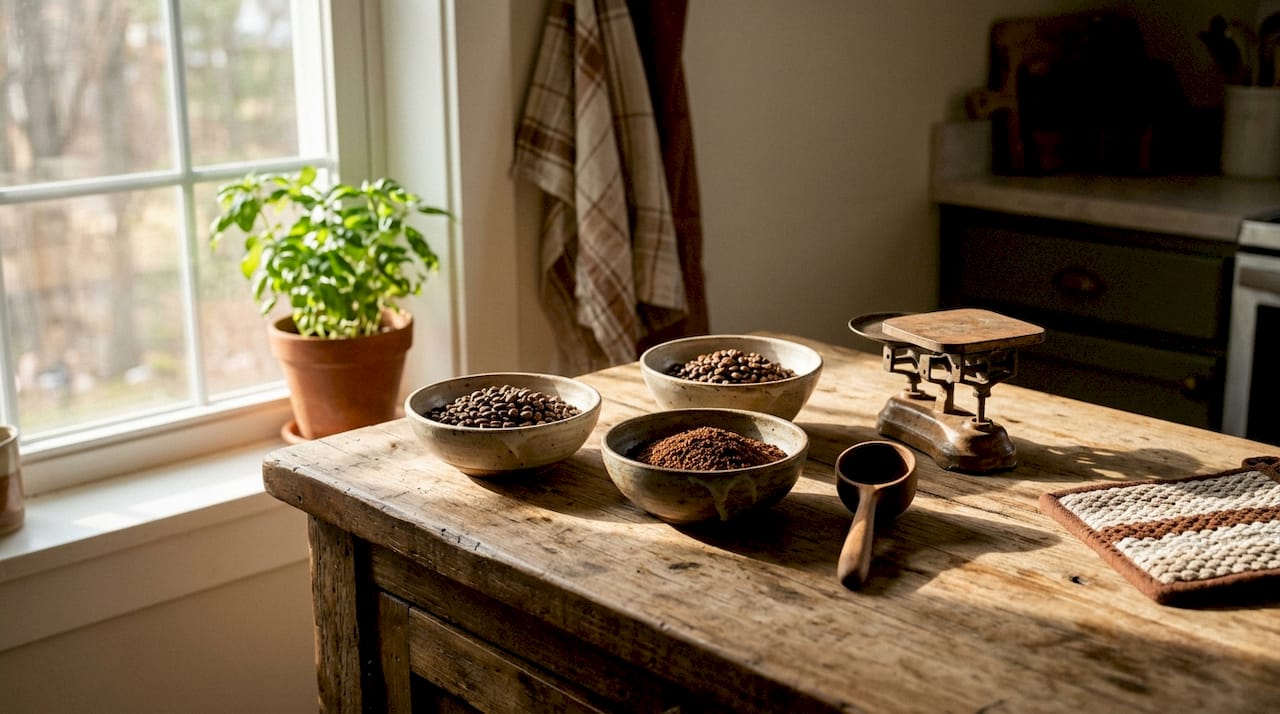
Label each cup clearly before you begin. Use numbered cards or sticky notes placed next to each bowl. A clean workflow prevents confusion mid-session and keeps your notes accurate.
Pro Tip: Use bowls of identical size and shape. Wider openings capture more aroma, and matching vessels eliminate one more variable from your comparison.
How does the coffee cupping process work step by step?
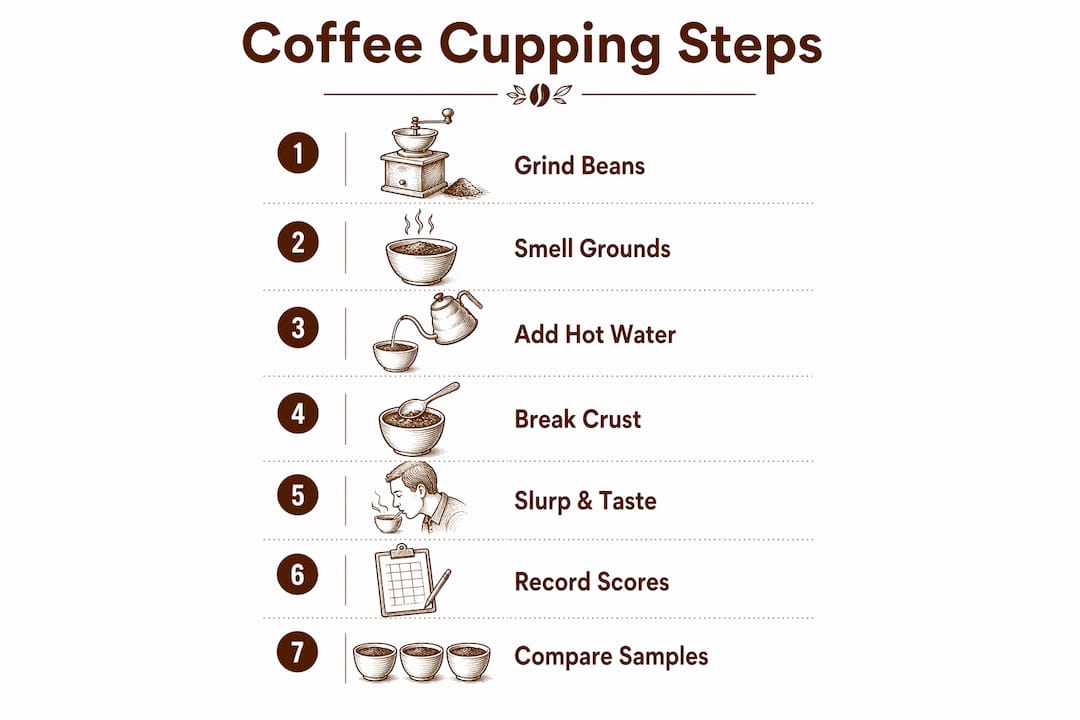
The cupping protocol is deliberate and sequential. Each step serves a specific sensory purpose, and skipping one changes what you perceive in the next.
-
Grind your coffee. Weigh out approximately 8.25 grams of coffee per 150 ml of water for each sample. Grind to a medium-coarse consistency, similar to coarse sea salt.
-
Smell the dry grounds. Before adding any water, lean over each cup and inhale slowly. This is the dry fragrance phase. You are detecting volatile aromatics that water will later transform. Note any floral, nutty, fruity, or earthy impressions.
-
Add hot water. Pour water at approximately 200°F (just off the boil) directly onto the grounds in a circular motion. Fill each cup to the same level. Start your timer immediately.
-
Smell the wet crust. A crust of grounds will form on the surface. At the 3-minute mark, lean in and smell each cup before breaking the crust. The wet aroma is often richer and more complex than the dry fragrance.
-
Break the crust. At 4 minutes, use your spoon to push through the crust with three gentle strokes. Lean in close as you do this. The release of steam carries concentrated aromatic compounds directly to your nose.
-
Skim the surface. Use two spoons to remove the floating grounds and foam from each cup. Work quickly and consistently across all samples.
-
Wait and then taste. Let the coffee cool for 6–8 minutes total from the pour. The cupping process involves tasting at multiple temperature points, so do not rush this stage.
-
Slurp loudly. Fill your spoon and slurp the coffee forcefully across your entire tongue. Loud slurping aerates the coffee, spreading it across taste receptors and releasing more flavor and aroma compounds simultaneously. This is not bad manners at the cupping table. It is technique.
-
Score and note. Record your impressions immediately after each sip. Revisit each cup as it cools. Flavors shift noticeably as temperature drops.
-
Rinse your spoon between each sample to prevent flavor transfer across cups.
Pro Tip: Rest your palate between samples with plain filtered water and a plain cracker. This resets your taste receptors and keeps your evaluations accurate across all five cups.
Cupping isolates intrinsic flavor by removing brewing variables like filter paper, pressure, and extraction technique. That is why the results feel so direct. You are tasting the coffee, not the brewing method.
What sensory attributes are assessed during coffee cupping?
Cupping evaluates seven core attributes. Each one captures a different dimension of the coffee’s character.
Cupping evaluates aroma, flavor, acidity, sweetness, body, aftertaste, and balance as its primary sensory categories. Tasters score each attribute using standardized descriptive language, which makes comparisons repeatable and objective.
| Attribute | What you are sensing | Example descriptors |
|---|---|---|
| Dry aroma | Fragrance of ground coffee before water | Floral, chocolatey, nutty, spicy |
| Wet aroma | Smell released when water hits grounds | Fruity, caramel, earthy, herbal |
| Flavor | Overall taste impression on the palate | Citrus, berry, cocoa, tobacco |
| Acidity | Brightness or liveliness on the tongue | Crisp, juicy, sharp, mild |
| Body | Weight and texture in the mouth | Light, silky, full, syrupy |
| Aftertaste | Lingering impression after swallowing | Clean, bitter, sweet, long |
| Balance | How well all attributes work together | Harmonious, disjointed, complex |
Temperature changes everything. Coffee reveals different tastes as it cools from hot to room temperature. A cup that tastes flat at 170°F may show bright fruit notes at 130°F. Tasting across the cooling curve is what separates a thorough evaluation from a quick sip.
Acidity is the attribute beginners most often misread. High acidity does not mean sour or unpleasant. It means brightness, the same quality that makes a ripe peach taste alive rather than flat. Ethiopian coffees often show a wine-like acidity. Mexican single-origin coffees, like those from Thejcoffeecollection, tend toward a softer, more balanced acidity with chocolate and cinnamon notes.
Body describes how the coffee feels, not how it tastes. A light-bodied coffee feels like water on the tongue. A full-bodied coffee feels more like whole milk. Processing method and roast level both influence body significantly. Understanding how processing affects flavor gives you a framework for predicting what you will find in the cup before you even pour.
How can you cup coffee at home to build real tasting skills?
Home cupping does not require professional lab conditions. It requires consistency and attention.
Practical steps for cupping coffee at home:
- Use consistent grind size, fixed coffee-to-water ratios, filtered water, and timed steeping every single session. Changing one variable at a time is the only way to learn what each variable actually does.
- Start with two or three coffees from different origins. Contrast is what trains your palate. Tasting one coffee in isolation gives you impressions. Tasting three side by side gives you understanding.
- Write down your notes before you look at the bag’s tasting notes. Your uninfluenced perception is the data point. Confirming it against the roaster’s description comes after.
- Revisit the same coffee across multiple sessions. Palate memory builds through repetition, not through a single tasting.
- Learn the origin context. Coffee from Bali tastes different from coffee grown in Peru for reasons rooted in soil, altitude, and climate. Reading about coffee terroir and flavor before a session sharpens what you notice during it.
The most common beginner mistake is rushing the cool-down phase. Most of a coffee’s complexity appears below 140°F. Patience during this stage is not optional. It is where the real tasting happens.
Pro Tip: Keep a dedicated cupping notebook. Date each session, list the coffees, and record your scores for each attribute. After six sessions, patterns emerge. You will start recognizing flavor families before you even taste.
Cupping is more a sensory analysis than a brewing method. That distinction matters at home. You are not making a cup of coffee to drink. You are conducting an evaluation. Treat it that way and your skills develop much faster.
Key Takeaways
The coffee cupping process is the most direct method for evaluating a coffee’s true flavor profile because it removes every brewing variable except the bean.
| Point | Details |
|---|---|
| Prepare 3–5 samples | Fewer samples offer no contrast; more than five overwhelms the palate and reduces accuracy. |
| Follow the timed protocol | Grinding, smelling, breaking the crust, and slurping each serve a distinct sensory purpose. |
| Evaluate seven attributes | Aroma, flavor, acidity, sweetness, body, aftertaste, and balance form the complete sensory picture. |
| Taste across the cooling curve | Coffee reveals different flavors at different temperatures; never stop at the first hot sip. |
| Take notes every session | Written records build palate memory faster than any other single practice. |
Why cupping changed how I think about coffee
Most people drink coffee to wake up. I started cupping to understand it. Those are very different relationships with the same beverage.
The first time I broke a crust on a washed Ethiopian and caught that jasmine and bergamot hit off the steam, I realized I had been missing an entire dimension of what coffee can do. That moment did not come from reading about coffee. It came from slowing down and paying attention to a specific protocol.
What I find most underrated about cupping is how quickly it builds confidence. After a handful of sessions, you stop second-guessing your palate. You start trusting what you actually taste rather than what the label says you should taste. That shift is significant. It means you can walk into any coffee shop, order something unfamiliar, and have a real framework for evaluating it.
The sensory skills you build through cupping also connect you to origin in a way that casual drinking never does. When you understand that a coffee’s acidity comes from altitude, or that its body reflects how it was processed, the cup becomes a story. Cupping is the practice that makes that story legible.
My honest advice: do not wait until you have the perfect setup. Two cups, a scale, a kettle, and two different coffees are enough to start. The protocol matters more than the equipment.
— jonathan
Ready to practice with coffees worth cupping
Cupping rewards you most when the coffees in your lineup are genuinely different from each other. That means sourcing from distinct origins, not just different roast levels of the same bean.
Thejcoffeecollection’s single-origin sample pack brings together six coffees from six world regions in one order. Each bag is freshly roasted and labeled with origin details, which gives you exactly the kind of contrast that accelerates palate development. The best-sellers sample pack covers a range of flavor profiles from chocolatey and smooth to bright and fruity. Both packs are built for side-by-side comparison, which is precisely what a cupping session demands.
FAQ
What is coffee cupping?
Coffee cupping is a standardized sensory evaluation method used to assess a coffee’s aroma, flavor, acidity, body, and aftertaste. It minimizes brewing variables through simple full-immersion steeping so tasters can evaluate the coffee itself, not the brew method.
How many coffees should I cup at once?
Experts recommend 3 to 5 coffees per session. Fewer than two offers no meaningful contrast, and more than five overwhelms the palate, especially for beginners.
Do I need special equipment to cup coffee at home?
No specialized equipment is required. A burr grinder, digital scale, equal-sized cups, a deep spoon, a kettle, and filtered water are sufficient for a reliable home cupping session.
Why do cuppers slurp so loudly?
Loud slurping aerates the coffee and spreads it across the entire tongue at once. This exposes more taste receptors simultaneously and releases additional aroma compounds, which improves sensory perception.
How does temperature affect cupping results?
Coffee reveals different flavors and mouthfeel characteristics as it cools from hot to room temperature. Tasting at multiple temperature points is a core part of thorough sensory evaluation and often reveals complexity that is invisible in a hot sip.
Recommended
- Coffee Processing Methods Compared: A 2026 Flavor Guide – The J Coffee Collection
- Coffee Terroir and Flavor: What Every Enthusiast Must Know – The J Coffee Collection
- What Is Batch Brew Coffee? A Complete Guide – The J Coffee Collection
- Natural Process Coffees: 9 Regional Examples to Know – The J Coffee Collection