

Natural Process Coffees: 9 Regional Examples to Know
Natural process coffee is defined by drying whole coffee cherries with the fruit skin and pulp still intact, which infuses the bean with sugars and fermentation compounds that produce intense fruit and sweetness. This method, also called dry processing, stands apart from washed or honey techniques because the seed never contacts water during its transformation. The result is a cup with heavy body, wine-like complexity, and fruit notes that range from blueberry to tropical mango. If you want to understand examples of natural process coffees and why they taste so different from everything else in your cup, this guide covers the most important regional expressions, flavor science, and brewing tips you need.
What are some leading examples of natural process coffees by region?
The best naturally processed coffees come from regions where dry climates and high altitudes allow slow, controlled drying without mold risk. Each origin stamps its own character onto the process, producing profiles that are immediately recognizable once you know what to look for.
-
Ethiopian Yirgacheffe Natural. Ethiopian naturals from Yirgacheffe are the benchmark for the style. They deliver blueberry, strawberry, and floral notes alongside a wine-like finish that no other region replicates at the same intensity. Thejcoffeecollection carries an Ethiopia natural coffee that captures this fruity, medium-light roast character well.
-
Yemen Natural. Yemen produces some of the oldest dry-processed coffees in the world. The beans dry on rooftops and raised terraces, absorbing dried fruit, tamarind, and warm spice notes. The complexity is earned through centuries of tradition rather than modern equipment.
-
Brazilian Natural. Brazil is the world’s largest producer of naturally processed coffee. Brazilian naturals show chocolate, nutty, and dried fruit sweetness that makes them crowd-pleasing and approachable. They work especially well as espresso bases because their low acidity and heavy body hold up under milk.
-
Tanzanian Gesha Natural. Tanzania’s Gesha variety, when processed naturally, produces floral notes like rose and jasmine alongside peach, sour cherry, and raspberry. This combination of variety and process creates one of the most complex cups available to enthusiasts.
-
Costa Rican Natural. Costa Rican naturals bring tropical fruit, honey sweetness, and a boozy complexity that surprises drinkers expecting a clean Central American profile. The country’s micro-mill movement has made small-lot naturals widely available.
-
Colombian Natural. Colombia has historically favored washed processing, but natural and honey lots from regions like Huila and Nariño are gaining ground. They show red fruit, brown sugar, and a syrupy body that contrasts sharply with the country’s classic washed profile. Thejcoffeecollection’s Colombia single origin reflects this bright, fruity character.
-
Ugandan Robusta Natural. Ugandan Robusta naturals occupy a different category from Arabica examples, but they matter. Traditional dry processing gives them a deep, earthy sweetness and full body that makes them valuable in espresso blends and instant coffee production.
Pro Tip: When buying natural coffees by region, start with Ethiopian Yirgacheffe if you want maximum fruit intensity, or Brazilian natural if you prefer chocolate sweetness with less fermentation funk.
How does the natural process impact flavor compared to other processing methods?
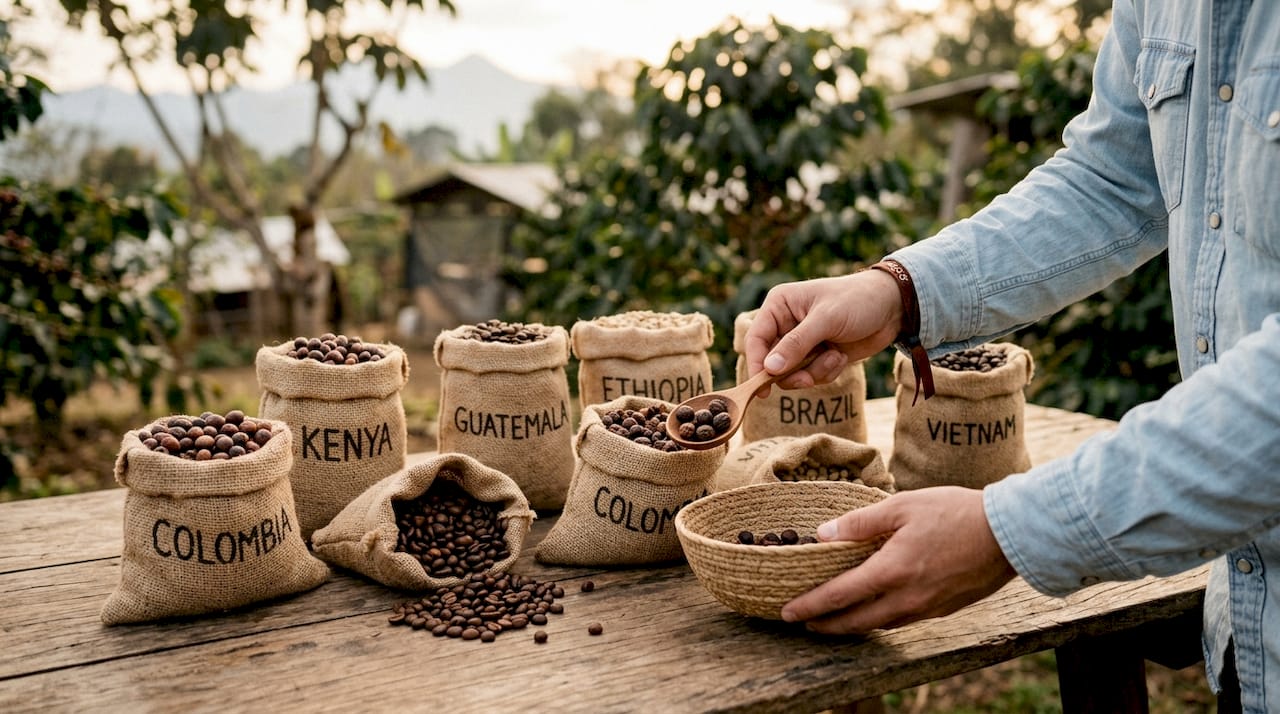
Prolonged contact between seed and intact fruit during drying is the single factor that separates natural coffees from every other processing method. The fruit sugars and fermentation compounds migrate into the bean over weeks, not hours. That transfer is irreversible and defines the cup.
Natural coffees deliver elevated sweetness, heavier body, and fruit-derived flavor compounds that washed coffees simply cannot replicate. Washed coffees remove the fruit before drying, producing cleaner, brighter, and more acidic profiles. The trade-off is clarity versus complexity. Washed coffees let terroir and variety speak clearly. Natural coffees layer fermentation character on top of both.
| Feature | Natural process | Washed process |
|---|---|---|
| Body | Heavy, syrupy | Light to medium |
| Sweetness | Intense, fruit-derived | Moderate, grain-like |
| Acidity | Softer, wine-like | Bright, clean |
| Fruit notes | Blueberry, tropical, dried fruit | Citrus, stone fruit |
| Fermentation character | Prominent | Minimal |
Drying method also shapes the final cup. Raised beds reduce off-flavors and mold risk compared to patio drying, and producers who monitor moisture carefully produce more consistent lots. Patios expose cherries to ground heat and uneven airflow, which can push fermentation into unpleasant territory if not managed well.
“The defining characteristic of natural processing is prolonged contact between seed and intact fruit during drying, increasing sweetness, body, and fruit intensity.” — Roastopedia
Honey process sits between the two. It removes the skin but leaves varying amounts of mucilage on the bean during drying. Yellow honey retains the least, black honey the most. Natural process retains everything, which is why its flavor impact is the most dramatic of the three main coffee processing techniques.
What are modern natural process innovations and their effects on coffee profiles?
Anaerobic natural processing is the most significant development in natural coffee processing methods over the past decade. It involves fermenting whole coffee cherries in sealed, oxygen-deprived tanks before the drying stage begins. Fermentation runs from 48 hours to 12 days depending on the producer’s target flavor profile.
The oxygen-free environment changes which microorganisms dominate fermentation. Lactic acid bacteria thrive without oxygen, producing compounds that accentuate acidity and deepen fruit sweetness beyond what traditional naturals achieve. The result is a cup with a more defined, almost laser-focused berry or wine character rather than the broader, wilder fruit of a traditional natural.
Modern producers have also introduced:
- Controlled drying rooms. Temperature and humidity-regulated chambers allow year-round production and reduce the weather dependency that makes outdoor drying unpredictable.
- Mechanical cherry sorting. Optical and density sorters remove underripe and overripe cherries before drying, which reduces defect rates and produces more uniform lots.
- Inoculated fermentation. Some producers introduce specific yeast or bacterial strains to guide fermentation toward predictable flavor targets, similar to winemaking practices.
- Combination protocols. Producers increasingly stack techniques, running anaerobic fermentation first, then finishing on raised beds, to layer complexity while controlling defects.
Pro Tip: If you see “anaerobic natural” on a coffee label, expect more acidity and a sharper fruit focus than a traditional natural from the same region. It is a different sensory experience, not just a marketing term.
These innovations are not universally celebrated. Traditionalists argue that heavy intervention masks terroir. The practical reality is that controlled fermentation gives producers a repeatable product, which matters for export markets. Both approaches produce excellent coffee when executed well.
How should you brew natural process coffees to best enjoy their flavor profiles?
Natural coffees reward brewers who respect their sweetness and body rather than fighting them. The fruit-forward character can tip into cloying or fermented if extraction runs too high, so the goal is balance.
-
Use a 1:15 to 1:16 brew ratio. A 1:15 to 1:16 ratio with a coarser grind on a flat-bottom brewer optimizes sweetness without over-extracting the fermentation compounds. Flat-bottom brewers like the Kalita Wave produce more even extraction than V60-style cones, which suits the heavy body of naturals.
-
Grind coarser than you would for a washed coffee. Natural coffees extract faster because their cell structure changes during fermentation. A coarser grind slows extraction and prevents the cup from turning muddy or overly fermented.
-
Lower your water temperature slightly. Brewing at 195°F rather than 205°F reduces the extraction of bitter compounds that can clash with the fruit sweetness. This is especially useful for darker-roasted naturals.
-
Try a pour-over for filter brewing. Pour-over methods give you control over flow rate and saturation. A slow, even pour highlights the floral and fruit notes in Ethiopian and Tanzanian naturals without muddying the cup.
-
Adjust espresso parameters carefully. Natural coffees pull well at slightly longer ratios, around 1:2.5 to 1:3, with a shorter extraction time. The heavy body means you do not need to push extraction to get a full-flavored shot.
-
Taste before adding milk. Natural coffees have enough sweetness and body to drink black. Adding milk masks the fruit notes that make these coffees worth seeking out. Try the first cup black, then decide.
-
Rest roasted naturals for 10–14 days. Natural coffees off-gas CO2 more aggressively than washed coffees due to fermentation. Brewing too soon after roast produces a bubbly, uneven extraction. Resting improves consistency significantly.
Key takeaways
Natural process coffee delivers its distinctive fruit intensity and heavy body because the whole cherry dries intact, transferring sugars and fermentation compounds directly into the bean.
| Point | Details |
|---|---|
| Defining process | Whole cherries dry with fruit intact for 2–6 weeks, targeting 10–12% moisture. |
| Top regional examples | Ethiopian Yirgacheffe, Brazilian natural, Tanzanian Gesha, and Costa Rican natural each offer distinct flavor signatures. |
| Flavor vs. washed | Natural coffees produce heavier body, softer acidity, and intense fruit notes compared to the clean brightness of washed coffees. |
| Modern innovation | Anaerobic fermentation in sealed tanks deepens berry and wine-like notes beyond traditional natural processing. |
| Brewing approach | Use a 1:15 to 1:16 ratio, coarser grind, and flat-bottom brewer to balance sweetness and avoid over-extraction. |
Why natural process coffees are the most exciting category right now
Natural coffees are the category where processing becomes as important as origin, and that shift in thinking is what makes them so compelling in 2026. When I first started paying close attention to these coffees, the conventional wisdom was that naturals were rustic and inconsistent. That reputation was partly earned. Poorly controlled drying produced fermented, barnyard-heavy cups that alienated as many drinkers as they attracted.
What has changed is producer discipline. The combination of raised-bed drying, moisture monitoring, and anaerobic fermentation protocols has given producers real control over outcomes. The best natural coffees today are not accidents. They are engineered expressions of place and process, and the flavor range they cover is wider than any other processing method.
The challenge for enthusiasts is calibrating expectations. A traditional Ethiopian natural and an anaerobic Costa Rican natural are both “natural process coffees,” but they taste nothing alike. Treating them as a single category is like treating all wine as the same because it ferments. The subcategories within natural processing are where the real learning happens, and that learning is genuinely rewarding.
My honest recommendation: buy a single-origin sample pack that includes at least one natural and one washed coffee from the same region. The contrast is the fastest education available.
— jonathan
Natural process coffees worth trying from Thejcoffeecollection
Thejcoffeecollection curates natural process varieties with the same attention to origin and flavor profile that enthusiasts expect from specialty-grade sourcing.

The Ethiopia natural is the clearest entry point into the style, delivering the blueberry and floral character that defines Yirgacheffe naturals at a medium-light roast. For enthusiasts who want to compare processing methods across regions, the full coffee collection includes single-origin selections that span washed, honey, and natural lots. Each product is sourced and roasted to highlight the processing method’s best qualities, not to mask them. If you know what flavor profile you are chasing, the descriptions make it easy to find the right match.
FAQ
What is natural process coffee?
Natural process coffee is made by drying whole coffee cherries with the fruit skin and pulp intact before hulling. This method transfers fruit sugars and fermentation compounds into the bean, producing intense sweetness and fruit-forward flavor.
How long does natural coffee processing take?
Natural drying spans 2–6 weeks, with cherries spread in 3–5 cm layers and turned every 30–45 minutes during peak sun hours. The target moisture level at the end of drying is 10–12%.
What is the difference between natural and washed coffee?
Natural coffees dry with the fruit intact, producing heavy body, soft acidity, and intense fruit notes. Washed coffees have the fruit removed before drying, which creates a cleaner, brighter, and more acidic cup with less fermentation character.
What does anaerobic natural coffee mean?
Anaerobic natural coffee is fermented in sealed, oxygen-deprived tanks for 48 hours to 12 days before traditional drying. The oxygen-free environment accentuates acidity and deepens fruit sweetness compared to standard natural processing.
Which natural process coffee is best for beginners?
Brazilian natural is the most approachable starting point because its chocolate, nutty, and dried fruit sweetness is familiar and low in fermentation intensity. Ethiopian Yirgacheffe natural is the next step for enthusiasts ready for more fruit complexity.
Recommended
- Single Origin Coffee Sample Pack – 6 World Regions | Lets Go Coffee – The J Coffee Collection
- Freshly Roasted Coffee Delivered to Your Door – The J Coffee Collection
- Flavored Coffee Sample Pack – 6 Natural Flavors | Lets Go Coffee – The J Coffee Collection
- Best Sellers Coffee Sample Pack – 6 Specialty Roasts | Lets Go Coffee – The J Coffee Collection