

Coffee Processing Methods Compared: A 2026 Flavor Guide
Coffee processing is defined as the post-harvest treatment of coffee cherries that directly shapes the flavor, aroma, body, and chemical profile of every cup you drink. The four major recognized techniques are washed, natural, honey, and anaerobic fermentation. Each method produces a chemically distinct bean before roasting even begins. Understanding coffee processing methods compared across these categories is the fastest way to explain why two coffees from the same country can taste completely different. Washed coffee accounts for about 60% of global specialty coffee production, which tells you something important: consistency and clarity win in most commercial markets. But the remaining 40% is where the most exciting flavor work happens.
1. What is washed coffee processing and how does it influence flavor?
Washed processing, also called the wet method, removes the cherry’s skin and pulp before drying. The bean then ferments in water for 24–72 hours to break down the remaining mucilage, followed by a thorough rinse and a drying period of 1–3 weeks.
The result is a clean, bright cup that expresses the bean’s origin character with minimal interference. Washed coffees from Ethiopia or Colombia tend to show crisp citrus acidity, floral notes, and a light body. The Colombia single origin from Thejcoffeecollection is a strong example of how washed processing delivers that characteristic brightness and fruit clarity.
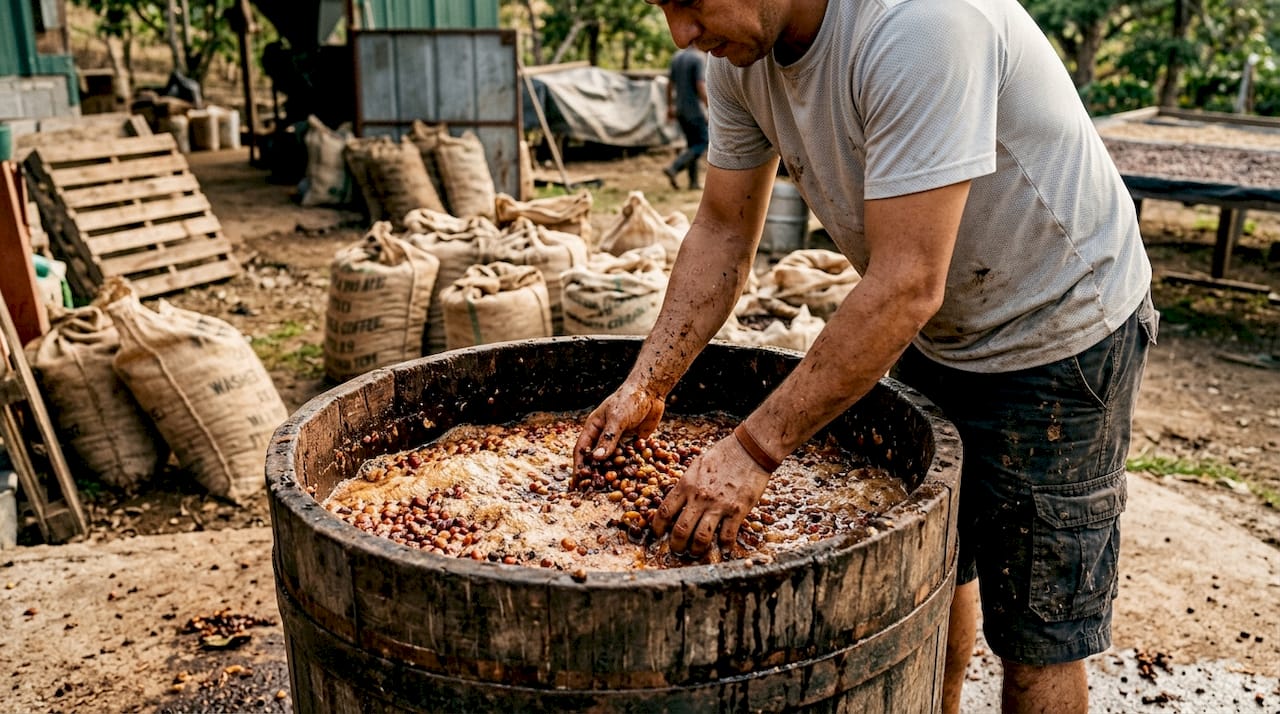
The tradeoff is water. Washed processing consumes 40–50 liters of water per kilogram of coffee. That figure makes it environmentally costly in water-scarce regions, which is a real constraint for producers in parts of Central America and East Africa.
Key characteristics of washed coffee:
- Flavor: Clean, bright, high acidity, terroir-forward
- Body: Light to medium
- Defect risk: Low when fermentation is controlled
- Water use: High (40–50 L/kg)
- Drying time: 1–3 weeks
Pro Tip: If you want to taste a coffee’s true origin character without fermentation influence, start with a washed lot. It is the clearest window into what soil, altitude, and variety actually contribute.
2. How does natural coffee processing differ and shape coffee taste?
Natural processing, also called dry processing, skips water almost entirely. The whole cherry, skin and all, dries on raised beds or patios for 3–6 weeks. During that time, the fruit’s sugars and acids migrate into the bean through extended fermentation inside the cherry.
The flavor difference between washed and natural is chemical. Fermentation time and sugar migration reshape the bean’s molecular structure before roasting. The cup that results is heavy in body, rich in fruit, and often described as wine-like or jammy. Ethiopian natural coffees frequently show blueberry, strawberry, and dark chocolate notes that washed versions of the same variety simply cannot replicate.
Natural processing uses near-zero water, which makes it the most sustainable option for arid growing regions like Yemen or parts of Ethiopia. The downside is defect risk. Without careful turning and monitoring, cherries can ferment unevenly or develop mold, producing off-flavors that ruin an entire batch.
Key characteristics of natural coffee:
- Flavor: Fruity, wine-like, heavy sweetness, complex fermentation notes
- Body: Full, syrupy
- Defect risk: High without careful management
- Water use: Near zero
- Drying time: 3–6 weeks
Natural processed coffees benefit from immersion brewing methods like French press or AeroPress. Those methods preserve the full body and sweetness that make naturals worth drinking. The Ethiopia Natural from Thejcoffeecollection shows exactly this profile: fruity, chocolatey, and built for a slow brew.
3. What is honey processing and why is it a hybrid method?
Honey processing sits between washed and natural. The skin and pulp are removed, but the sticky mucilage layer is left on the bean during drying. That mucilage is what gives honey-processed coffee its characteristic sweetness and body.
The method is classified into grades based on how much mucilage remains and how much it oxidizes during drying. Honey processing classification into yellow, red, and black reflects mucilage amounts and oxidation levels, not quality rankings. Yellow honey retains the least mucilage and dries fastest. Black honey retains the most and requires the longest, most labor-intensive drying period of 1–4 weeks.
The flavor sits in a satisfying middle ground. Honey coffees offer the sweetness and body of a natural with the cleaner finish of a washed. Honey and anaerobic processed coffees score higher for balance and mouthfeel compared to fully washed or dry-processed lots. The Costa Rica honey process from Thejcoffeecollection is a textbook example: sweet, smooth, and more complex than a standard washed Central American.
Key characteristics of honey coffee:
- Flavor: Sweet, balanced, medium body, stone fruit notes
- Body: Medium to full
- Defect risk: Moderate; black honey is highest risk
- Water use: Low
- Drying time: 1–4 weeks depending on grade
Pro Tip: Black honey is the most skill-dependent processing grade. If a producer offers it, that is a signal of serious quality control. Seek it out when you want maximum sweetness without the unpredictability of a full natural.
4. What are rare and emerging coffee processing methods compared to classic ones?
Anaerobic fermentation is the most significant development in specialty coffee processing in the past decade. Producers seal depulped or whole cherries in oxygen-free tanks, which forces fermentation along a different chemical pathway than open-air methods produce.
Anaerobic processing enables exotic tropical or lactic flavor profiles that traditional washed, natural, or honey methods cannot achieve. Think passionfruit, pineapple, or yogurt-like tartness in a cup. These flavors come from specific microbial activity that only thrives in low-oxygen conditions. The rise of anaerobic fermentation is creating a specialty niche focused on complexity and uniqueness that commands premium pricing.
Beyond anaerobic, producers are experimenting with carbonic maceration (borrowed from wine), lactic fermentation, and co-fermentation with fruit or spices. These experimental techniques are still rare at scale, but their market presence is growing fast.
How rare methods compare to classic ones:
- Washed: Clean, predictable, terroir-forward
- Natural: Fruity, heavy, fermentation-forward
- Honey: Balanced, sweet, moderate complexity
- Anaerobic: Exotic, intense, lactic or tropical notes
- Experimental (carbonic maceration, co-fermentation): Highly variable, producer-dependent
Combining processing method with fermentation time enables targeting distinct flavor profiles with precision. That finding explains why anaerobic producers can reliably reproduce unusual flavors across harvests once they dial in their fermentation protocol.
5. How do these coffee processing techniques compare on environment and practicality?
Processing method choice is not just about flavor. It is also about water access, labor capacity, climate, and drying infrastructure. These practical factors often determine which method a producer can realistically use.
| Criterion | Washed | Natural | Honey | Anaerobic |
|---|---|---|---|---|
| Water use | High (40–50 L/kg) | Near zero | Low | Low to moderate |
| Drying time | 1–3 weeks | 3–6 weeks | 1–4 weeks | Variable |
| Defect risk | Low | High | Moderate | Moderate to high |
| Labor intensity | Moderate | High (turning) | High (monitoring) | Very high |
| Flavor complexity | Clean, bright | Fruity, complex | Balanced, sweet | Exotic, intense |
| Best climate | Humid, water-rich | Dry, sunny | Dry, moderate | Controlled environment |
Natural processing suits dry climates with long sunny seasons. Washed processing requires reliable water access and fermentation tanks. Honey processing demands consistent dry weather during the drying phase to prevent mold on the exposed mucilage. Anaerobic fermentation requires sealed tanks and temperature control, making it the most infrastructure-dependent method.
Processing affects not only flavor but also non-volatile metabolites that define bitterness, sweetness, and mouthfeel at a molecular level. That means the environmental conditions during processing are not just logistical concerns. They directly shape what ends up in your cup.
Key takeaways
The processing method applied to a coffee cherry is the single biggest variable shaping flavor before roasting, and choosing the right method requires balancing sensory goals, water access, and drying conditions.
| Point | Details |
|---|---|
| Washed dominates specialty markets | About 60% of specialty coffee is washed, prized for clean, consistent flavor. |
| Natural delivers the most fruit complexity | Extended cherry drying creates wine-like, heavy-bodied cups with near-zero water use. |
| Honey is the best of both worlds | Retained mucilage adds sweetness and body without the defect risk of full natural processing. |
| Anaerobic unlocks exotic profiles | Sealed-tank fermentation produces tropical and lactic notes impossible with traditional methods. |
| Environment drives method choice | Water availability, climate, and labor capacity determine which processing technique is practical. |
My honest read on processing methods after years of tasting
Most coffee drinkers focus on roast level or origin country, and completely miss processing. That is a mistake. I have tasted two coffees from the same Ethiopian farm, same harvest, one washed and one natural, and they were unrecognizable as the same bean. The natural was blueberry jam. The washed was lemon verbena. Same soil, same altitude, same variety. Processing did all of that.
The misconception I hear most often is that natural processing is “better” because it is more complex. That is not accurate. Natural processing is riskier and more variable. A poorly managed natural lot tastes like compost. A well-managed washed lot from a great terroir is one of the most satisfying cups you can drink. Complexity without control is just noise.
Honey processing is the most underrated of the three classic methods. It consistently delivers sweetness and balance that neither washed nor natural can match in the same cup. If you have never tried a black honey from Costa Rica, that is the gap in your coffee education worth fixing first.
On sustainability: the shift toward natural and honey processing in water-scarce regions is not just a trend. It is a necessity. Producers in Yemen and parts of Ethiopia have no choice. When you buy a natural processed coffee, you are often supporting a farmer who adapted to real environmental constraints, not just chasing a flavor trend.
My practical advice: buy a single-origin sample pack that includes washed, natural, and honey lots. Brew them the same way, back to back. That single exercise will teach you more about processing than any article can.
— jonathan
Taste the difference with Thejcoffeecollection
Understanding processing methods is one thing. Tasting them side by side is where real appreciation starts.

Thejcoffeecollection curates specialty coffees by processing method, including washed single origins, natural-processed lots, and honey-process selections from regions where each method makes the most sense. The single-origin sample pack covers six world regions and gives you a direct, side-by-side way to experience how washed, natural, and honey processing each shape a cup. Every coffee is carefully sourced and roasted to let the processing character come through clearly, not get buried under a dark roast. If you want to move from reading about flavor to actually tasting it, that is the right place to start.
FAQ
What is the main difference between washed and natural coffee?
Washed coffee removes the cherry before drying, producing a clean, bright, and acidic cup. Natural coffee dries with the cherry intact, creating a fruity, full-bodied, wine-like flavor through extended fermentation.
Which coffee processing method uses the least water?
Natural processing uses near-zero water, making it the most water-efficient method. Washed processing is the most water-intensive, consuming 40–50 liters per kilogram of coffee.
What does honey processing mean in coffee?
Honey processing removes the skin and pulp but leaves the sticky mucilage on the bean during drying. The result is a sweeter, more balanced cup than washed coffee, with more body but less fermentation intensity than a natural.
Is anaerobic coffee processing better than traditional methods?
Anaerobic processing is not better, it is different. It produces exotic tropical and lactic flavor profiles that traditional methods cannot achieve, but it requires more infrastructure and carries a higher defect risk when not managed carefully.
How does processing method affect brewing choice?
Natural and honey processed coffees perform well with immersion brewing methods like French press, which preserve their full body and sweetness. Washed coffees shine in pour-over methods that highlight clarity and acidity.
Recommended
- Flavored Coffee Sample Pack – 6 Natural Flavors | Lets Go Coffee – The J Coffee Collection
- Freshly Roasted Coffee Delivered to Your Door – The J Coffee Collection
- Single Origin Coffee Sample Pack – 6 World Regions | Lets Go Coffee – The J Coffee Collection
- Best Sellers Coffee Sample Pack – 6 Specialty Roasts | Lets Go Coffee – The J Coffee Collection