

Curated Tea Gifts That Feel Personal and Ready to Buy
The best tea gift ideas fall into five categories: loose-leaf samplers, teaware, subscriptions, matcha or wellness kits, and paired accessories. Pick by matching the recipient’s tea habits (beginner or connoisseur) to your budget, then add one personal touch, a handwritten note or a jar of honey, to turn a good gift into a memorable one. Several sellers curate these formats as ready-made options if you want something assembled already.
TL;DR:
- Choose a sampler set with a variety of flavors to help the recipient discover new teas without a full purchase of a single type.
- Consider a subscription box with rotating themes for ongoing enjoyment, especially for those who already have ample tea.
- Select teaware based on the recipient’s preferred brewing method, such as a glass teapot for viewing leaves or a temperature-controlled kettle for delicate teas.
- Match the gift’s complexity to the recipient’s experience, giving simple, labeled samplers to beginners and more specific, high-quality options to enthusiasts.
- Budget should guide the presentation and packaging, with under $25 options suitable for casual acquaintances and splurge items for serious connoisseurs.
Table of Contents
- Tea Gift Ideas by Type: Samplers, Teaware, Kits, and More
- How to Choose the Right Tea Gift
- Presentation Ideas That Make a Tea Gift Feel Personal
- Tea Gift Ideas by Budget: Under $25, Midrange, and Splurge
- How The J Coffee Collection Curates Tea Gifts
- Shipping and Delivery Timing for Tea Gifts
- What a Tea Gift Really Costs: Shipping and Add-Ons Included
- Choosing Tea Gifts by Age and Experience Level
- Verifying Tea Quality Before You Buy
- Editor Perspective: Curation Beats the Brand Name
- Grab a Ready-Made Sampler From The J Coffee Collection
- Sources
Tea Gift Ideas by Type: Samplers, Teaware, Kits, and More
Not every tea drinker wants the same thing, which is why the smartest approach starts with matching the gift type to how the recipient actually drinks tea, not just what looks nice in a box.
Loose-leaf sampler sets work for almost anyone because they solve the biggest problem in tea gifting: guessing wrong on flavor. A good sampler includes several distinct varieties, such as black tea, green tea, an herbal blend, and something unusual like a smoked lapsang souchong, so the recipient can find a favorite without committing to a full tin of something they might not like. Loose-leaf also beats tea bags on a sensory level. The aroma and leaf appearance signal freshness in a way bagged tea simply can’t replicate, and that difference is obvious the moment someone opens the tin.
Subscription boxes solve a different problem: what to give someone who already owns plenty of tea. A monthly or quarterly box keeps the gift going long after the holiday or birthday has passed. The best subscriptions rotate origin or flavor themes rather than repeating the same four blends, and picking the right frequency matters. A single memorable first box works for a casual acquaintance, while a six-month term signals something for a close friend or partner.
Teaware turns tea drinking into a small ritual, and the right piece depends entirely on how someone brews. A stainless mesh infuser fits the person who wants convenience. A glass teapot suits someone who likes watching loose leaves unfurl. A Japanese kyusu, with its side handle and built-in strainer, appeals to the person who already takes tea seriously. A gooseneck kettle with temperature control matters most for green tea and matcha drinkers, since water that’s too hot scorches delicate leaves. And a double-walled temperature mug solves the universal complaint of tea going cold before it’s finished.
Matcha and specialty kits feel premium because they come with a learning curve built in. A proper set includes a bamboo whisk (chasen), a ceramic bowl (chawan), a bamboo scoop (chashaku), and a tin of ceremonial-grade matcha. These kits work best for someone who has already expressed curiosity about matcha rather than someone encountering it cold, since the tools alone can feel intimidating without a little context.
Wellness and herbal kits pair naturally with add-ons that reinforce the theme: a jar of local honey, a small tin of ginger biscuits, or a fruit preserve that complements self-care gift ideas like chamomile or peppermint blends. These work well for anyone recovering from something, dealing with stress, or simply not a caffeine drinker. A dedicated herbal tea gift collection can help you figure out which herbal pairings actually complement each other instead of fighting for attention on the palate.
Practical accessories round out almost any gift without needing to stand alone. Consider:
- An insulated travel mug for commuters who drink tea on the go
- An airtight tin for storing loose leaf away from light and moisture
- A small measuring spoon set calibrated for tea rather than baking
- A tea strainer or infuser basket sized for a full teapot rather than a single mug
Novelty and experience gifts make sense when you want something that surprises rather than something purely functional. Tea advent calendars, blooming tea balls that unfurl into flowers when steeped, and local tasting classes all fall into this category. Marketplaces built around unusual presents list hundreds of these novelty tea ideas, which is worth browsing if the recipient already owns every practical teaware item you could think of. Save this category for someone who already has the basics covered. Giving a blooming tea ball to someone who’s never brewed loose leaf before skips a step they might actually enjoy.
How to Choose the Right Tea Gift
The fastest way to narrow dozens of options is to run through a short checklist before you buy, rather than after you’ve already committed to something.
- Match complexity to experience. A tea novice benefits from a simple, well-labeled sampler. A longtime enthusiast wants something more specific, a single-origin harvest, a rare varietal, or teaware upgrading what they already own.
- Check the product listing for origin and harvest details. Reputable sellers disclose where the tea was grown and when it was harvested, since freshness and quality both hinge on those two facts. A listing with no origin information is a red flag.
- Confirm caffeine level fits the recipient. Someone who avoids caffeine after noon needs herbal or decaf options, not a bold black tea.
- Match quantity to budget. A two-ounce sample pouch and an eight-ounce tin are priced very differently; know which you’re actually paying for.
- Verify shipping timelines and the return policy before you assume a gift will arrive by a specific date.
- Ask about allergies or dietary restrictions, especially with kits that include honey, dairy-adjacent creamers, or nut-based biscuits.
Pro Tip: Before checkout, confirm whether the seller lists a harvest date on the product page. A tin with no date is often old stock, and stale loose-leaf tea loses aroma fast, which defeats the entire point of gifting it.
Presentation Ideas That Make a Tea Gift Feel Personal
Packaging changes how a gift feels before anyone even opens it. A reusable tin, a mason jar layered with two or three loose-leaf varieties, or a fabric wrap tied with twine all look more considered than a plastic bag from a shipping box. If you’re buying loose tea in bulk to split into smaller portions, mason jars work particularly well because the recipient can see the leaf color and texture through the glass.
Small personalization touches do more work than people expect. An engraved spoon, a handwritten tasting note describing when to steep and for how long, or a custom label naming the blend all signal effort without costing much. Editors who curate tea gift lists consistently point to these small touches as the difference between a forgettable gift and one someone actually remembers giving.
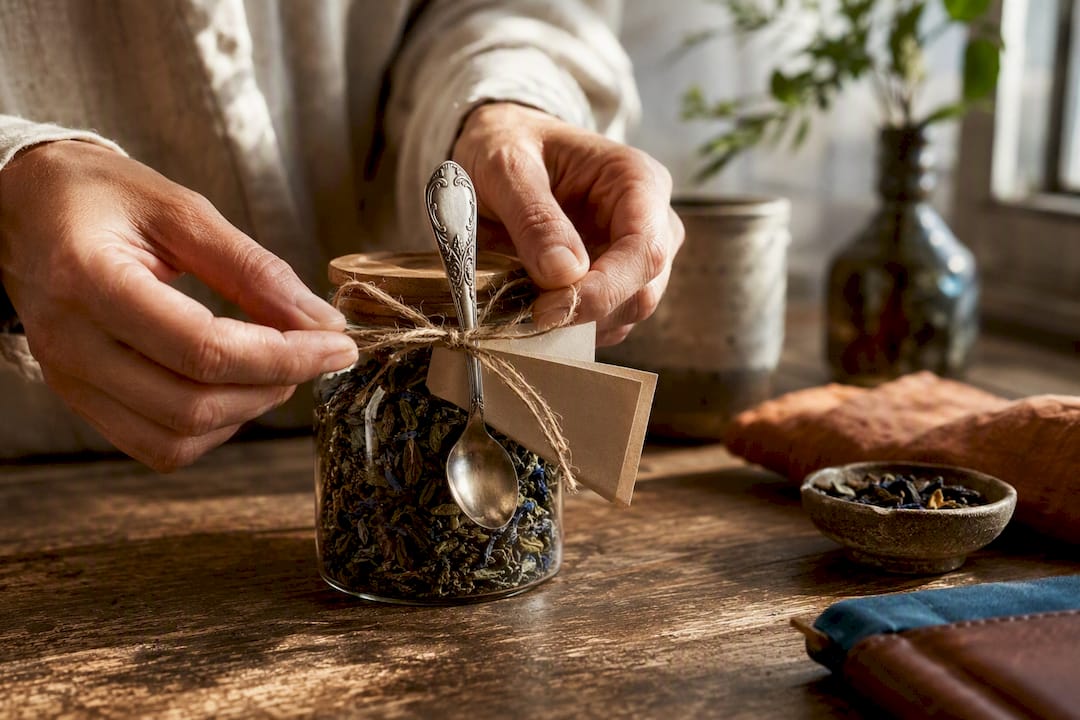
Pairings add perceived value fast. A jar of local honey, a small tin of shortbread, or a linen tea towel next to a sampler makes the whole package feel curated rather than thrown together.
Perceived value jumps more from thoughtful pairing than from spending more money. A $20 sampler with a $5 jar of honey and a handwritten note often reads as more generous than a $30 sampler alone.
For occasion-specific presentation: holiday gifts do well in a tin with a ribbon, thank-you gifts work better understated in simple kraft packaging, and teacher appreciation gifts land well as small mason-jar samples that don’t require the teacher to store a large box at school.
Tea Gift Ideas by Budget: Under $25, Midrange, and Splurge
Budget determines format more than it determines quality. Here’s roughly what each tier can realistically deliver.
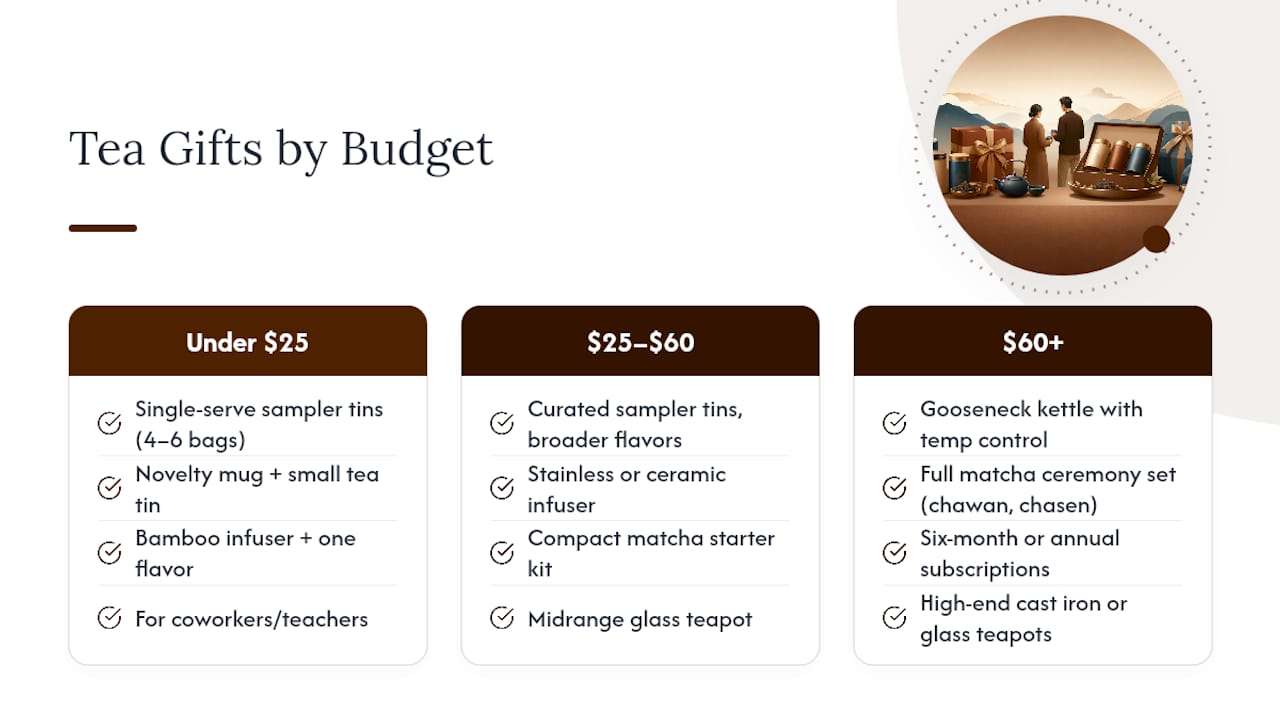
Under $25: Look at single-serve sampler tins with four to six tea bags or loose-leaf pouches, a novelty mug paired with a small tin of tea, or a simple bamboo infuser bundled with one flavor. This tier works well for coworkers, teachers, or acquaintance-level gifts where you want something thoughtful without overcommitting.
$25 to $60: This range covers curated sampler tins with a broader flavor range, a quality stainless steel or ceramic infuser, a compact matcha starter kit, or a midrange glass teapot. Expect better packaging at this level and enough tea quantity that the recipient can actually settle into a routine rather than run out after a week.
Splurge ($60 and up): Premium gooseneck kettles with temperature control, full matcha ceremony sets with a proper chawan and chasen, six-month or annual subscriptions, and high-end cast iron or glass teapots all live here. This tier makes sense for a partner, a parent, or someone whose tea habit has clearly moved past casual interest.
Across all three tiers, packaging quality tends to track with price. Expect simpler packaging under $25, gift-ready tins in the midrange, and boxed presentation with a certificate of origin or tasting card at the splurge level.
How The J Coffee Collection Curates Tea Gifts
Curation starts with sourcing. Some sellers focus on single-origin selections and naturally flavored options, applying flavor profiling used across their coffee lineup to their tea offerings. That means a gift sampler isn’t just a random assortment. It’s built around teas that pair well together in aroma and intensity, so the recipient gets a coherent tasting experience rather than four unrelated flavors competing with each other.
A gift-ready configuration may pair a small curated sampler with a complementary add-on, such as honey, jam, or a simple accessory, following the logic that pairing raises perceived value more than spending more on tea alone. If you’re building your own version of this from the tea collection, start with two contrasting flavor profiles (one bold, one delicate) and one pairing item, and you’ll land close to what a professionally curated sampler delivers.
Shipping and Delivery Timing for Tea Gifts
Standard shipping on tea gifts typically runs three to seven business days for domestic orders, though exact timing depends on the seller and your location. If you’re ordering for a specific date, a birthday, a holiday, a graduation, build in a buffer of at least two extra days beyond the seller’s stated delivery window. Carriers slow down significantly in the two weeks before major holidays, and tea sellers see the same seasonal crunch as everyone else in gift retail.
Expedited or rush shipping is worth the extra cost when you’re ordering within a week of the date you need it. Most specialty sellers offer this as a checkout option rather than a guarantee, so read the fine print before assuming a faster shipping tier locks in an exact arrival day.
Packaging matters for shipping durability, too. Loose-leaf tea in a sealed tin travels better than tea in a flimsy bag, and glass teaware needs enough padding that it survives a multi-day transit without the box getting tossed around a sorting facility. If a listing doesn’t specify how fragile items are packed, it’s reasonable to ask before you buy, especially for glass teapots or ceramic matcha bowls being shipped any real distance.
One more practical note: confirm whether the seller ships directly to the recipient or only to your own address. Some gift-focused sellers offer direct-to-recipient shipping with a gift message included, which saves you the extra step of repackaging and mailing it yourself.
What a Tea Gift Really Costs: Shipping and Add-Ons Included
The listed price on a tea sampler or teaware set rarely reflects the full cost once you add shipping, gift wrap, and any personalization. A $25 sampler can easily cost more after adding shipping fees, and that’s before you add a gift box upgrade or an engraved accessory.
Here’s a rough breakdown of what to expect:
Free shipping thresholds are worth watching for. Many specialty sellers waive shipping fees once your order crosses a set dollar amount, which can make it cheaper to add a small $8 accessory than to pay a flat shipping charge on a smaller order. Gift wrap is usually the easiest cost to control since it’s almost always optional at checkout, while personalization fees vary the most depending on whether it’s a simple sticker label or an actual engraving service. If you’re assembling your own presentation instead of paying for the seller’s gift wrap, a mason jar and ribbon from a craft store often costs less than $5 total and looks just as considered.
Choosing Tea Gifts by Age and Experience Level
A recipient’s age tells you less than their actual tea experience does, but the two often correlate enough to be a useful starting point. Someone in their twenties or thirties who’s newer to specialty tea usually responds well to approachable, well-labeled samplers with tasting notes included, since the barrier to entry is understanding what they’re even drinking. Older recipients who’ve been steeping loose leaf for decades tend to want either something they can’t easily find themselves (a rare single-origin harvest) or an upgrade to their existing brewing setup.
For a true beginner of any age, skip the specialty teaware entirely and lead with tea itself. A confusing gooseneck kettle handed to someone who’s never brewed loose leaf is a gift they’ll admire and then never use. Start them with a simple infuser mug and a small sampler instead.
For an intermediate drinker, someone who already has a favorite tea shop or a go-to blend, the move is introducing something adjacent to what they already like: a new origin of a tea type they already drink, or a teaware upgrade that improves a ritual they’ve already established.
For the serious enthusiast, specificity wins. A single-origin harvest tea with a documented origin and harvest date reads as far more thoughtful than a general “assorted greens” tin, because it signals you understood their taste well enough to get specific.
Verifying Tea Quality Before You Buy
Quality verification starts with information the seller either provides or doesn’t. A trustworthy listing states the tea’s origin region and harvest date, since both directly affect flavor and freshness. If a product page gives you nothing more than a flavor name and a price, that’s a sign to look elsewhere or at least ask the seller directly before buying.
Leaf appearance is a second signal, even from a photo. Whole or large-leaf tea generally holds flavor and aroma longer than heavily broken leaf or dust, which is part of why loose-leaf outperforms standard bagged tea on sensory quality. If product photos show intact, uniform leaves rather than a fine powder, that’s a reasonable indicator of better sourcing.
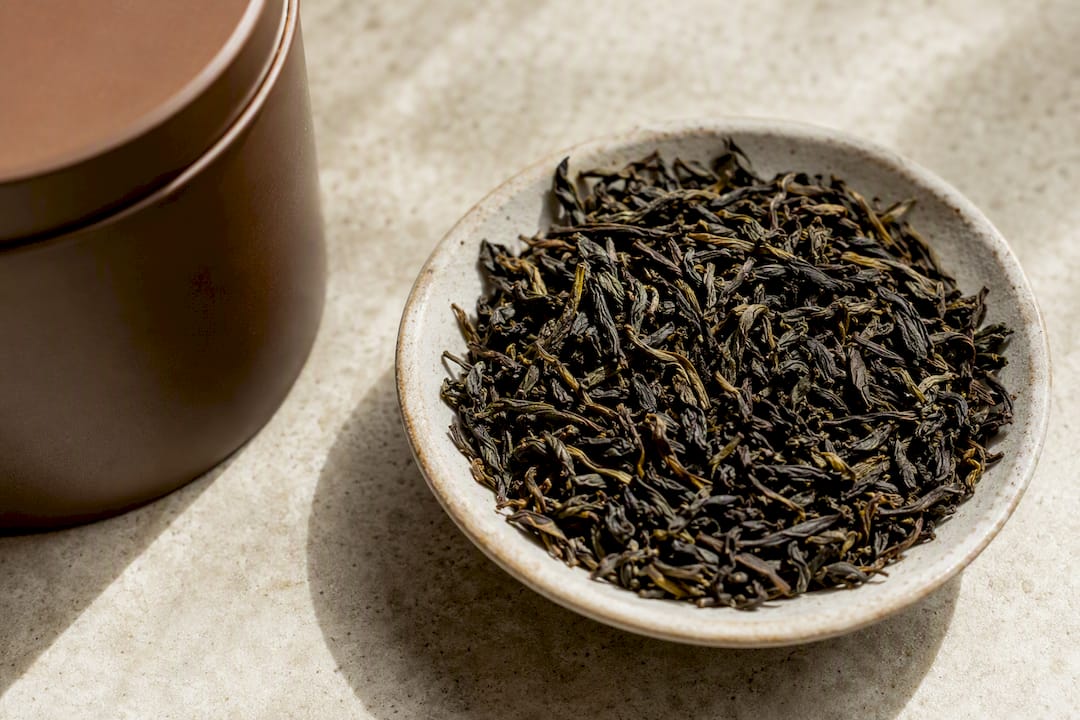
Packaging tells you something too. Tea sold in an airtight, light-blocking tin or pouch protects freshness far better than a clear plastic bag left exposed on a shelf. If you’re buying from a seller you haven’t used before, check for a stated shelf life or “best by” date, and don’t hesitate to reach out and ask directly if that information isn’t listed. A seller confident in their sourcing will usually answer quickly and specifically rather than deflecting with vague assurances.
Editor Perspective: Curation Beats the Brand Name
The best tea gift I’ve seen given wasn’t expensive. It was a mason jar of loose oolong with a handwritten steeping note taped to the lid, no fancy label, no brand name anyone would recognize. It worked because the giver thought about how the recipient actually drinks tea, not what looked impressive at checkout.
That’s the real lesson buried in all these categories and budgets: match the ritual, not your own taste. A gooseneck kettle means nothing to someone who microwaves water. A blooming tea ball is wasted on someone who’s never brewed loose leaf.
Pick one bucket from this guide, sampler, teaware, kit, or accessory, and commit to it fully rather than splitting your budget across three half-hearted ideas.
— jonathan
Grab a Ready-Made Sampler From The J Coffee Collection
If you’d rather skip the assembly and go straight to something curated, the flavored coffee sample pack shows exactly the kind of gift-ready format this guide has been describing: multiple profiles in one box, built for someone who wants variety without committing to a single flavor upfront.
Some sellers source single-origin selections and naturally flavored options with curation principles that pair flavor profiles to achieve a coherent tasting experience rather than a random assortment. For tea drinkers who also lean toward specialty coffee, the single-origin coffee guide is worth a look, and for anyone shopping for a health-conscious recipient, the mushroom coffee blend covers a gift niche standard tea samplers can’t touch. Sample sizes ship in standard packaging with typical delivery windows of three to seven business days domestically, so order with enough buffer if you’re targeting a specific date. Head to the sample pack page now and pick the flavor combination that fits your recipient best.
Sources
For more presentation and pairing inspiration, Food & Wine’s tea lover gift roundup covers editor-tested picks across price points. To understand what separates quality loose-leaf from mediocre stock, the Tea Trolley buyer’s guide breaks down origin and freshness signals. For novelty options beyond the standard sampler, Uncommon Goods’ tea gift collection offers a wide idea bank worth browsing.
- The 26 Best Gifts for Tea Lovers
- Loose Leaf Tea Buyer’s Guide: How to Choose & Buy the Best Tea | The Tea Trolley
- 225 Tea Gift Ideas 2026 - Uncommon Goods