

What Is Flash Brew Coffee? Method, Flavor, and Tips
Flash brew coffee is defined as hot coffee brewed directly onto ice, chilling instantly to lock in bright aromatics and vivid acidity. Also called Japanese iced coffee, this method produces a fully extracted iced cup in 3–5 minutes rather than the 12–24 hours required for cold brew. The rapid chill stops extraction at its peak, preserving volatile flavor compounds that evaporate during slow cold steeping. If you have ever wondered what is flash brew coffee and why specialty cafés favor it for single-origin beans, the answer lives in that instant temperature drop.
What is the flash brew coffee method?
Flash brew is a distinct brewing method, not a shortcut version of cold brew. Hot water at 195–205°F passes through ground coffee exactly as it would in a standard pour-over, but the brewed liquid falls directly onto a bed of ice sitting in the carafe below. The ice chills the coffee in seconds, before delicate aromatic compounds have a chance to evaporate or degrade.
The ratio that makes this work is 40% ice and 60% hot water by total liquid volume. You are essentially brewing a concentrated coffee that the melting ice dilutes to the correct strength. Get that split wrong and you end up with either watery coffee or an overpowering concentrate.

Grind size matters more here than in a standard pour-over. Because less hot water contacts the grounds, a slightly finer grind compensates for the reduced extraction time and prevents a thin, sour cup. Think one or two clicks finer on a burr grinder than your usual pour-over setting.
Key variables to control in the flash brew coffee method:
- Water temperature: 195–205°F for full extraction of acids and aromatics
- Coffee-to-liquid ratio: 1:15 to 1:17 (coffee to total liquid, including ice weight)
- Ice volume: 40% of total liquid weight placed in the carafe before brewing
- Grind size: Slightly finer than standard pour-over to compensate for less hot water
- Brew time: 3–5 minutes total, matching a typical pour-over pace
Pro Tip: Weigh your ice before brewing. Ice is water, and treating it as part of your total water volume is the single most reliable way to hit the right strength every time.
What are the flavor benefits of flash brew vs. cold brew?
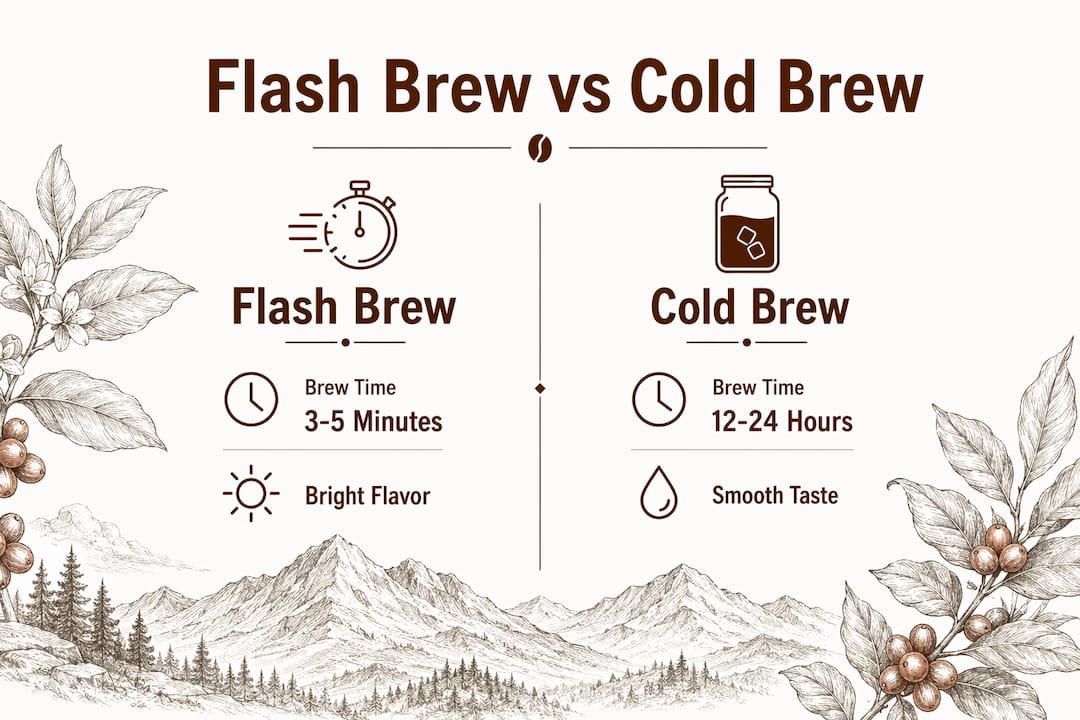
The flavor difference between flash brew and cold brew is not subtle. Cold brew steeps grounds in room-temperature or cold water for 12–24 hours, which extracts heavier, chocolatey, low-acid compounds while leaving brighter volatile notes behind. Flash brew does the opposite. Hot water extraction followed by instant chilling locks in floral, citric, and juicy flavor notes that cold brew never captures.
The science is straightforward. Heat dissolves aromatic compounds quickly and efficiently. The instant ice contact stops those compounds from evaporating, which is exactly what happens when hot coffee sits on a counter and “cooks off” its top notes. Pouring hot coffee directly onto ice prevents that evaporation and preserves flavor brightness that cold brew methods lose entirely.
“Flash brew is the closest cold version of a hot pour-over. It retains the bean’s original flavor profile rather than transforming it into something heavier and more uniform.” — Tetsu Kasuya, 2016 World Brewers Cup champion
This is why flash brew is the preferred method for single-origin coffees. A washed Ethiopian Yirgacheffe, for example, carries jasmine and bergamot notes that cold brew buries under chocolate and malt. Flash brew keeps those notes front and center. Understanding how processing affects flavor helps you predict which beans will shine brightest with this method.
| Characteristic | Flash brew | Cold brew |
|---|---|---|
| Brew time | 3–5 minutes | 12–24 hours |
| Flavor profile | Bright, floral, acidic | Heavy, chocolatey, low-acid |
| Best for | Single-origin, light roasts | Blends, dark roasts |
| Serving readiness | Immediate | Requires refrigeration overnight |
| Volatile aromatics | Preserved | Largely lost |
Pro Tip: Use a light or medium roast for flash brew. Dark roasts can turn bitter when brewed hot and chilled fast because their roast-driven compounds extract aggressively at high temperatures.
How to make flash brew coffee at home
Making flash brew at home requires no special equipment beyond what most pour-over drinkers already own. Any pour-over device works well, including the V60, Chemex, Kalita Wave, and AeroPress. The key is placing your carafe or server on a scale so you can track both ice weight and brewed liquid weight in real time.
Follow these steps for a reliable flash brew coffee recipe:
- Set your total brew weight. Decide on your final cup size. A 300g total brew means 120g of ice (40%) and 180g of hot water (60%).
- Grind your coffee. Use a 1:15 ratio of coffee to total liquid. For 300g total, grind 20g of coffee one or two clicks finer than your standard pour-over setting.
- Place ice in the carafe. Add your weighed ice to the server or carafe before you start brewing. Set the pour-over device on top.
- Bloom the grounds. Pour twice the weight of coffee in hot water (40g for 20g of coffee) and wait 30–45 seconds. This releases CO2 and prepares the grounds for even extraction.
- Pour in steady, circular passes. Add the remaining hot water in slow, controlled pours over 2–3 minutes. Aim for the center and spiral outward to wet all grounds evenly.
- Swirl the carafe. Once brewing finishes, swirl the carafe to dissolve any remaining ice and mix the brew to a uniform temperature.
- Serve immediately. Flash brew is ready the moment brewing ends. Pour over fresh ice if you prefer a colder drink, or serve as-is.
The most common mistake beginners make is pouring too fast. A rushed pour melts ice unevenly and dilutes the brew before extraction completes. Slow, intentional pours give you control over both extraction and dilution at the same time.
Pro Tip: If your flash brew tastes sour or thin, grind finer and slow your pour. Both adjustments increase extraction and fix the most common flash brew problems in one step.
Variations and creative uses of flash brew
Flash brew is a flexible method, and small adjustments produce noticeably different results. Shifting the ice ratio from 40% to 45% gives you a lighter, more refreshing cup. Dropping it to 35% produces a stronger, more concentrated brew that holds up well over a full glass of fresh ice.
The AeroPress works particularly well for flash brew when you want a single, espresso-strength shot chilled instantly. Brew directly into a glass filled with ice, then dilute with cold water to taste. The pressure-assisted extraction pulls flavor fast and pairs well with the immediate chill.
Creative uses and variations worth trying:
- Citrus infusion: Add a strip of orange or lemon peel to the carafe with the ice. The cold extraction pulls subtle citrus oils into the finished brew.
- Spiced flash brew: Place a cinnamon stick or two cardamom pods in the carafe before brewing. The heat of the coffee blooms the spices as it passes through.
- Flash brew tonic: Pour finished flash brew over tonic water and ice for a bright, effervescent coffee drink.
- Milk pairing: Flash brew pairs cleanly with oat milk or whole milk because its acidity cuts through fat without tasting harsh.
Storage is straightforward. Flash brew keeps in the refrigerator for up to 24 hours without significant flavor loss, though it tastes best within the first few hours. Unlike cold brew concentrate, it does not need dilution before drinking. Exploring home brewing blends can help you find the right coffee for each variation.
Key Takeaways
Flash brew coffee produces a brighter, more aromatic iced cup than cold brew because hot extraction followed by instant chilling locks in volatile flavor compounds that slow steeping destroys.
| Point | Details |
|---|---|
| Core definition | Flash brew brews hot coffee directly onto ice, chilling it in seconds rather than hours. |
| Critical ratio | Use 40% ice and 60% hot water by total liquid weight for balanced strength and dilution. |
| Grind adjustment | Grind slightly finer than standard pour-over to compensate for less hot water volume. |
| Flavor advantage | Flash brew preserves floral, citric, and acidic notes that cold brew loses during long steeping. |
| Best bean choice | Light and medium roast single-origin coffees show the most dramatic flavor improvement with this method. |
Why flash brew changed how I think about iced coffee
I spent years defaulting to cold brew because it felt foolproof. Make a big batch on Sunday, refrigerate it, and you have coffee for the week. That convenience is real, but it comes at a cost I stopped accepting once I tasted a properly made flash brew with a washed Kenyan coffee.
The floral and blackcurrant notes in that cup were completely absent from every cold brew I had made with the same beans. That moment made me realize cold brew was not just a different method. It was actively erasing part of the coffee I had paid good money for. Flash brew felt like hearing the full song instead of a muffled recording.
The beginner mistake I see most often is treating flash brew like a faster cold brew. It is not. The grind, the ratio, and the pour technique all require attention. Rushing any one of those steps produces a flat, watery cup that makes people give up on the method entirely. Slow down, weigh everything, and swirl the carafe at the end. Those three habits fix most problems before they start.
If you want to understand your coffee at a deeper level, flash brew is the most direct path. It shows you what a bean actually tastes like, without the transformation that cold brewing imposes. Start with a light roast single-origin and compare it side by side with a cold brew made from the same coffee. The difference will convince you faster than any explanation.
— jonathan
The right beans make all the difference in flash brew
Flash brew rewards quality coffee more than almost any other method. Because it preserves the bean’s original flavor profile, a mediocre coffee tastes mediocre and a great one tastes exceptional.
Thejcoffeecollection carries a curated range of single-origin coffees sourced specifically for their distinct flavor profiles, including light and medium roasts that perform beautifully in flash brew. The Single Origin Favorites Sample Pack lets you brew the same flash brew recipe across six different origins and taste exactly how much the bean changes the cup. For coffee drinkers who want to experiment with naturally flavored options, the Flavored Coffee Sample Pack adds a creative dimension to flash brew without artificial additives. Thejcoffeecollection makes it easy to find the right coffee for the method you are mastering.
FAQ
What is flash brew coffee in simple terms?
Flash brew coffee is hot coffee brewed directly onto ice so it chills instantly. The process takes 3–5 minutes and produces a bright, aromatic iced coffee without the long wait of cold brew.
Is flash brew coffee the same as Japanese iced coffee?
Yes. Flash brew and Japanese iced coffee refer to the same method. The technique originated in Japan and is widely recognized in specialty coffee as a pour-over brewed over ice.
Is flash brew coffee stronger than cold brew?
Flash brew is not necessarily stronger, but it tastes more intense because it preserves bright acids and aromatics. Cold brew often has higher caffeine concentration due to its long steep time and typical concentrate format.
What is the best grind size for flash brew?
Use a grind one or two steps finer than your standard pour-over setting. The finer grind compensates for the reduced hot water volume and prevents a thin or sour extraction.
Can you make flash brew with any pour-over device?
Any pour-over brewer works, including the V60, Chemex, Kalita Wave, and AeroPress. Place the brewer over an ice-filled carafe and brew as normal, keeping the 40% ice to 60% hot water ratio consistent.