

250–1,500 mg Per Serving: What Mushroom Coffee Ingredients Mean
Mushroom coffee is coffee, usually instant, blended with powdered extracts of medicinal mushrooms like lion’s mane, reishi, cordyceps, or chaga, plus occasional add-ins like MCT powder or cocoa. The mushroom portion is there for functional reasons (focus, calm, energy) rather than flavor, and it typically runs in a range of milligrams per serving without specifying an exact amount. Most blends taste closer to regular coffee than you’d expect, with an earthy edge underneath.
TL;DR:
- Most mushroom coffee blends contain between 250 and 1,500 milligrams of mushroom extract per serving, with higher doses offering a more earthy flavor and potentially stronger effects.
- The most common mushrooms used are lion’s mane for focus, reishi for stress relief, cordyceps for energy, and chaga for antioxidants, but human research on their benefits remains limited.
- Consumers should look for products with specific species names, clear extraction methods, and third-party contaminant testing to ensure quality and potency.
- Mushroom coffee generally has half the caffeine of regular coffee, as the mushroom extract is caffeine-free and typically mixed at a 1:1 ratio with coffee.
- People on prescription medications or with health concerns should consult a healthcare professional before regularly consuming mushroom coffee due to possible drug interactions and contamination risks.
Table of Contents
- Mushroom Coffee Ingredients: What’s on the Label
- The Mushroom Species You’ll Actually See in These Blends
- Fruiting Body, Mycelium, or Full-Spectrum: What the Label Terms Mean
- How Much Caffeine Is Actually in a Cup?
- Safety, Interactions, and When to Talk to a Doctor
- How to Choose a Quality Mushroom Coffee Blend
- Try Thejcoffeecollection’s Mushroom Coffee Lineup
- Sources
- FAQ
Mushroom Coffee Ingredients: What’s on the Label
Read the ingredient panel on any commercial bag and the structure is usually the same. A soluble coffee base carries one or more mushroom extract powders, sometimes stacked with a few functional extras.
- Coffee base: Most blends use instant soluble coffee rather than whole roasted beans, since it dissolves cleanly with the mushroom powder.
- Mushroom extract powder: Either a single species or a house blend, standardized to some degree, making up the “functional” half of the product.
- Fillers and carriers: Some cheaper products bulk up extract powder with starches or maltodextrin, which is worth checking for.
- Add-ins: MCT powder for a creamier mouthfeel, cocoa for flavor, natural sweeteners, non-dairy creamer bases, or additional adaptogenic herbs like ashwagandha.
Commercial products generally pack somewhere between 250 milligrams and 1,500 milligrams of mushroom extract per serving, and that range matters. A blend near the low end will taste almost exactly like regular coffee. One near the high end carries more of the mushroom’s earthy, slightly bitter undertone, and arguably more of whatever effect you’re after.
The Mushroom Species You’ll Actually See in These Blends
Not every mushroom shows up in coffee for the same reason. Each species carries its own marketing story, and it’s worth knowing which claims have some human research behind them and which are still mostly lab work.
- Lion’s mane is the one most associated with focus and memory support, and it’s the species most likely to show up in a “morning” or “focus” blend.
- Reishi gets marketed for stress and sleep, often positioned as an evening or wind-down mushroom rather than a morning one, which is a little ironic given it’s still sold in coffee.
- Cordyceps is the energy and endurance pick, frequently paired with caffeine on the theory that it supports stamina during exercise.
- Chaga trades on antioxidant and immune-support claims, and its dark, almost cocoa-like appearance makes it a popular pick for richer-tasting blends.
- Turkey tail, shiitake, maitake, and king trumpet show up less often solo but appear in multi-mushroom formulas aimed at general wellness rather than one specific benefit.
Here’s the catch worth sitting with: most clinical research on these species is preliminary, and a good share of it comes from lab or animal studies rather than people drinking coffee. Human research specifically on mushroom coffee itself is limited, even though the mushrooms themselves have been studied individually. Some human trials on medicinal mushroom extracts do exist and are indexed on PubMed, covering cognitive and immune outcomes, but doses and results vary widely from study to study. That gap between “studied mushroom” and “studied cup of coffee” is one most product labels don’t mention.
Fruiting Body, Mycelium, or Full-Spectrum: What the Label Terms Mean
Three terms decide a lot about what you’re actually drinking, and most shoppers have never heard any of them explained plainly.
- Fruiting body refers to the visible part of the mushroom, the part you’d recognize on a forest floor, and it’s generally considered the more concentrated source of the compounds people are after.
- Mycelium is the root-like network the mushroom grows from, often grown on grain, which is cheaper to produce but can carry more starch filler unless it’s cleanly separated.
- Full-spectrum products blend both parts intentionally, on the idea that combining them broadens the range of bioactive compounds in the final powder.
Extraction method matters just as much as the plant part. Dual-extracted products use both hot water and alcohol to pull out a wider range of compounds than a single hot-water extraction alone. Quality brands also standardize for beta-glucan or polysaccharide content, a number that tells you something concrete rather than just “mushroom powder included.”
Pro Tip: Skip any product that lists “mushroom powder” with no species name and no extraction method. That vagueness usually means a cheaper, less concentrated ingredient than the packaging implies.
How Much Caffeine Is Actually in a Cup?
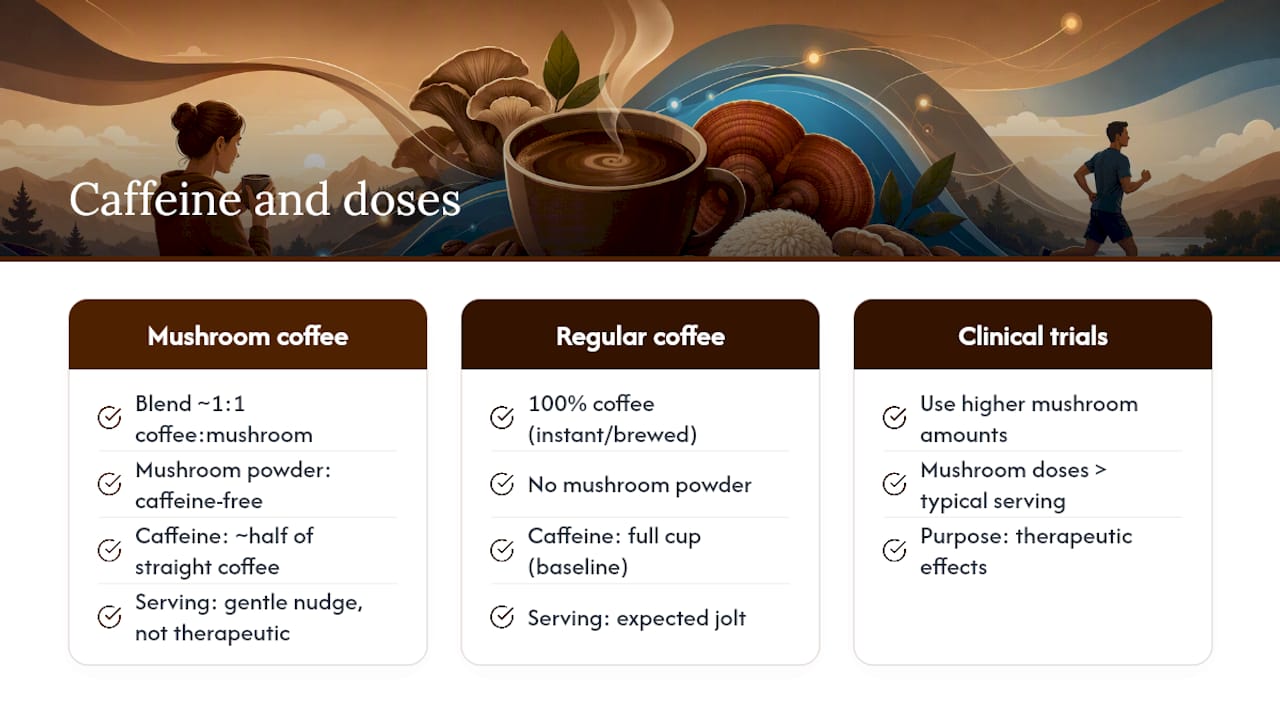
Mushroom coffee generally runs about half the caffeine of a regular cup, and the math behind that is simple. Mushroom powder itself is caffeine-free, and most commercial blends mix it with coffee at roughly a 1:1 ratio, which cuts the total caffeine load nearly in half compared to a straight cup of instant or brewed coffee.
That’s worth knowing if you’re switching from regular coffee expecting the same jolt. It’s also worth comparing the mushroom milligrams per serving against research doses. Clinical trials on medicinal mushrooms often use amounts higher than what a typical serving of mushroom coffee provides, so a single morning cup is closer to a gentle nudge than a therapeutic dose.
Safety, Interactions, and When to Talk to a Doctor
Mushroom coffee is generally well tolerated, but it isn’t automatically risk-free just because it’s marketed as natural. A few specific concerns deserve attention before you make it a daily habit.
- Medication interactions: Mushroom extracts can interact with immunosuppressants, blood thinners, and diabetes medications, so anyone on prescription drugs should check with a clinician first.
- Contaminant risk: Mushrooms can absorb heavy metals from the substrate they’re grown in, and controlled indoor cultivation paired with third-party contaminant testing is the main safeguard against that.
- Digestive sensitivity and allergies: Some people notice mild stomach upset when starting mushroom extracts, and anyone with a known mushroom allergy should avoid them entirely.
- Oxalate content: Certain mushroom species carry oxalates, which is a minor consideration for anyone with a history of kidney stones.
None of this means mushroom coffee is dangerous for most healthy adults. It does mean anyone managing a chronic condition, pregnant, or on regular prescription medication should treat it the way they’d treat any new supplement: check with a doctor before making it a daily habit.
How to Choose a Quality Mushroom Coffee Blend
Reading a label the right way separates a genuinely functional product from a coffee bag with a marketing sticker on it.
- Check for named species. “Mushroom extract” with no species listed is a red flag; you want lion’s mane, reishi, cordyceps, or chaga called out specifically.
- Look for extract type. Fruiting body, mycelium, or full-spectrum should be disclosed, along with standardization figures like beta-glucan percentage where available.
- Compare mg per serving. A “booster” dose in the low hundreds of milligrams is fine for taste-first drinkers, but anyone chasing a specific effect should look for servings closer to the upper end of the typical range.
- Confirm testing. Labels that disclose testing for heavy metals and contaminants signal a brand that takes sourcing seriously.
- Weigh the coffee base. If flavor matters to you as much as function, prioritize the coffee quality first, since a great mushroom dose in a mediocre cup still tastes like a mediocre cup.
Pro Tip: If you’re pairing mushroom coffee with MCT or another fat source, that combination can improve absorption of some compounds, similar to the logic behind pairing turmeric with fat and black pepper for better uptake.
Try Thejcoffeecollection’s Mushroom Coffee Lineup
Most mushroom coffee shopping comes down to trust: does the bag actually tell you what species, what extract type, and what dose you’re getting? Some brands build their mushroom coffee line around that standard, pairing named mushroom species like lion’s mane and cordyceps with a coffee base that’s freshly roasted rather than sitting on a warehouse shelf for months.
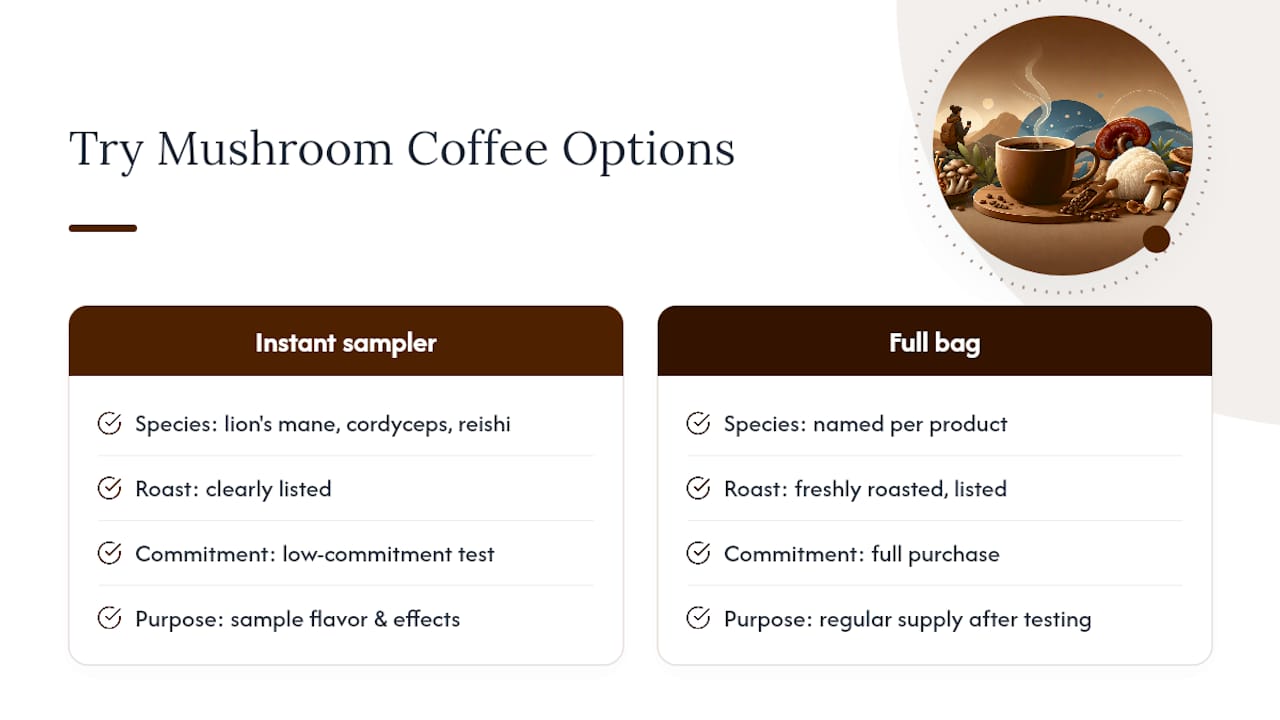
The Mushroom Coffee collection lists species and roast profiles clearly on every product page, so you’re never guessing what’s in the bag. If you’d rather test a few styles before committing to a full bag, the instant mushroom coffee with lion’s mane, cordyceps, and reishi is a low-commitment way to see how the flavor and effects sit with your routine. Start there, compare it against your usual cup, and decide from a real taste test rather than a label promise.
This article is general information, not a substitute for advice from a qualified doctor. Consult a qualified healthcare professional about your own circumstances before acting on anything here.
Sources
Thejcoffeecollection builds its mushroom coffee around the same criteria this guide just walked through: named species, a genuinely good coffee base, and clear ingredient disclosure rather than a vague “proprietary blend.” Readers who want the specifics can check the mushroom coffee medium roast product page or the brand’s blog coverage on caffeine and safety for a deeper look.
— jonathan
- What to know about mushroom coffee (Harvard Health)
- Mushroom Coffee: What It Is, Benefits, and Downsides (Healthline)
- What Is Mushroom Coffee? Ingredients and Effects — Coffee Studies
- Mushroom coffee health benefits (WebMD)
FAQ
Is Mushroom Coffee Actually Healthy?
It can be a reasonable addition to a healthy diet, but it’s not a cure or a proven treatment for any condition. The mushroom species used carry some promising early research, though most human studies on mushroom coffee specifically are still limited.
What Medications Cannot Be Taken With Mushroom Coffee?
People taking immunosuppressants, blood thinners, or diabetes medications should talk to a clinician before drinking mushroom coffee regularly, since certain mushroom compounds can interact with how those drugs work. This matters most for daily, ongoing use rather than an occasional cup.
What Is the Downside to Mushroom Coffee?
The main downsides are lower caffeine than expected, a real risk of vague or low-quality “mushroom powder” labeling, and mushroom doses that often fall short of amounts used in clinical research. Contaminant risk from poorly sourced mushrooms is another concern worth checking labels for.
Which Mushroom Coffee Is the Healthiest?
The healthiest option is the one with named mushroom species, disclosed extract type, and third-party testing for contaminants rather than any single “best” species. Products from Thejcoffeecollection’s mushroom coffee line are built around that same transparency standard, listing species and roast details directly on each product page.