

Cordyceps Mushroom Coffee Explained: What Science Confirms
Cordyceps mushroom coffee is regular coffee blended with extracts of Cordyceps militaris, and the science splits cleanly into two camps: what’s measurable in a lab and what’s proven in a person. Laboratory analyses confirm real, quantifiable changes when Cordyceps militaris joins the brew, including detectable cordycepin, β-glucans, and boosted mineral content. What’s missing is the human clinical evidence to back the endurance and immune claims splashed across product labels.
A compositional study analyzing coffee brewed with Cordyceps militaris found measurable increases in specific bioelements and phenolic acids compared to plain coffee. That’s a real chemistry story. It is not, on its own, a health outcomes story, and Harvard Health Publishing makes that distinction plainly: interesting compounds do not equal proven human clinical benefit.
Here’s what actually shows up in the cup:
- Measurable cordycepin and β-glucan content, depending on extract type and brewing method
- Higher levels of certain minerals (magnesium, zinc, copper, sodium, potassium, calcium) in coffee brewed with C. militaris
- A flavor most people describe as nuttier or earthier than straight coffee
- Caffeine levels that often run lower than a standard cup, since mushroom extract typically displaces some coffee volume
Quick fact: Adding C. militaris to brewed coffee raised 4-feruloylquinic acid by 18.6 mg per 200 mL and 3,5-di-caffeoylquinic acid by 3.76 mg per 200 mL compared to control coffee, a measurable but modest shift in antioxidant compounds.
Key Takeaways
Cordyceps mushroom coffee delivers measurable bioactive compounds and mineral increases in lab analyses, but no robust human trial yet confirms the endurance, energy, or immune claims attached to it.
| Point | Details |
|---|---|
| Species matters | Nearly all products use cultivated Cordyceps militaris, not the rare, costly wild C. sinensis. |
| Chemistry is confirmed, biology isn’t | Labs measure real increases in cordycepin, β-glucans, and minerals; human outcome trials are still missing. |
| Brewing method changes yield | Traditionally brewed ground coffee extracted more bioactive compounds than instant or machine-brewed samples in lab testing. |
| Check for safety flags | Kidney conditions, blood thinners, immunosuppressants, and antidiabetic medications all warrant a doctor’s input first. |
| Start small and transparent | Thejcoffeecollection’s instant and roast-specific mushroom blends name the species and roast clearly, matching the quality checklist this guide recommends. |
Table of Contents
- What Is Cordyceps Mushroom Coffee, Exactly?
- Which Bioactive Compounds Actually Do Something?
- Does Cordyceps Coffee Actually Work? What the Research Shows
- Does Brewing Method Change How Much You Actually Get?
- Is Cordyceps Coffee Safe? Side Effects to Know
- How to Try Cordyceps Coffee Without Wasting Money or Guessing
- How The J Coffee Collection Sources Its Mushroom Coffee
- What the Research Actually Supports, and What It Doesn’t
- Ready to Try It? Start With One Cup
- Frequently Asked Questions
- Sources
What Is Cordyceps Mushroom Coffee, Exactly?
The category name is a little misleading, because “cordyceps” covers more than one organism. There are over 400 recognized Cordyceps species, but the one you’ll find in your coffee bag is almost always Cordyceps militaris, not the wild Cordyceps sinensis that shows up in traditional Himalayan medicine markets. Wild C. sinensis is harvested from infected caterpillar larvae at high altitude, which makes it scarce and extraordinarily expensive. Cultivated C. militaris, grown on grain substrate in controlled facilities, delivers a comparable bioactive profile at a fraction of the cost, which is why nearly every commercial mushroom coffee on shelves today relies on it.
Product forms vary more than most shoppers realize. You’ll typically encounter:
- Instant mushroom coffee: freeze-dried coffee and mushroom extract powder, dissolves directly in hot water
- Ground coffee blends: mushroom powder mixed into roasted coffee grounds, brewed like a normal drip or pour-over
- Concentrated extracts: standalone tinctures or powders added to an existing cup of coffee
- Single-serve pods: pre-measured combinations designed for pod machines
The ingredient label tells you more than the marketing copy does. Look for whether the product uses fruiting body extract, mycelium extract, or a blend of both. Fruiting body extracts (the visible, mushroom-shaped part of the organism) tend to carry higher concentrations of cordycepin and β-glucans, while mycelium-based products, grown faster and cheaper on grain, sometimes deliver more residual starch than active compound. A reputable label will state the extraction ratio (something like a 10:1 concentrate) rather than just listing “cordyceps extract” with no specifics.
On taste: most people notice a subtle earthy or nutty undertone rather than anything mushroom-forward or off-putting. It reads more like a deeper roast note than a fungal flavor. Caffeine content depends heavily on the ratio of coffee to mushroom powder in the final product. Instant blends that stretch a smaller coffee base with mushroom filler often land 30 to 50 percent below a standard 95-milligram cup, though manufacturers rarely publish exact figures, so if caffeine dosing matters to you, check the label or contact the brand directly before assuming.
Which Bioactive Compounds Actually Do Something?
Four compound categories drive nearly every health claim attached to cordyceps mushroom coffee, and they don’t carry equal evidentiary weight.
Cordycepin gets the most attention, and for good reason. It’s a nucleoside analog unique to Cordyceps species, and laboratory research links it to improved ATP production and cellular energy pathways. ATP is the molecule your cells burn for fuel, so a compound that supports its production is a legitimately interesting research target. The catch: that link comes almost entirely from cellular and animal studies, not from trials measuring energy or endurance in people drinking mushroom coffee.
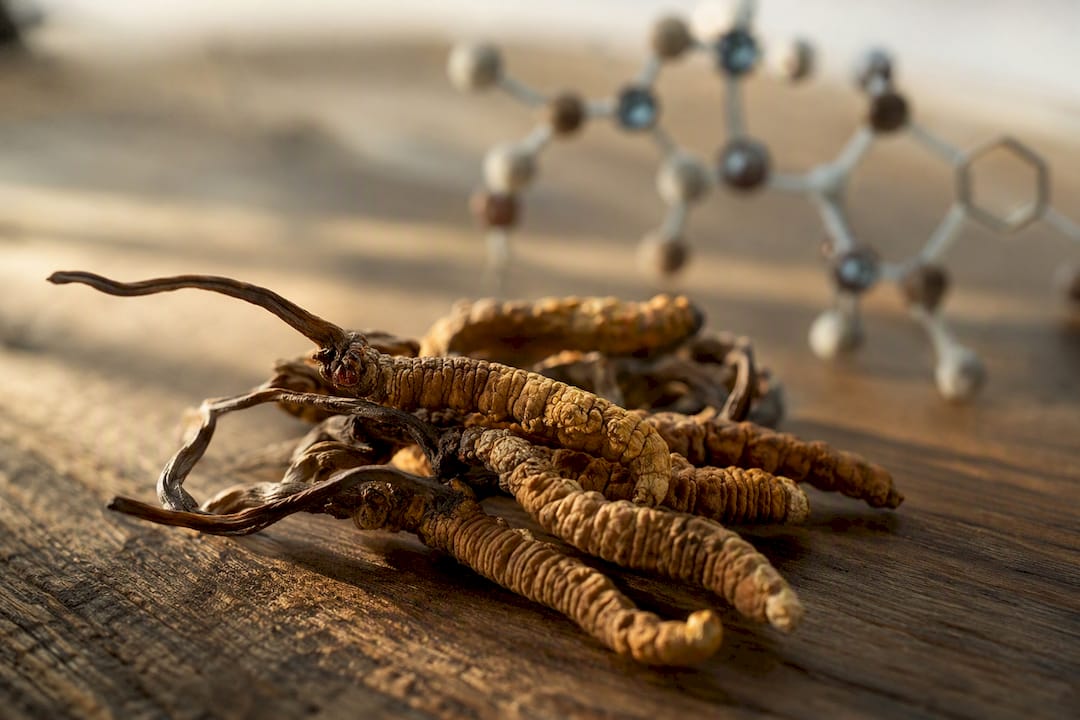
β-glucans are polysaccharides found in the cell walls of many fungi, and they’re studied for immune-modulating activity. A functional-coffee study measuring cordycepin and β-glucan content confirmed these compounds are present and quantifiable in cordyceps-coffee blends. Whether the concentration in a cup of coffee approaches what’s used in immune-focused research on whole mushrooms is a separate question, and one the current literature doesn’t fully answer.
Ergosterol (a fungal sterol, sometimes called provitamin D2) and trace amounts of lovastatin-like compounds show up in some Cordyceps analyses too, alongside a cluster of polyphenolic acids. The PMC compositional study specifically measured increases in 4-feruloylquinic acid and 3,5-di-caffeoylquinic acid when C. militaris was added to brewed coffee, both compounds with antioxidant activity in laboratory assays.
Mineral content changed too. The table below summarizes what that same compositional analysis found when comparing control coffee to coffee brewed with added C. militaris.
| Compound or Mineral | Change Observed With C. Militaris Added |
|---|---|
| 4-feruloylquinic acid | Increased by 18.6 mg per 200 mL |
| 3,5-di-caffeoylquinic acid | Increased by 3.76 mg per 200 mL |
| Magnesium (Mg) | Measurable increase versus control coffee |
| Zinc (Zn) | Measurable increase versus control coffee |
| Copper (Cu) | Measurable increase versus control coffee |
| Potassium (K), sodium (Na), calcium (Ca) | Measurable increase versus control coffee |
Those mineral increases are real and reproducible in the lab. What they mean nutritionally is more modest than it sounds: a boost in trace minerals from one cup of coffee is a minor contribution to your daily intake, not a substitute for dietary sources like leafy greens, nuts, or dairy. Treat the numbers as evidence the compound transfer is happening, not as a nutritional selling point on par with a multivitamin.
Does Cordyceps Coffee Actually Work? What the Research Shows
The honest answer is: the chemistry checks out, the health outcomes mostly don’t, at least not yet in humans drinking this specific beverage.
Compositional studies are consistent on one point: when C. militaris is brewed into coffee, measurable amounts of its bioactive compounds transfer into the liquid. The PMC study on coffee with Cordyceps militaris and Hericium erinaceus found traditionally brewed ground coffee with added C. militaris produced the highest yields of these bioactive substances among the preparation methods tested, ahead of instant and machine-brewed samples. That’s a genuine, replicable finding about chemistry, not physiology.
Where the evidence thins out is at the point where chemistry needs to become biology, in a real person, over real time. Claims about enhanced aerobic endurance, reduced fatigue, or immune modulation lean almost entirely on preclinical work: cell cultures, isolated compound assays, and animal models. None of that is worthless, it’s how most drug and supplement research starts, but it’s a long way from a controlled human trial measuring VO2 max or self-reported fatigue in people drinking cordyceps coffee daily for weeks.
The gap isn’t that cordyceps compounds do nothing. It’s that nobody has run the kind of controlled human trial that would confirm what a cup of this coffee actually does for your endurance, your immune markers, or your energy over time. Antioxidant potential and compositional shifts are measurable. Health outcomes in real drinkers are not.
Several methodological limits explain why the gap persists:
- Most existing data comes from in vitro (test tube) or animal models, which don’t reliably predict human dose response
- Product composition varies widely between brands, extraction ratios, and even batches, making it hard to compare “cordyceps coffee” as a single category
- Dosing is inconsistent across studies and products, so there’s no agreed-upon effective amount
- Almost no studies use clinical endpoints (measured health outcomes) specific to the beverage form; most measure the isolated compound instead
Harvard Health Publishing puts a fine point on it: robust human clinical trials on mushroom coffee specifically are lacking, and whole mushrooms may deliver clearer, more established nutritional value than a processed coffee blend. That’s not a dismissal of the ingredient. It’s a call for proportionate expectations. The fair summary sits somewhere in the middle: plausible mechanism, real measurable chemistry, unproven human benefit for most of the claims attached to the product category. If you’re drawn to cordyceps coffee for the taste, the ritual, or genuine curiosity about a functional beverage, that’s a reasonable reason to try it. If you’re expecting it to replace a training program or a proven supplement protocol, the current research doesn’t support that bar.
Does Brewing Method Change How Much You Actually Get?
Not all mushroom coffee delivers the same dose of active compound, and that comes down to extraction chemistry more than marketing.
Some bioactive compounds in Cordyceps militaris are water-soluble and reasonably heat-stable, meaning they transfer well during a standard hot brew. Others degrade under prolonged heat exposure or high-temperature roasting, which matters more for products where the mushroom is roasted alongside the coffee bean rather than added as a separate extract afterward.
The compositional study comparing brewing methods found real differences by preparation type:
- Traditionally brewed ground coffee with C. militaris added produced the highest measured levels of bioactive compounds among the methods tested.
- Machine-brewed coffee (drip or pod-based) delivered moderate levels, likely due to shorter contact time between water and grounds.
- Instant coffee blends showed the least extraction efficiency for several of the measured compounds, though convenience makes this format popular anyway.
For consumers, that translates into a practical choice: extract-based products, where a standardized cordycepin or β-glucan concentration is added directly, offer more predictable dosing than whole mushroom-powder blends, where the actual compound content depends on growing conditions, harvest timing, and processing that varies batch to batch.
Pro Tip: If you’re brewing a ground mushroom coffee blend rather than using an instant mix, extend your steep or contact time slightly beyond what you’d use for regular coffee. A French press or slow pour-over gives water more time in contact with the mushroom powder, which the research suggests helps pull more of the water-soluble compounds into the cup.

Is Cordyceps Coffee Safe? Side Effects to Know
For most healthy adults, cordyceps mushroom coffee causes no more trouble than a regular cup of coffee. The concerns that do exist are worth knowing before you commit to a daily habit.
Mild digestive upset is the most commonly reported side effect, including nausea, bloating, or an upset stomach, particularly when starting a new product or increasing intake quickly. UCLA Health’s guidance on mushroom coffee flags this as the most frequent complaint among people trying functional mushroom beverages for the first time.
A few groups carry added risk:
- People with kidney disease should be cautious, since some mushroom varieties (chaga in particular) carry high oxalate content that can stress kidney function
- Anyone on anticoagulant medication (blood thinners) should check with a doctor first, since some Cordyceps compounds have been studied for mild blood-thinning activity
- People taking immunosuppressant drugs should be careful, given the immune-modulating properties associated with β-glucans
- Anyone on antidiabetic medication should monitor blood sugar closely, since some cordyceps research suggests a mild glucose-lowering effect
The real safety gap isn’t toxicity, it’s inconsistency. Because mushroom coffee products aren’t standardized the way pharmaceutical drugs are, the same “cordyceps coffee” label can mean wildly different extract concentrations from one brand to the next. That variability is exactly why UCLA Health and similar clinical resources recommend a conversation with your provider before adding it to a daily routine, especially if you’re pregnant, breastfeeding, managing a chronic illness, or taking prescription medication.
How to Try Cordyceps Coffee Without Wasting Money or Guessing
Testing a new functional beverage works better with a plan than with blind faith in the packaging.
- Start with one product, not three. Clinicians studying mushroom blends specifically recommend isolating one ingredient at a time, since multi-mushroom formulas make it nearly impossible to tell which ingredient is doing what.
- Keep a short log. Track energy, sleep quality, digestion, and mood for one to two weeks. Simple notes on your phone are enough, you’re looking for patterns, not lab-grade data.
- Check the label before you buy. Look for the species name (Cordyceps militaris, not a vague “cordyceps blend”), the extract type (fruiting body versus mycelium), and any mention of third-party testing.
- Brew it the way that maximizes extraction if you’re using a ground blend rather than instant: a longer steep, a French press, or a slow pour-over over instant hot-water mixing.
- Stop and check in with a doctor if you notice persistent digestive issues, unusual fatigue, or anything unexpected, especially if you’re on medication for blood clotting, immune function, or blood sugar.
Pro Tip: Buy the smallest available size first. A 30-serving instant pack is a low-risk way to run your two-week log before committing to a larger bag of ground blend you might not finish.
How The J Coffee Collection Sources Its Mushroom Coffee
Thejcoffeecollection builds its mushroom coffee line around the same transparency standards this guide recommends: named species, clear roast profiles, and no vague “proprietary blend” labeling that hides what’s actually in the bag.
The collection includes an instant format for anyone running a short trial period, plus medium and dark roast ground blends for people who prefer a traditional brew method, which the compositional research suggests may extract more of the mushroom’s bioactive compounds than instant preparation.
Coffee sourcing should be as transparent as the science it’s built on. Naming the species, stating the roast, and skipping the vague “proprietary blend” language is the baseline, not a bonus.
What the Research Actually Supports, and What It Doesn’t
The most defensible position on cordyceps mushroom coffee is also the least exciting one: it’s a legitimate functional beverage with confirmed compositional changes and an evidence base that hasn’t caught up to the marketing.
Where conventional wisdom overreaches is in treating lab-measured compounds as proof of felt benefit. A study confirming higher cordycepin content in a cup of coffee tells you something happened in the beaker. It doesn’t tell you what happens in your body three cups in, six weeks into a habit. That distinction gets flattened constantly in product copy, and readers deserve better than a chemistry finding dressed up as a health claim.
What should you prioritize first? Ingredient transparency over promised outcomes. A brand that names its species, states its extraction method, and doesn’t oversell the science is giving you what you actually need: an honest starting point to test the product on your own terms, log your own results, and decide for yourself whether it earns a permanent spot in your routine.
Ready to Try It? Start With One Cup
If the science convinced you the chemistry is real but you’re still unsure what “trying it” should look like, that’s the right instinct. Thejcoffeecollection sells its mushroom coffee in the exact formats this guide recommends testing: a lower-commitment instant mushroom coffee for your first two-week log, plus medium roast and dark roast ground blends for anyone who wants the traditional brew method the compositional research points to for stronger extraction.
Every SKU names its species and roast plainly, no vague “mushroom blend” language standing in for real ingredient transparency. Start with the smallest size, keep your symptom log for a week or two, and decide from there whether the earthy, lower-caffeine cup earns a permanent spot next to your regular bag. Browse the full mushroom coffee collection to compare roast and format before you order.
Frequently Asked Questions
Is cordyceps coffee healthy? It’s not harmful for most healthy adults, and it does contain measurable bioactive compounds. Whether it delivers a specific health benefit beyond regular coffee is not yet confirmed in human trials, so “healthy” depends on what outcome you’re hoping for.
What does cordyceps coffee taste like? Most drinkers describe a subtly nuttier or earthier flavor compared to regular coffee, without an overtly mushroom or fungal taste.
How do I make cordyceps coffee at home? Use an instant mushroom coffee mix dissolved in hot water for convenience, or brew a ground coffee and cordyceps blend using a French press or pour-over, which lab research suggests extracts more bioactive compound than instant preparation.
What are the main side effects of cordyceps coffee? Mild digestive upset is the most commonly reported issue. People with kidney conditions or those on blood thinners, immunosuppressants, or antidiabetic medication should talk to a doctor before regular use.
Does cordyceps mushroom coffee have less caffeine than regular coffee? Often yes, since mushroom extract typically displaces some of the coffee volume in the final product, though the exact amount varies by brand and format.
Sources
- Mushroom coffee: Worth a taste? - Harvard Health Publishing
- Coffee with Cordyceps militaris and Hericium erinaceus fruiting bodies as a source of essential bioactive substances
- PubMed indexed study reporting compositional changes after adding C. militaris to coffee
- Should you switch to mushroom coffee? - UCLA Health
Recommended
- Mushroom Instant Coffee – Lion’s Mane Cordyceps Reishi | Lets Go Coffee – The J Coffee Collection
- Mushroom Coffee Dark Roast – Lion’s Mane Cordyceps Reishi | Lets Go Coffee – The J Coffee Collection
- Mushroom Coffee Medium Roast – Lion’s Mane Cordyceps Reishi | Lets Go Coffee – The J Coffee Collection
- Best nuyucoffee.com Alternatives: Mushroom Coffee Options – The J Coffee Collection