

What Mushroom Coffee Actually Tastes Like
Mushroom coffee tastes like coffee first, with a mellow earthy or nutty undertone riding underneath. It doesn’t taste like a portobello dropped into your mug, and if the blend is doing its job, you shouldn’t be able to pick out “mushroom” as a distinct flavor at all.
Two things swing the result more than anything else: the quality of the coffee base and how much mushroom powder is mixed in relative to the coffee. A cheap instant blend loaded with extract will taste flatter and more medicinal than a well-roasted arabica cut with a light hand of lion’s mane. Before your first cup, here’s what to expect:
- Coffee-forward blends (most ground and whole-bean products): taste primarily like regular coffee, with a soft earthy finish.
- Extract-heavy or 100% mushroom drinks: noticeably more woody, sometimes bitter, and less like traditional coffee.
- Instant packets: flavor depends heavily on the coffee powder quality, not the mushrooms.
Key Takeaways
Mushroom coffee tastes like coffee with a mild earthy or nutty undertone, and the coffee base, not the mushroom, determines most of the final flavor.
| Point | Details |
|---|---|
| Coffee quality drives taste | A well-roasted, single-origin bean carries mushroom notes far better than a cheap or instant base. |
| Mushroom type matters some | Lion’s mane stays mild, reishi and chaga bring more earthy or bitter character at higher ratios. |
| Caffeine typically drops | Standard 1:1 mushroom-to-coffee mixes usually cut caffeine content by about half. |
| Format changes the result | Ground and whole-bean blends generally taste more like traditional coffee than instant versions. |
| Start with a coffee-forward blend | Thejcoffeecollection’s Medium Roast mushroom coffee is built to taste like coffee first, mushroom second. |
Table of Contents
- Does Mushroom Coffee Taste Like Mushrooms?
- How Does Mushroom Variety Change the Flavor?
- What Changes the Taste More: The Coffee or the Mushrooms?
- Why Does Mushroom Coffee Sometimes Feel Different Than Regular Coffee?
- How Do You Brew Mushroom Coffee for the Best Taste?
- What Do The J Coffee Collection’s Mushroom Blends Taste Like?
- Who Might Not Enjoy Mushroom Coffee?
- Sources
Does Mushroom Coffee Taste Like Mushrooms?
No, not in the way you’d expect from eating a sautéed mushroom. The drying and extraction process that turns fungi into a fine powder strips out most of the savory, umami compounds that make fresh mushrooms taste “mushroomy” in the first place. What survives is a milder, woodier note that tends to fold into the coffee’s existing roast character rather than sitting on top of it, according to UCLA Health.
Aroma is where you’ll notice the biggest gap between expectation and reality. Crack open a bag of ground mushroom coffee and you’ll smell roasted beans, maybe a hint of cocoa or toasted nuts. The fungal smell most people brace for almost never shows up.
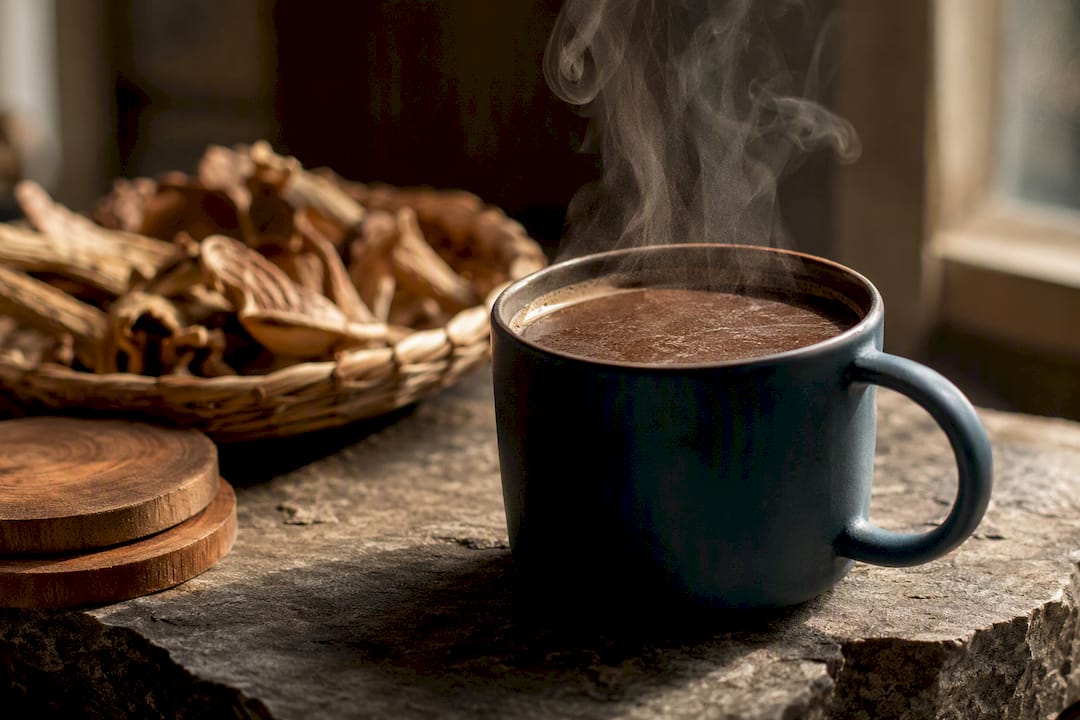
First sip tends to feel smoother and less sharp than a straight dark roast. Bitterness is usually toned down, partly because mushroom powder has no acidity of its own to fight against the coffee’s, and partly because manufacturers often pick milder beans for these blends in the first place.
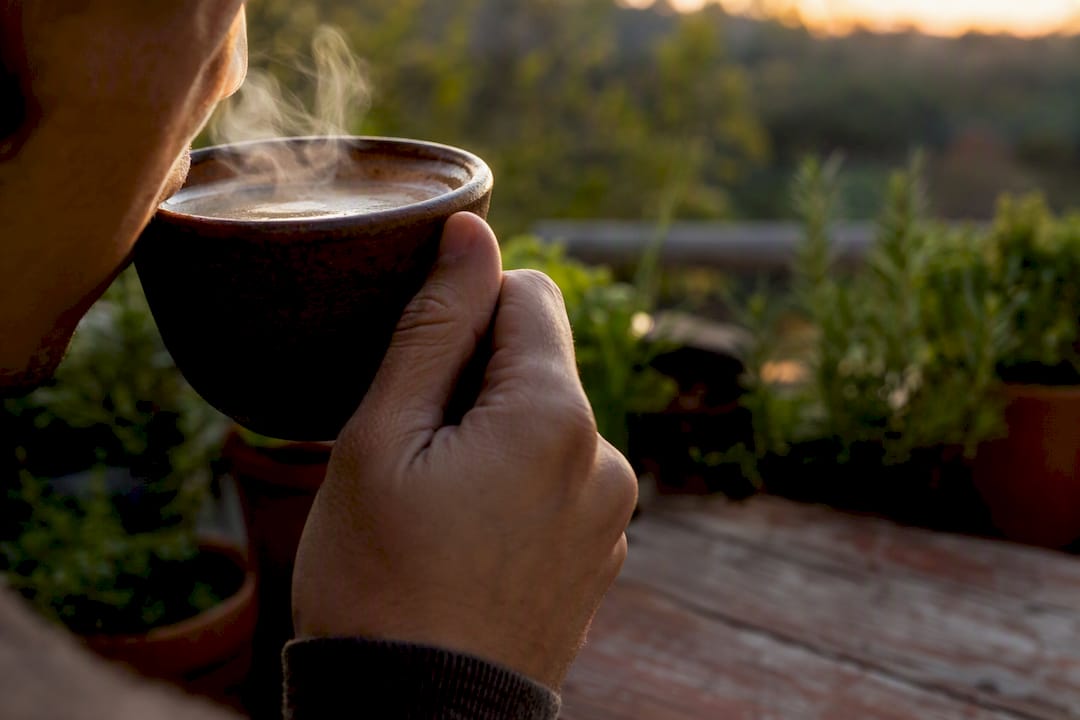
Midpalate and finish is where the “mushroom” descriptors actually surface, and they’re consistently mild: earthy, nutty, sometimes a faint chocolate or toasted-grain quality. Acidity runs lower than a standard cup, which is why so many drinkers describe mushroom coffee as “gentler on the stomach.”
Here’s a quick descriptor cheat sheet for judging any new blend on the first pour:
- Earthy: damp wood, forest floor, common with chaga or reishi at higher ratios.
- Nutty: almond or hazelnut edge, most associated with lion’s mane.
- Chocolatey: usually the coffee roast talking, not the mushroom.
- Smooth/low acid: a byproduct of both the mushroom powder and the roast profile chosen for these blends.
- Bitter: a red flag pointing to either a cheap coffee base or a high reishi ratio.
Pro Tip: Smell the dry grounds before you brew. If you catch a strong medicinal or “vitamin shop” scent, the blend leans extract-heavy and will probably taste that way in the cup too.
Reviewers at Glamour who tried mushroom coffee for two months reported the same pattern: it tasted like coffee with mild earthy touches, not like a health-food experiment gone wrong. The one number worth knowing before your first cup: because mushroom powder carries no caffeine of its own, blends mixed roughly 1:1 with coffee grounds typically land at about half the caffeine of a regular cup, according to Healthline. That lower dose is part of why the whole experience reads as “smoother.”
How Does Mushroom Variety Change the Flavor?
Not all mushrooms taste the same in a cup, though the differences are subtler than most marketing copy suggests.
- Lion’s mane is the mildest of the bunch. Expect a faint sweetness or nutty quality that mostly disappears into the coffee. This is the mushroom least likely to announce itself.
- Reishi carries more bitterness and a woody, almost bark-like character. In blends where reishi makes up a larger share of the mushroom powder, you’ll notice it as a dry, slightly astringent aftertaste.
- Chaga brings a dry, cocoa-adjacent earthiness. Some drinkers describe it as tasting like weak, unsweetened dark chocolate mixed with dirt, which sounds worse on paper than it tastes in practice.
- Cordyceps and turkey tail sit at the neutral end of the spectrum. Both tend to read as generically earthy without pushing bitterness or sweetness in either direction.
One pattern holds across almost every mushroom type: powdered extracts contribute far less overt flavor than whole-mushroom powders. Extraction concentrates specific compounds (often beta-glucans or triterpenes prized for their functional properties) while leaving behind the volatile aromatic molecules responsible for strong mushroom flavor. That’s a feature, not a flaw, if your goal is a cup that still tastes like coffee. If a label lists a full-spectrum or whole-fruiting-body mushroom powder, expect a slightly more pronounced earthy presence than you’d get from a standard extract.
What Changes the Taste More: The Coffee or the Mushrooms?
The coffee bean does the heavy lifting, full stop. A single-origin arabica roasted with care will carry a mushroom addition far better than a bag of commodity robusta ever could, because the coffee’s own natural sweetness, body, and acidity give the earthy mushroom notes something pleasant to hide inside. Reviewers at MassLive found this out the hard way: instant mushroom coffee made with a low-grade coffee base tasted thin and one-dimensional, while ground blends using better beans came across as far closer to a normal, enjoyable cup.
Roast level matters almost as much:
- Light roasts let more of the mushroom’s earthy character show through, since there’s less roasted-bean flavor to mask it.
- Medium roasts tend to strike the best balance for most drinkers, adding enough caramelized sweetness to counter any dryness from the mushroom powder.
- Dark roasts bring bold, smoky, sometimes bitter notes that can either complement or clash with reishi’s own bitterness, depending on the ratio used.
Ratio and format round out the list. A blend heavy on mushroom extract relative to coffee will taste noticeably more herbal and less like a café-style cup. Instant versions add another variable: the spray-drying or freeze-drying process used to make instant coffee can flatten flavor complexity on its own, before mushrooms even enter the picture, which is why format and coffee quality interact directly with roast profile to determine the final result. Added flavorings like coconut, cinnamon, or cacao can smooth over rough edges in cheaper blends, though they also make it harder to judge the coffee’s actual quality underneath.
Why Does Mushroom Coffee Sometimes Feel Different Than Regular Coffee?
Caffeine content is the biggest driver here. That roughly 50% reduction from standard 1:1 mushroom-to-coffee blends, per Healthline, means less of the jittery edge and less of the afternoon crash that regular coffee can bring. If you’re used to a strong double espresso, a mushroom blend at that ratio will likely feel noticeably gentler within the first 20 to 30 minutes.
Some drinkers also report a steadier, longer focus window rather than a sharp spike, which several attribute to the adaptogen compounds in mushrooms like reishi and cordyceps, though the research on these effects is still developing and shouldn’t be read as a guaranteed outcome for everyone.
- Lower caffeine load reduces jitteriness and the classic afternoon crash for most drinkers.
- Some report smoother, sustained energy, though individual response varies with body chemistry and the specific blend.
- Mild stomach upset can happen, especially the first few times, and is often more about switching routines than the mushrooms themselves.
- Expectation plays a real role too. If you go in braced for a weird taste or unusual effect, you’re more likely to notice minor sensations you’d otherwise ignore.
If you’re on medication, pregnant, or managing a health condition, check with a clinician before adding functional mushrooms to your routine. Cleveland Clinic notes that adaptogens can interact with certain prescriptions, and that caution is worth taking seriously rather than guessing your way through it.
How Do You Brew Mushroom Coffee for the Best Taste?
Getting a good cup out of mushroom coffee comes down to the same fundamentals as regular coffee, plus a couple of small adjustments.
- For ground blends, use roughly 2 tablespoons per 6 ounces of water, and keep water temperature between 195 and 205 degrees Fahrenheit. Pour-over and French press both work well; French press tends to bring out more body, which helps balance any earthy notes.
- For instant packets, use hot (not boiling) water and stir or froth well. Mushroom powder can clump more than standard instant coffee, so a quick whisk or milk frother smooths out the texture.
- Add-ins that help: a splash of oat or whole milk softens bitterness, a small spoon of unsweetened cocoa deepens the chocolate notes naturally already present, and a pinch of cinnamon plays well with earthy undertones. Skip artificial sweeteners, which tend to clash with the mushroom’s natural dryness.
- Try simple recipes: a mocha-style cup with cocoa and steamed milk, or an iced version blended with a splash of cream over ice for a cold-brew feel.
Pro Tip: Run a quick blind taste test between two blends, black, side by side, before deciding which one to keep buying. It’s the fastest way to isolate whether you’re reacting to the coffee base or the mushroom content.
What Do The J Coffee Collection’s Mushroom Blends Taste Like?
Thejcoffeecollection builds its mushroom coffee lineup around single-origin beans paired with lion’s mane, cordyceps, and reishi, aiming for a cup that reads as coffee first.
- Medium Roast: balanced body, mild sweetness, and a soft earthy finish that stays in the background. This is the pick for anyone nervous about “mushroom flavor” showing up too strong.
- Dark Roast: bolder, smokier profile where roast character dominates and the mushroom notes mostly disappear into the depth of the cup. Good for drinkers who already prefer dark roast regular coffee.
- Instant: built for convenience without sacrificing the coffee-forward taste that separates a good instant mushroom blend from a mediocre one.
A quality coffee base matters more than which mushrooms are in the bag. Start with a roast style you already enjoy in regular coffee, and the mushroom addition should feel like a quiet upgrade rather than a flavor gamble.
If you already lean toward medium roast in your daily cup, start there. If you’re a dark roast loyalist, the dark roast version will feel far more familiar than unfamiliar.
Who Might Not Enjoy Mushroom Coffee?
Cheap instant blends are the most common source of complaints, often tasting thin, flat, or one-dimensional compared to a properly roasted ground blend, as reported by MassLive.
- Blends leaning heavily on mushroom extract can taste more herbal or medicinal, further from classic coffee.
- Drinkers with sensitive stomachs or on medications should consult a clinician before regular use, particularly with reishi or cordyceps at higher doses.
- Pregnant readers should get medical guidance before adding functional mushrooms to a daily routine.
- Sample packs or single-serve instant packets are the lowest-risk way to test a blend before committing to a full bag.
A Note on How These Tasting Notes Were Formed
These impressions come from brewing multiple mushroom coffee blends side by side, black and with milk, comparing ground and instant formats under the same water temperature and ratio each time. My own baseline leans toward medium roast, black, which shapes what reads as “balanced” versus “bitter” here. If your palate runs differently, a small sample is still the fastest way to know for sure.
— jonathan
Try a Coffee-Forward Mushroom Blend for Yourself
If the sensory breakdown above sounds appealing but you’re still not ready to commit to a full bag, start small. Thejcoffeecollection’s approach leans coffee-first by design, using single-origin beans as the base rather than treating mushroom powder as the star, so the transition from your regular cup feels closer to a subtle upgrade than a flavor overhaul.
The Medium Roast Mushroom Coffee is the natural starting point for drinkers who want the earthy, nutty undertones without losing the coffee character they already enjoy. Prefer convenience over brewing? The instant mushroom coffee delivers the same flavor logic in a single-serve packet you can test before buying a full bag. For a broader look at the full lineup, browse the mushroom coffee collection and pick the roast that matches how you already drink coffee.
Sources
- Mushroom coffee: What it is, benefits, and downsides — Healthline
- Should you switch to mushroom coffee? — UCLA Health
- I drank mushroom coffee for two months — Glamour
- I drank Mushroom Coffee so you don’t have to — MassLive
Recommended
- Best nuyucoffee.com Alternatives: Mushroom Coffee Options – The J Coffee Collection
- Best myshroomycoffee.com Alternatives: Mushroom Coffee Compared – The J Coffee Collection
- Mushroom Coffee Medium Roast – Lion’s Mane Cordyceps Reishi | Lets Go Coffee – The J Coffee Collection
- Mushroom Instant Coffee – Lion’s Mane Cordyceps Reishi | Lets Go Coffee – The J Coffee Collection