

30–100 mg per Serving: Mushroom Coffee Caffeine and Safety
Yes, most mushroom coffee contains caffeine, just less of it. Many popular mushroom coffee blends contain lower caffeine per serving than regular brewed coffee, due to dilution with noncaffeinated mushroom powder or extract. The gap comes down to one thing: mushroom coffee blends real coffee grounds with noncaffeinated mushroom powder or extract, so every serving gets diluted before it ever hits your mug.
TL;DR:
- Most mushroom coffee contains lower caffeine levels than regular coffee, typically around 40 to 60 mg per serving, but some blends can approach traditional coffee caffeine amounts.
- The caffeine content varies mainly due to the blend ratio, type of coffee used, form of mushroom added, and serving size, so always read the milligram details on the label.
- Reducing caffeine intake from mushroom coffee generally leads to fewer jitters, calmer afternoons, and better sleep, but the mushrooms’ cognitive benefits remain unproven at a large scale.
- Consumers on medication, pregnant individuals, and those sensitive to caffeine should consult healthcare professionals before trying mushroom coffee due to potential interactions.
- For lower caffeine, choose products with clear caffeine labeling, a higher mushroom content, or opt for decaf mushroom drinks, and track your response during an initial trial period.
Table of Contents
- What Is Mushroom Coffee, and How Is It Made?
- How Much Caffeine Is in Mushroom Coffee vs Regular Coffee?
- Why Does Caffeine Vary So Much Between Mushroom Coffee Products?
- How Does Lower Caffeine Change Energy, Focus, and Sleep?
- Is Mushroom Coffee Safe? Interactions and Who Should Be Cautious
- How Do You Check and Choose a Lower-Caffeine Mushroom Coffee?
- Our Take on Choosing Between Mushroom Coffee and Regular Coffee
- A Lower-Caffeine Coffee Ritual That Still Tastes Like Coffee
- Sources
- FAQ
What Is Mushroom Coffee, and How Is It Made?
Mushroom coffee is exactly what it sounds like: ground coffee combined with powdered or extracted functional mushrooms. It’s not the same as a standalone mushroom tea or tonic, which skips coffee altogether and carries no caffeine at all. The confusion between the two categories is where a lot of shopper mistakes start.
The most common mushroom ingredients are lion’s mane, reishi, cordyceps, and chaga, each added for a different reason (cognitive support, calm, energy, or antioxidants, depending on the brand’s pitch). Manufacturers use either whole-mushroom powder, which keeps more fiber and texture, or a concentrated extract, which delivers more bioactive compounds per gram. University of Illinois Extension notes that extraction method (hot water versus dual extraction) determines exactly which compounds end up in your cup and at what concentration.
You’ll typically find mushroom coffee in one of these forms:
- Instant single-serve packets, the most popular format for online brands
- Ground blends meant for a drip machine or French press
- Coffee pods compatible with single-cup brewers
- Decaf or no-coffee mushroom drinks for people avoiding caffeine entirely
How Much Caffeine Is in Mushroom Coffee vs Regular Coffee?
The honest answer is: it depends on the brand, but the pattern is consistent. Mushroom coffee lands lower than regular coffee almost every time, because the coffee itself makes up a smaller share of the final blend.
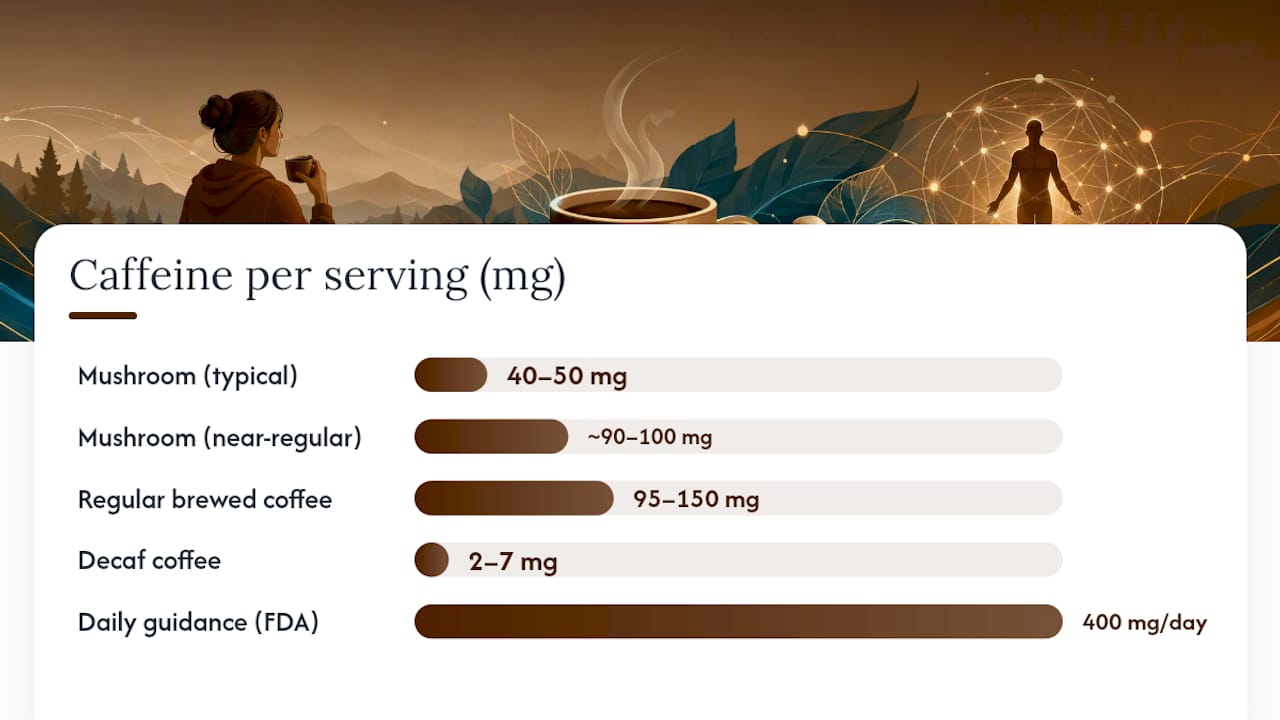
Typical caffeine ranges by drink type:
- Mushroom coffee (single-serve packet): roughly 30 to 100 mg per serving, with many popular blends clustering around 40 to 60 mg
- Regular brewed coffee (8 oz cup): roughly 95 to 150 mg
- Decaf coffee: roughly 2 to 7 mg
- FDA daily guidance for most healthy adults: 400 mg per day
Consumer health outlets including AARP report that many best-selling mushroom coffee packets land around 40 to 50 mg per serving, roughly a third to half of what a standard cup delivers. But that number isn’t universal. Some brands market their product as “mushroom coffee” while using a nearly full coffee base with just a light dusting of mushroom powder for marketing appeal. Those blends can sit close to regular coffee’s caffeine level, so the mushroom label alone tells you almost nothing about the dose.
That’s the trap: two products can share the same name and the same shelf, yet differ by 50 mg or more per cup. If you’re tracking intake against the 400 mg daily ceiling that the Harvard T.H. Chan School of Public Health cites as the general safety threshold, guessing isn’t good enough. You need the actual milligram figure printed on the package, not an assumption based on the category.
Why Does Caffeine Vary So Much Between Mushroom Coffee Products?
Four variables drive most of the difference, and understanding them turns a confusing label into something you can actually read.
- Blend ratio. This is the single biggest factor. A blend that’s 80% coffee and 20% mushroom powder will carry far more caffeine than one running the reverse ratio.
- Type of coffee used. Instant coffee generally has less caffeine per serving than fresh-brewed grounds, and Robusta beans carry roughly double the caffeine of Arabica. Some mushroom blends start from decaf beans entirely.
- Powder vs extract. Whole-mushroom powder dilutes the coffee more by volume, while concentrated extracts take up less space in the mix, sometimes leaving more room for coffee (and caffeine) in the same scoop.
- Serving size and prep. A concentrated single-serve packet mixed into 8 ounces of water delivers a different dose than the same packet stretched across a 12-ounce mug.
Added ingredients like MCT oil or L-theanine don’t change caffeine content directly, but they do change how the caffeine feels. L-theanine in particular is often paired with caffeine to smooth out the alertness curve rather than blunt it.
Pro Tip: If a label doesn’t list milligrams of caffeine per serving, check the ingredient order. Coffee listed first, ahead of any mushroom powder, is a decent clue you’re not getting a dramatically lower-caffeine product.
How Does Lower Caffeine Change Energy, Focus, and Sleep?
Cutting your caffeine dose by half tends to produce a real, physical difference, and most of it has nothing to do with mushrooms. Less caffeine generally means fewer jitters, a smaller anxiety spike, and less interference with sleep onset later in the day. That’s basic dose response, not a mushroom-specific effect.
UCLA Health points out that people who are sensitive to caffeine often report better sleep and calmer afternoons simply from taking in less of it, regardless of what else is in the cup. Some coverage, including Forbes, describes the resulting energy curve as smoother, sustained clarity instead of a sharp spike followed by a crash.
Where things get murkier is the mushroom side of the claim. Lion’s mane is under active research for cognitive support, but a PubMed-indexed look at the evidence shows study conditions rarely resemble a cup of instant mushroom coffee, and a broader review of mushroom bioactives on PMC concludes that large-scale clinical evidence for commercial blends is still thin. Registered dietitians quoted by Healthline put it plainly: much of what people feel after switching comes from drinking less caffeine, not from the mushrooms doing something dramatic.
Common side effects to watch for include:
- Mild digestive upset, especially when trying a new mushroom extract for the first time
- Headache or fatigue during the first few days, often a caffeine withdrawal symptom rather than a mushroom reaction
- Rare allergic reactions to specific fungi, which warrant stopping immediately
A practical way to separate real effects from placebo: swap your usual coffee for a mushroom blend for one week and track sleep quality, mood, and jitteriness each day. Compare notes at the end. It’s simple, it’s free, and it tells you more than any product page will.
Is Mushroom Coffee Safe? Interactions and Who Should Be Cautious
Mushroom coffee isn’t risk-free just because it sounds like a wellness product. Certain mushroom extracts, lion’s mane included, may interact with blood thinners and some diabetes medications, an underreported risk flagged by the University of Illinois Extension. Anyone on prescription medication for clotting or blood sugar control should talk to a clinician before adding a new mushroom supplement to their routine, even one disguised as coffee.
A few groups deserve extra caution:
- Pregnant or breastfeeding people, and children, should check with a clinician before trying any functional mushroom product
- Anyone highly sensitive to caffeine, or managing anxiety, arrhythmia, or a sleep disorder, should treat mushroom coffee as a lower-dose stimulant, not a caffeine-free swap
- People already on anticoagulants or diabetes medication should ask a pharmacist or doctor about specific mushroom extracts before regular use
If you notice new digestive symptoms, unusual heart palpitations, or a skin reaction after starting mushroom coffee, stop and get medical advice rather than pushing through it. The same goes for any noticeable interaction with an existing prescription. None of this makes mushroom coffee dangerous for most healthy adults. It just means the “natural” label doesn’t exempt it from the same basic checks you’d run on any new supplement.
How Do You Check and Choose a Lower-Caffeine Mushroom Coffee?
Reading a label properly takes about thirty seconds once you know what to look for.
- Find the milligram number. Look for caffeine content per serving printed directly on the package or product page. If it’s missing, treat that as a red flag, not a neutral omission.
- Check the ingredient order. Ingredients are listed by weight, so coffee near the top of the list usually means less dilution and more caffeine.
- Look for a decaf or no-coffee base. Some brands offer a completely caffeine-free mushroom drink for people avoiding stimulants altogether.
- Adjust your own brew. Using half a packet, or stretching a single-serve packet across a larger cup of hot water, lowers your effective dose without changing the flavor much.
- Run a one-week trial. Swap your regular afternoon coffee for a lower-caffeine mushroom blend and track sleep and anxiety levels before deciding if it’s a permanent switch.
Pro Tip: Buy one lower-caffeine option and one near-regular-strength mushroom blend, then compare how each one makes you feel over a few days. The label rarely tells the whole story, but your own notes will.
Our Take on Choosing Between Mushroom Coffee and Regular Coffee
Thejcoffeecollection sources and curates mushroom blends alongside single-origin and flavored coffee, which means we look at these products the way a buyer should: as coffee first, functional add-in second. The clearest, most defensible reason to reach for mushroom coffee is caffeine reduction with a familiar ritual intact, not a promise that lion’s mane will sharpen your focus by some measurable degree. The research on mushroom bioactives is real and ongoing, but it doesn’t yet support the sweeping claims some marketing pages make.
If you’re trying to cut caffeine without giving up the habit of a warm cup in your hands, mushroom coffee is a genuinely useful tool. Check the milligram count on whatever product you buy, not the category label, and treat any energy or focus improvement as a bonus rather than a guarantee. For a deeper look at what the evidence does and doesn’t support, our breakdown of mushroom coffee’s real benefits and our guide to possible side effects go further than most product pages will.
— jonathan
A Lower-Caffeine Coffee Ritual That Still Tastes Like Coffee
Cutting caffeine usually means giving up the actual experience of coffee, and that trade-off is why most people quit trying after a week. Mushroom Coffee Medium Roast keeps the roasted, familiar flavor while trimming the caffeine load through a lion’s mane, cordyceps, and reishi blend designed for people who want fewer jitters without switching to tea.
It comes in an instant format for convenience, so you’re not adding a brewing step to your day just to cut your dose. If you’re mid-trial on tracking your own caffeine intake, this is a straightforward way to see how a lower dose feels without giving up your ritual entirely. Check the Mushroom Coffee Medium Roast product page for the exact milligrams per serving before you order, and pair it with a flavored coffee sample pack if you want variety while you experiment. For readers who want more caffeine, not less, our Max Caf Robusta blend sits at the opposite end of the same spectrum.
This article is general information, not a substitute for advice from a qualified doctor. Consult a qualified healthcare professional about your own circumstances before acting on anything here.
Sources
- Caffeine and Health — The Nutrition Source, Harvard T.H. Chan School of Public Health
- Should you switch to mushroom coffee? — UCLA Health
- PMC review article on mushroom bioactives — NCBI
FAQ
What Is the Downside to Mushroom Coffee?
The main downsides are inconsistent labeling (some brands barely dilute the coffee), mild digestive upset from new mushroom extracts, and possible interactions with blood thinners or diabetes medication for certain mushroom types.
Why Do I Feel Weird After Drinking Mushroom Coffee?
If you’ve been used to a full-strength cup of coffee, a sudden drop in caffeine can trigger mild withdrawal symptoms like headache or fatigue, and some people also react to a new mushroom extract with digestive discomfort.
Does Mushroom Coffee Actually Give You Energy?
Yes, because it still contains caffeine, just less of it, so most people feel a milder, steadier lift instead of the sharp spike of a regular cup; mushroom-specific cognitive benefits have limited clinical support so far.
Is 2 Cups of Mushroom Coffee a Day Too Much?
Two cups of a typical mushroom blend usually stays well under the FDA’s 400 mg daily guidance, but check the label since some blends run closer to regular coffee strength.
Is Mushroom Coffee Caffeinated or Caffeine-Free?
Most mushroom coffee is caffeinated because it’s made with real coffee grounds; only products explicitly labeled decaf or “no-coffee” mushroom drinks are caffeine-free.