

Why Decaf Coffee Isn’t Caffeine Free: Labs and the 97% Rule
Decaf coffee is not caffeine-free. A typical cup carries roughly 2 to 15 milligrams of caffeine, compared with about 95 milligrams in a regular 8-ounce brew, according to industry guidance from the National Coffee Association. That’s low enough for most people to drink freely, but not zero. Anyone who must avoid caffeine entirely, including some pregnant women and people on certain medications, should still ask a clinician before making decaf a daily habit.
TL;DR:
- Decaf coffee typically contains between 2 and 15 milligrams of caffeine per cup, but levels can vary up to 32 milligrams depending on the sample and brewing method.
- Residual caffeine remains because commercial decaffeination processes aim for at least 97% caffeine removal, with most products containing less than 0.10% caffeine by dry weight.
- People with extreme caffeine sensitivity, pregnant women, and those on certain medications should still consult a healthcare professional before consuming decaf regularly.
- Brewing variables such as grind size, brew time, and serving size significantly influence the actual caffeine content in a cup, regardless of decaffeination.
- Choosing decaf processed via water or CO2 methods and ensuring transparency on residual caffeine levels can help minimize flavor loss and caffeine intake.
Table of Contents
- How Much Caffeine Is Actually in a Cup of Decaf?
- How Decaffeination Works, and Why Zero Caffeine Isn’t the Goal
- Who Should Be Cautious About Even Trace Caffeine
- What Actually Changes the Caffeine in Your Cup
- Weighing the Benefits Against the Downsides
- How to Choose Lower-Caffeine Decaf Without Losing Flavor
- A Coffee Seller’s Take on Decaf Quality
- Find Well-Sourced Decaf Without the Guesswork
- Sources
- FAQ
How Much Caffeine Is Actually in a Cup of Decaf?
The 2 to 15 milligram range you’ll see on most industry pages holds up under lab testing, but the real spread is wider and messier than that tidy number suggests. A peer-reviewed sampling study published in the Journal of Analytical Toxicology tested retail decaf drinks and found levels ranging from 0 to 13.9 milligrams per 16-ounce serving. Espresso shots from the same sample set ranged from 3.0 to 15.8 milligrams, and some outlier samples in other testing have pushed as high as 32 milligrams in a single serving.
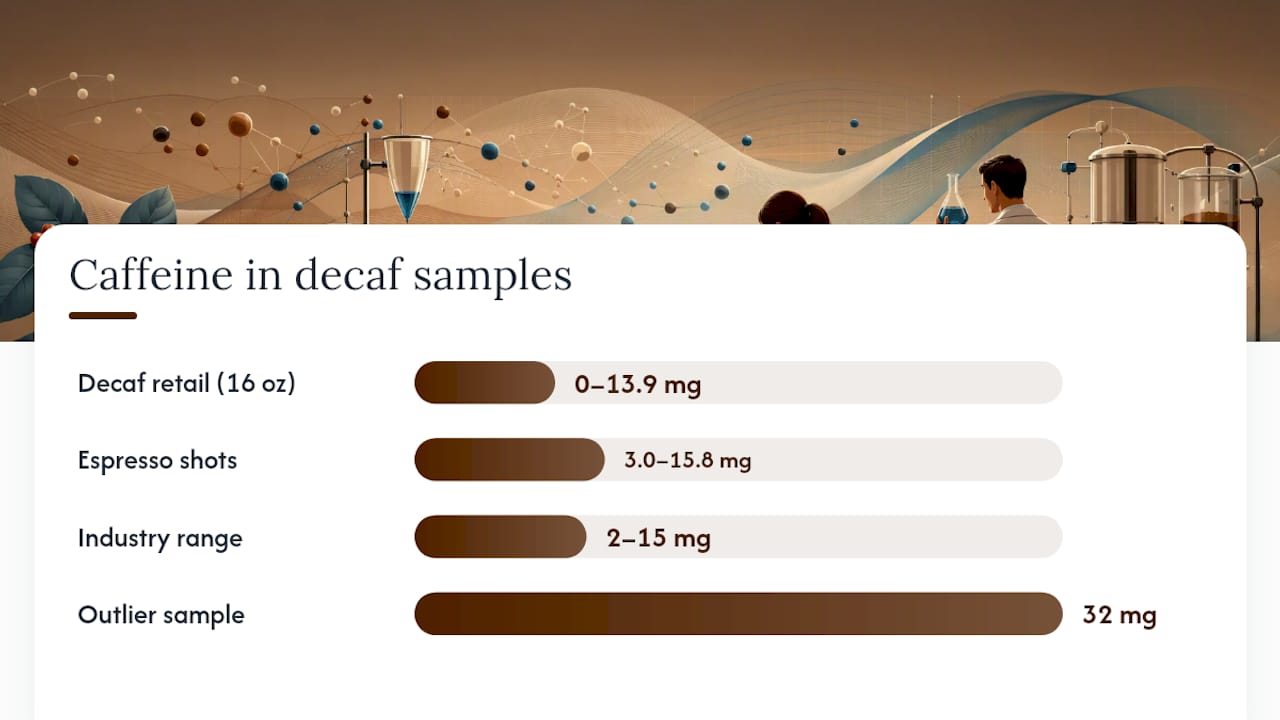
Context matters here. A regular 8-ounce cup of coffee averages around 95 milligrams of caffeine, so even a decaf on the high end of that range still delivers a fraction of a normal cup. You’d need many cups of decaf to match one regular coffee, depending on which sample you happened to get.
A few things drive that variability:
- Retail vs. lab-controlled brewing. Coffee shop staff don’t measure grounds to the milligram, so two cups from the same shop can differ.
- Sample size in studies. Smaller studies amplify the effect of one unusually high or low reading.
- Bean origin and roast. Robusta beans start with roughly double the caffeine of arabica, so even after decaffeination, residual amounts can run higher.
- Testing method. Some labs use more sensitive detection than others, which shifts reported numbers slightly.
Quick reference: decaf coffee: 2 to 15 mg per cup. Regular coffee: about 95 mg per 8 oz. A can of cola: roughly 30 to 40 mg. A 1.5-ounce dark chocolate bar: around 20 mg. Decaf sits closer to chocolate than to its caffeinated namesake.
How Decaffeination Works, and Why Zero Caffeine Isn’t the Goal
No commercial process removes every trace of caffeine, and that’s by design, not a flaw. Manufacturers in the United States only need to hit a 97% removal threshold to legally call a product decaf, and packaged decaf beans are expected to stay under about 0.10% caffeine by dry weight, per NCA standards. Pushing past that point to chase 100% removal tends to strip out flavor compounds along with the caffeine, so roasters stop short on purpose.
Three methods dominate the industry:
- Solvent-based processing, using ethyl acetate or methylene chloride to pull caffeine from green beans, still common for high-volume production.
- Swiss Water Process and other water-based methods, which soak beans in water and use activated carbon filtration instead of chemical solvents, popular with specialty roasters marketing a cleaner process.
- Supercritical CO2 processing, which uses pressurized carbon dioxide as a solvent and is prized for preserving flavor in higher-end beans.
Verifying how much caffeine actually remains after any of these methods comes down to testing. High-performance liquid chromatography, or HPLC, is the gold standard for measuring residual caffeine, and it’s what most peer-reviewed studies rely on. Some producers are shifting to near-infrared spectroscopy for faster, cheaper screening, trading a little precision for speed on the production line. If a roaster publishes actual test numbers rather than just a process name, that’s usually a sign they’re taking residual caffeine seriously.
Who Should Be Cautious About Even Trace Caffeine
For most people, the caffeine in decaf is a non-issue. It’s genuinely small for a handful of groups where even a few milligrams can matter.
- People with severe caffeine sensitivity. Some individuals react to doses well under 20 milligrams with jitteriness, elevated heart rate, or anxiety symptoms.
- Pregnant women. Guidance generally caps total daily caffeine intake at low levels, and multiple decaf cups can add up faster than expected.
- People on certain medications. Drugs metabolized through the same liver pathways as caffeine, including some antidepressants and antiarrhythmics, can see altered effects even from small amounts.
- Anyone managing anxiety or panic disorders. Caffeine’s stimulant effect can amplify physical symptoms of anxiety, and sensitivity varies a lot person to person.
WebMD’s guidance on decaf is blunt about this: decaf is generally safe and keeps most of coffee’s beneficial compounds, but anyone who must avoid caffeine entirely should talk to a clinician rather than assume “decaf” means “none.”
Pro Tip: If you’re not sure how sensitive you are, try one cup of decaf and wait four to six hours before drawing conclusions. Caffeine’s half-life in most adults runs five to six hours, so a jittery afternoon after a decaf breakfast is worth paying attention to.
What Actually Changes the Caffeine in Your Cup
Brewing choices move the number more than most people assume. Grind size, coffee-to-water ratio, and brew time all affect how much caffeine gets extracted from the grounds, regardless of whether the beans started as decaf or regular.
- Finer grinds and longer contact time pull more caffeine out, even from decaffeinated beans.
- A stronger coffee-to-water ratio concentrates whatever caffeine remains into a smaller volume.
- Serving size still rules everything. A 16-ounce decaf will usually carry more total caffeine than a 6-ounce cup, even at identical strength.
Espresso confuses people here. A shot tastes far more intense than drip coffee, but that’s concentration, not necessarily total caffeine. A single decaf espresso shot can contain a similar or even smaller total caffeine amount than a large decaf brewed cup, simply because the shot’s volume is so much smaller. If you’re trying to minimize intake, a small decaf pours beats a venti-sized decaf latte every time.
Weighing the Benefits Against the Downsides
Switching to decaf doesn’t mean giving up coffee’s upside. Most of the antioxidant content and the associations with lower risk of certain chronic diseases carry over from regular coffee, since decaffeination targets caffeine specifically rather than the broader compound profile. That’s a real reason health-conscious drinkers reach for decaf instead of cutting coffee entirely.
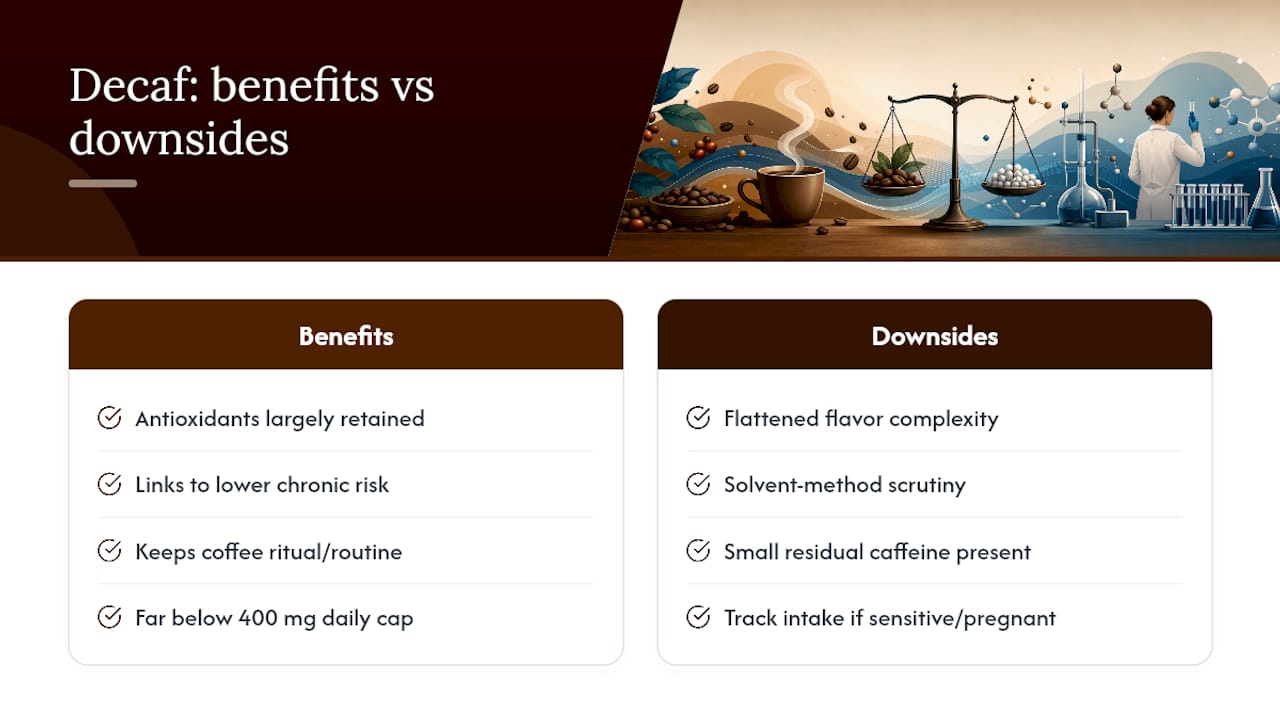
The downsides are smaller but real. Decaffeination can flatten some flavor complexity, which is why process matters so much to specialty roasters. Solvent-based methods have drawn scrutiny over the decades, though current regulatory frameworks, including FDA rules on approved solvents, treat properly processed decaf as safe. And for context, general adult caffeine guidance caps daily intake around 400 milligrams. Even someone drinking several cups of decaf a day stays nowhere near that ceiling, though highly sensitive individuals and pregnant women should still track total intake carefully.
How to Choose Lower-Caffeine Decaf Without Losing Flavor
- Check the process on the label. Water-process or CO2-processed decafs often publish clearer removal claims than generic “decaffeinated” labeling.
- Look for published test numbers. A roaster willing to share HPLC results is telling you something about how seriously they take accuracy.
- Start with a sample pack. Testing a flavored decaf sample pack before committing to a full bag lets you gauge both taste and personal sensitivity.
- Brew shorter and smaller if you want to go lower. Shorter extraction times and single cups instead of large mugs both reduce total caffeine, even within the same decaf batch.
Pro Tip: Ask a roaster directly which decaffeination method they use and whether they test residual caffeine. A specialty seller that can answer both questions confidently is usually more trustworthy than one that just prints “decaf” on the bag.
A Coffee Seller’s Take on Decaf Quality
This coffee seller focuses on single-origin and naturally flavored coffee, decaf included, because sourcing and process transparency matter as much for decaf as for anything caffeinated. Readers weighing flavor against sensitivity might find our comparison of decaf versus regular coffee or our breakdown of processing methods and flavor useful next steps.
— jonathan
Find Well-Sourced Decaf Without the Guesswork
Most decaf on grocery shelves doesn’t tell you which process it used or what the residual caffeine actually tests at. This retailer’s approach emphasizes single-origin sourcing and naturally flavored options curated with process transparency in mind, so you’re not choosing blind.
If you want to taste a few decaf styles before committing to a full bag, the Flavored Coffee collection is a practical starting point, especially paired with a sample pack that lets you compare origins and roasts side by side. Prefer single-origin character over blended flavor profiles? Browse the Single Origin Coffee collection for options roasted to order rather than sitting on a shelf for months. Either path gets you closer to a decaf that fits your sensitivity and your palate, not just whatever was on sale.
Sources
- Decaf coffee - NCA - About Coffee
- How Much Caffeine is in Decaf? | Swiss Water® Process
- Caffeine content study (Journal of Analytical Toxicology)
- Decaf coffee: What to know | WebMD
This article is general information, not a substitute for advice from a qualified doctor. Consult a qualified healthcare professional about your own circumstances before acting on anything here.
FAQ
Is decaf coffee OK if you can’t have caffeine at all?
Decaf still contains trace caffeine, typically 2 to 15 milligrams per cup, so it’s not a true zero option. If you must avoid caffeine completely for a medical reason, talk to your clinician before relying on decaf as a substitute.
Is there any benefit to drinking decaf coffee?
Yes. Decaf retains most of coffee’s antioxidant content and many of the associations with lower disease risk, since decaffeination targets caffeine specifically rather than the coffee bean’s broader compound profile.
Is decaf OK for anxiety?
Decaf’s much lower caffeine load makes it a reasonable choice for people managing anxiety, since caffeine can amplify physical symptoms like a racing heart. Highly sensitive individuals can still react to the small remaining amount, so starting with one cup and monitoring your response is a fair test.
Is there a downside to decaffeinated coffee?
The main trade-offs are a flatter flavor profile compared with regular coffee and the fact that it’s not truly caffeine-free. Choosing a roaster that discloses its decaffeination process, like water-processed or CO2-processed options, tends to minimize both issues.
How much caffeine is in decaf coffee compared with regular coffee?
Decaf runs about 2 to 15 milligrams per cup, while regular coffee averages around 95 milligrams per 8-ounce serving. You’d need many cups of decaf to match the caffeine in a single regular coffee.