

Coffee Lovers: Test Flavored Decaf With a Six Flavor Sample Pack
Yes, flavored decaf can genuinely satisfy a coffee craving. The trick is picking decaf that protects the bean’s original character and pairs it with natural flavoring rather than a chemical shortcut. Start with a naturally flavored decaf or a sample pack like the one from Thejcoffeecollection, which lets you test several profiles before committing to a full bag.
TL;DR:
- Decaf flavorings are often applied after decaffeination and roasting, with natural extracts providing a more authentic taste that ages better in packaging.
- The decaffeination process influences flavor retention, with Swiss Water and CO2 methods preserving more original bean qualities than solvent-based methods.
- Small sample packs are advisable for testing flavored decafs, as flavor preferences vary widely and full bags may lead to unwanted waste.
- Flavored decaf loses its aromatic top notes within two to three months after opening due to oxidation of added oils, making freshness crucial.
- Artificial flavorings tend to be sharper and less nuanced than natural ones, and flavor adds a shorter shelf life compared to plain decaf.
Table of Contents
- What Is Flavored Decaf Coffee, Exactly?
- How Coffee Roasters Add Flavor (And What It Tells You About Quality)
- How to Choose a Flavored Decaf Worth Buying
- How to Brew Flavored Decaf So the Flavor Actually Comes Through
- Are Flavor Additives in Decaf Coffee Safe?
- Does Flavored Decaf Go Stale Faster Than Plain Decaf?
- Why We Push Sample Packs Over Guessing on a Full Bag
- Try a Flavored Decaf Sample Pack Before You Commit to a Bag
- Sources
What Is Flavored Decaf Coffee, Exactly?
Flavored decaf coffee is decaffeinated coffee that has had flavoring, natural or artificial, applied to the beans either before or after roasting. That’s a different animal from regular flavored coffee, which starts with caffeinated beans and follows the same flavoring process. The caffeine removal step happens first, and it’s the part that determines whether the bean has enough structural integrity left to hold flavor well.
Label language matters here. “Natural flavors” means the flavoring compound was derived from a real source (vanilla bean extract, hazelnut oil) rather than synthesized in a lab, even though the FDA’s definition allows some latitude in how “natural” is sourced. “Infused” usually signals the flavor was applied to whole or cracked beans through oil or extract, while “artificial” flavoring is synthetic and tends to taste sharper and more one-note over time.
Decaffeination method affects the canvas the flavor gets painted on:
- Swiss Water Process uses only water and osmosis, no chemical solvents, and tends to preserve more of the bean’s natural oils and subtler notes.
- CO2 process uses pressurized carbon dioxide to pull caffeine out and is considered gentle on flavor, though it’s less common on budget shelf brands.
- Solvent-based methods (using methylene chloride or ethyl acetate) are cheaper and widespread, but can strip some of the bean’s aromatic compounds along with the caffeine.
Whichever method is used, the flavor itself is almost always applied after decaffeination and roasting, since the coating or infusion needs a finished bean surface to adhere to.
How Coffee Roasters Add Flavor (And What It Tells You About Quality)
The flavoring method used tells you a lot about what you’re actually tasting. Natural extracts and essential oils, pressed or distilled from real vanilla, hazelnut, or cinnamon sources, tend to taste rounder and fade more gracefully as the cup cools. Artificial flavorings, built from synthetic compounds designed to mimic a taste, often hit harder up front and then flatten out, sometimes leaving a slightly chemical or perfume note in the finish.
Most flavored decaf falls into one of these production styles:
- Bean infusion: flavoring oil is tumbled with roasted beans so it soaks into the surface, common for classics like decaf hazelnut coffee or decaf vanilla coffee.
- Post-roast coating: a lighter flavor spray applied right before packaging, giving strong aroma but sometimes a thinner taste once brewed.
- Flavored syrups: added at the point of brewing rather than to the bean itself, more common in cafes than packaged retail coffee.
- Pod coatings: single-serve pods often use a concentrated flavor layer designed to survive the shorter, faster brew cycle of a pod machine.
Single-serve pods deserve a specific callout. Convenience is the obvious win, but freshness and flavor intensity vary enormously by brand. Large-scale testing of dozens of K-Cups found that some inexpensive flavored pods actually outperformed pricier options, which tells you price isn’t a reliable flavor signal. Separate testing that ranked K-Cups from worst to best found the same pattern held for flavored varieties specifically, with some budget pods delivering better balance than premium ones.
Pro Tip: Check the roast date, not just the “best by” date. Flavor compounds degrade faster than the coffee itself, so a bag roasted eight months ago will taste flat even if it’s technically still “good.”
Packaging matters more for flavored decaf than for plain decaf, since aromatic oils oxidize faster once exposed to air. Look for a one-way valve bag, a visible roast date, and a resealable seam.
How to Choose a Flavored Decaf Worth Buying
Picking a good flavored decaf comes down to five checks you can run in under a minute, whether you’re standing in a store aisle or scrolling a product page.
- Confirm the decaffeination method. Swiss Water or CO2 processing tends to leave more of the bean’s natural flavor intact for the added flavoring to build on.
- Look for “natural flavors” on the label. Natural flavoring generally tastes more authentic and ages better in the bag than artificial alternatives.
- Check the roast date, not the expiration date. Anything roasted within the last four to six weeks is a safe bet for flavored beans.
- Match roast level to the flavor profile. Lighter and medium roasts let dessert flavors like vanilla or caramel shine through; darker roasts can compete with and mute subtler flavoring.
- Buy small before you buy big. A sample pack or the smallest bag size available limits your risk if a flavor doesn’t land the way you hoped.
That last point matters more than people think. Flavor preference is genuinely personal. What tastes like a rich hazelnut latte to one drinker reads as artificial and cloying to another, and there’s no way to know which side you’re on until you try it. That’s the entire logic behind sample-pack shopping: it turns a guess into a controlled taste test.
Return policies are worth checking too. Some roasters, Thejcoffeecollection included, sell flavored coffee in sample formats specifically so you’re not stuck with a full bag of a flavor you didn’t love.
How to Brew Flavored Decaf So the Flavor Actually Comes Through
Water temperature makes a bigger difference with flavored decaf than with plain coffee, as explained in Herbal Teas from Your Garden: Grow and Brew, where careful infusion techniques preserve delicate botanical flavors. Aim for 195 to 205 degrees Fahrenheit. Water that’s too hot can scorch the added flavoring oils and turn a smooth vanilla note bitter; water that’s too cool under-extracts and leaves the flavor tasting muted and dusty.
Ratio-wise, stick close to the standard two tablespoons of coffee per six ounces of water, then adjust up slightly if you want the flavor more pronounced rather than adding more flavoring syrup after the fact.
- Whole bean, ground fresh: gives the truest flavor since the aromatic oils haven’t had time to oxidize in a bag.
- Pre-ground: convenient, but flavor fades within two to three weeks of opening even in a sealed bag.
- Pods: fastest and most consistent, though flavor intensity depends heavily on brand and brew size.
For pod users, one adjustment helps more than any other: brewing on the smallest cup size or “bold” setting your machine offers concentrates the flavor rather than diluting it across more water, a fix confirmed in testing across 40 K-Cup varieties.
Pro Tip: A splash of warm oat or whole milk enhances dessert-style flavors like vanilla and hazelnut without masking them the way sugar can.
Store flavored decaf beans in an airtight container at room temperature, away from light. Skip the refrigerator. Cold storage introduces condensation that dulls both aroma and flavor, and the fridge’s other smells can seep into the beans.
Are Flavor Additives in Decaf Coffee Safe?
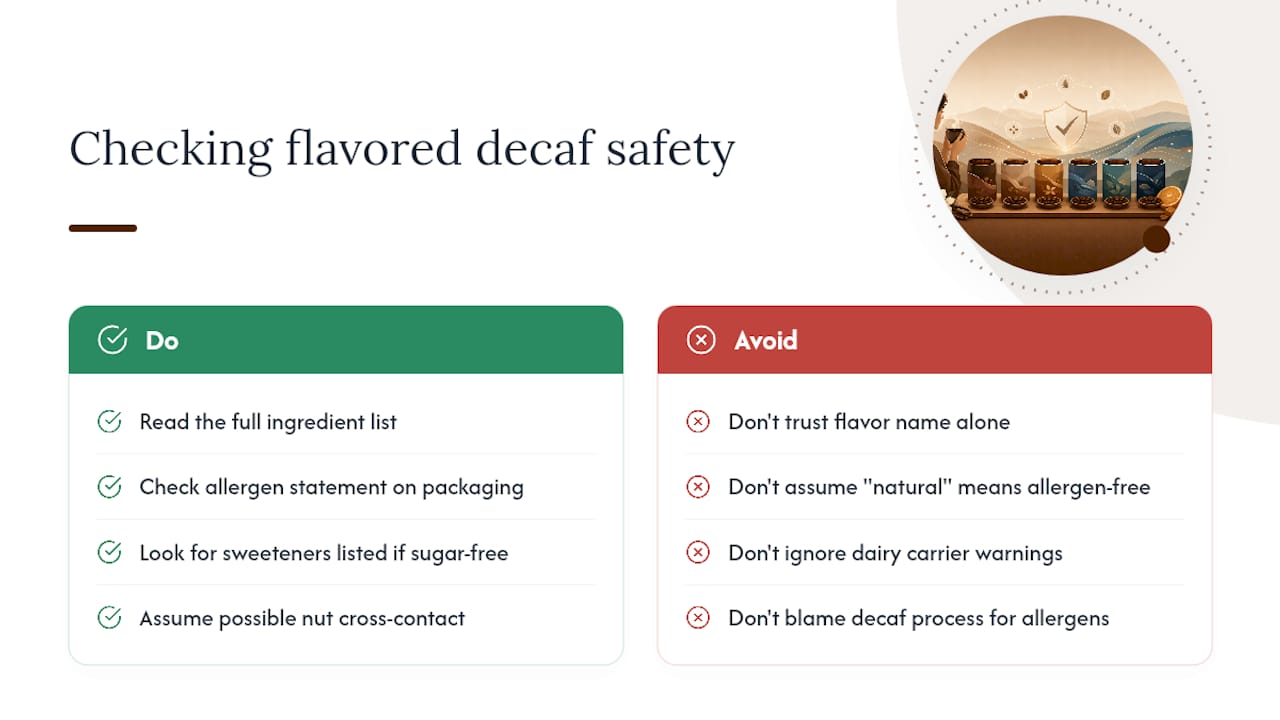
Flavor additives used in decaf coffee are generally recognized as safe by the FDA, whether they’re derived from natural sources or manufactured synthetically. The bigger consideration for most drinkers isn’t safety, it’s allergens and sensitivities. Flavorings built around nut extracts (hazelnut, almond, macadamia) are typically flavor compounds rather than actual nut derivatives, but cross-contamination during processing is possible if a facility handles real nut products elsewhere.
If you have a tree nut allergy, check the packaging for an allergen statement rather than assuming “hazelnut flavor” is nut-free by default. The same caution applies to dairy-derived flavor bases sometimes used in caramel or vanilla cream profiles, since some use milk solids as a carrier for the flavor compound.
Artificial sweeteners occasionally show up in flavored decaf blends marketed as “sugar-free” dessert flavors, which is worth a second look if you’re managing blood sugar or avoiding specific sweetener types. Reading the ingredient list, not just the flavor name on the front of the bag, is the one habit that catches most of these issues before they become a problem.
Decaf itself carries no unique allergen risk from the decaffeination process. Trace solvent residue from chemical decaffeination methods falls well under FDA safety thresholds, so the flavor additive is almost always the more relevant thing to scrutinize, not the decaf process itself.
Does Flavored Decaf Go Stale Faster Than Plain Decaf?
Flavored decaf loses its edge faster than plain decaf, and it’s the added oils that are the reason. Flavoring oils oxidize on contact with air more quickly than the coffee bean’s own natural oils, so a flavored bag that sits open for a month will taste noticeably flatter than an unflavored decaf treated the same way.
Plain decaf, stored properly, can hold reasonable flavor for six to nine months past the roast date. Flavored decaf’s usable window is shorter, generally two to three months once opened, even in a sealed, airtight bag. The aromatic top notes (the cinnamon snap, the vanilla sweetness) fade first, leaving a duller, more generic coffee taste behind even though the product hasn’t technically gone bad.
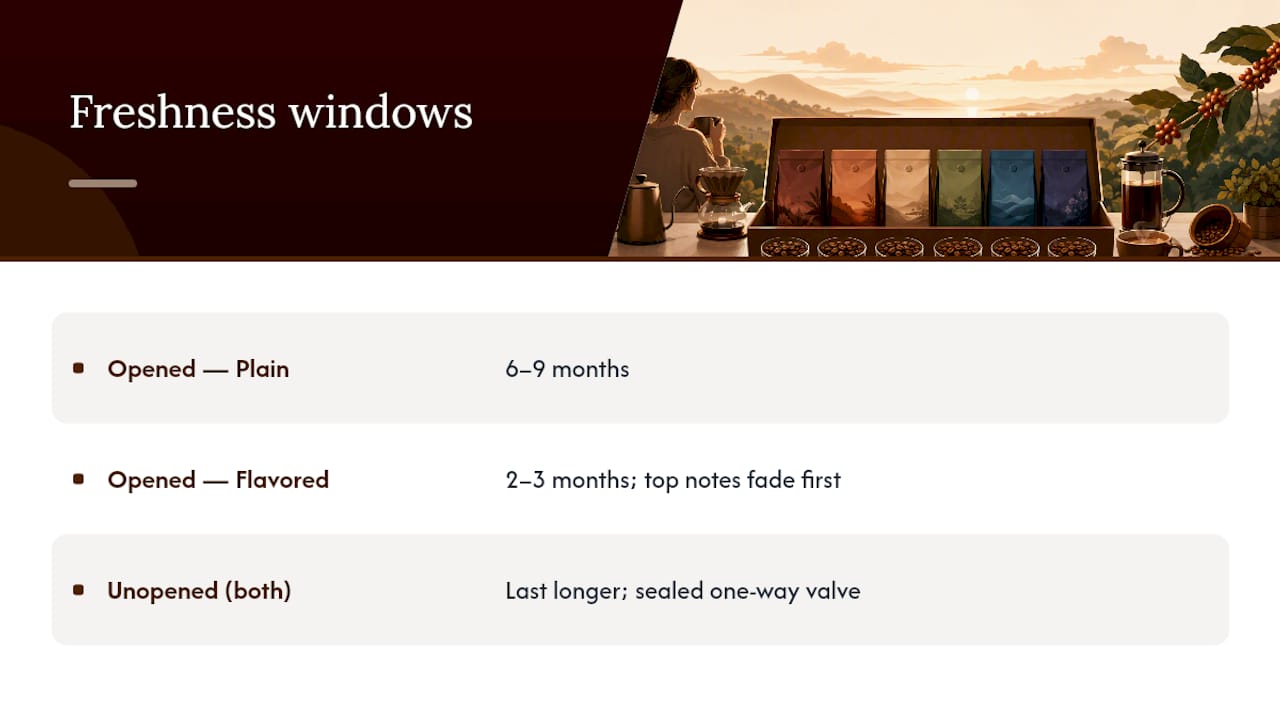
Unopened, both types last longer thanks to the sealed one-way valve most specialty bags use, but flavored coffee still benefits from being bought in smaller quantities. This is another argument for sample packs or smaller bag sizes over the big value bag. If you’re a once-a-week decaf drinker, a 12-ounce bag of flavored decaf that takes two months to finish is a better bet than a pound that outlasts its flavor window before you’re halfway through it.
Pods sidestep most of this problem since each one is individually sealed, which is part of why flavored profiles show up so often in single-serve formats.
Why We Push Sample Packs Over Guessing on a Full Bag
Flavor preference in decaf is too personal to guess at, and that’s the whole reason Thejcoffeecollection built its lineup around naturally flavored roasts and a six-flavor sample pack instead of pushing one bestseller. A sample pack turns an expensive guess into a cheap experiment. You try a spoonful’s worth of hazelnut, vanilla, and a seasonal blend side by side, instead of committing to a full bag and hoping.
If you’re new to flavored decaf, start with a classic vanilla and a nut profile like hazelnut. They’re the two flavor types least likely to taste artificial even at a lighter roast, and they give you a fast read on whether you lean toward dessert-sweet or toasted-nutty profiles before exploring anything more adventurous.
— jonathan
Try a Flavored Decaf Sample Pack Before You Commit to a Bag
Guessing which flavored decaf you’ll actually like is the expensive way to shop. Thejcoffeecollection’s flavored coffee sample pack gives you six natural flavors in one order, so you can rule out what falls flat and find your favorite without buying six separate bags to get there.
Every flavor in the lineup uses natural flavoring rather than artificial shortcuts, sourced the same way as the rest of the flavored coffee collection if you already know what you like and want to go straight to a full bag. And if flavored decaf turns out to be your gateway back into coffee generally, the single-origin lineup is worth exploring next for a flavor experience built entirely from the bean itself, no added flavoring required.
Order the sample pack, brew each flavor side by side over a week, and you’ll know exactly which bag to reorder.
Sources
- Quit Brewing Bad Coffee in Your Keurig. I Tested 40 K-Cups and These Are the Best - CNET
- Keurig K-Cup Coffee Pods, Ranked Worst To Best - Tasting Table