

Coffee and Tea Pairing Explained for Flavor Enthusiasts
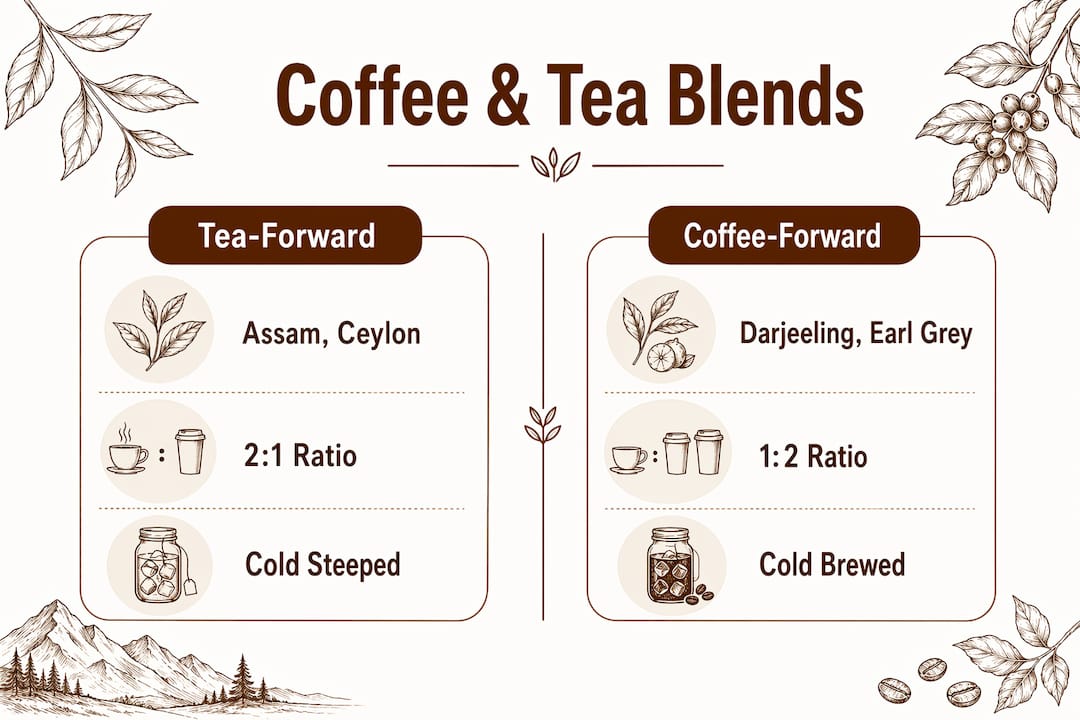
Coffee and tea pairing is the deliberate blending or serving together of these two beverages to create layered flavor profiles that neither drink achieves alone. By combining coffee’s roasted oils and acids with tea’s tannins and aromatics, you unlock a spectrum of flavor complexity that ranges from malty and sweet to bold and spicy. Recommended ratios run from 2:1 tea to coffee for tea-forward drinks, 1:1 for a balanced blend, and 1:2 for coffee-dominant results. Beyond flavor, pairing can also moderate caffeine effects. Tea’s L-theanine produces a smoother energy curve than coffee alone, making these combinations worth exploring for both taste and function.
Coffee and tea pairing explained: how flavors interact
The foundation of any good coffee and tea combination is understanding what each beverage brings to the cup. Coffee contributes roasted oils, organic acids, and bitterness. Tea contributes tannins, polyphenols, and delicate aromatics. When these elements meet, the tannins in tea interact with coffee’s acids to shift perceived bitterness and astringency in ways that can either harmonize or clash.
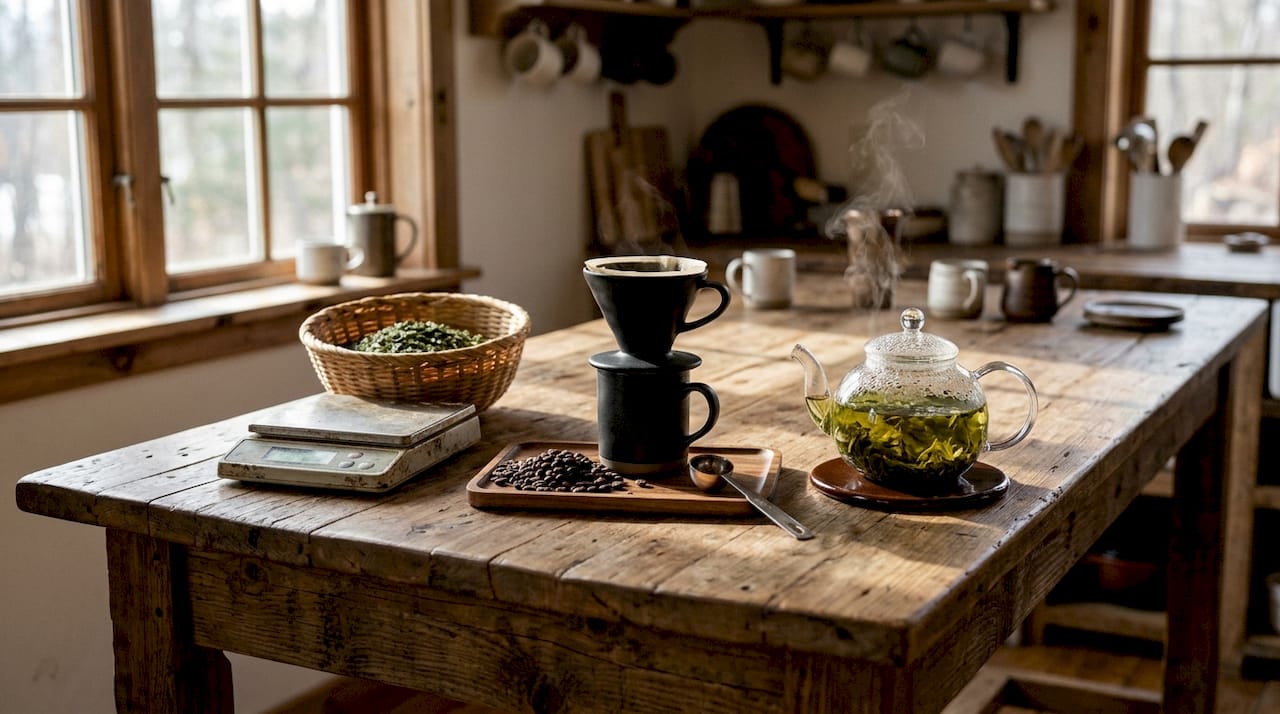
The key variable is extraction control. Separately brewing coffee and tea preserves flavor integrity because each requires different steeping temperatures and times. Coffee extracts best at higher temperatures over a short time. Tea needs lower, more controlled temperatures to avoid pulling excess tannins that turn the cup harsh and drying.
Once brewed separately, you combine the concentrates at your chosen ratio. The three standard ratios each produce a distinct result:
- 2:1 tea to coffee: Tea-forward, lighter body, subtle coffee undertone. Best for drinkers who want coffee’s depth without its dominance.
- 1:1 balanced: Equal presence of both. The most forgiving ratio for beginners because neither flavor overwhelms the other.
- 1:2 coffee to tea: Coffee-forward with tea’s aromatics as a background note. Works well with bold black teas like Assam.
Pro Tip: Brew your tea and coffee as concentrates rather than standard-strength drinks. This gives you precise control over the final ratio without diluting the blend.
Understanding coffee’s flavor terroir also matters here. A fruity Ethiopian single-origin behaves very differently in a blend than a dark-roasted Sumatra. Matching the coffee’s natural flavor profile to the tea’s character is where pairing becomes a craft.
What are the most popular coffee and tea hybrid drinks?
Cultural traditions around the world have been combining coffee and tea for decades. These drinks are not novelty experiments. They are time-tested formulas with loyal followings.
-
Yuenyeung (Hong Kong): The original coffee and tea hybrid, yuenyeung originated in 1950s Hong Kong cafes as a way to bridge Western coffee culture with Chinese milk tea rituals. The standard recipe uses a 2:1 ratio of Hong Kong-style milk tea to coffee, sweetened with condensed milk. The result is a rich, malty drink with a creamy finish that neither coffee nor tea alone can replicate.
-
Kopi Cham (Malaysia and Singapore): A close cousin to yuenyeung, kopi cham uses local robusta coffee blended with strong black tea and evaporated milk rather than condensed milk. The evaporated milk adds creaminess without sweetness, letting the bitter and malty notes come through more clearly.
-
Dirty Chai (specialty cafés worldwide): A shot of espresso pulled directly into a masala chai base. The spiced tea, typically built on black tea with cardamom, cinnamon, ginger, and clove, wraps around the espresso’s intensity. The result is bold, aromatic, and warming. Dirty chai has become one of the most ordered specialty café hybrids in North America.
-
Iced coffee and green tea blends: Less traditional but growing in popularity, these cold blends pair light-roast cold brew with jasmine green tea or matcha. The floral notes in jasmine tea complement the bright acidity of a light roast without competing with it.
Each of these drinks honors the strengths of both beverages. Milk and sweeteners play a structural role in all of them, smoothing the points where coffee’s bitterness and tea’s astringency might otherwise clash.
How to create your own coffee and tea pairings at home
Making your own blends at home is straightforward once you understand the sequence. The process rewards patience and note-taking more than any special equipment.
-
Choose your base ingredients. For tea, Assam and Ceylon are the most forgiving starting points. Assam is malty and bold, which holds up against dark roasts. Ceylon is brighter and more citrusy, pairing well with medium roasts. For coffee, a medium roast with chocolate or caramel notes is the most versatile starting point.
-
Brew each separately under optimal conditions. Brew coffee at 195–205°F for 3–4 minutes using your preferred method. Brew black tea at 200–212°F for 3–4 minutes. Never steep tea longer than 5 minutes. Over-steeping tea causes excessive astringency that clashes with coffee’s acidity and is very difficult to correct after the fact.
-
Start with the 2:1 ratio. Combine two parts brewed tea with one part brewed coffee. Taste it before adding anything else. Note what you like and what feels off. Then adjust toward 1:1 or 1:2 based on your preference.
-
Add milk and sweeteners deliberately. Condensed milk adds sweetness and a viscous mouthfeel that physically smooths tannins and bitterness. Evaporated milk adds creaminess without sweetness. Plant-based milks like oat milk add a subtle sweetness and alter perceived aroma. Add sweeteners in small increments and taste between each addition.
-
Experiment with spice. Cardamom and cinnamon add warm aromatic lift to blends without overpowering the coffee roast notes. Use sparingly, typically 1–2 grams of ground spice per cup, and taste between adjustments.
| Variable | Tea-forward blend | Coffee-forward blend |
|---|---|---|
| Tea type | Assam, Ceylon | Darjeeling, Earl Grey |
| Coffee roast | Medium | Dark or espresso |
| Ratio | 2:1 tea to coffee | 1:2 tea to coffee |
| Milk choice | Condensed milk | Evaporated or oat milk |
| Best served | Hot | Hot or iced |
Pro Tip: For iced blends, use cold-brew methods. Cold-brew coffee and cold-steeped tea produce smoother, less acidic results. Steep coffee for 12–18 hours and tea for 6–12 hours, then combine at a 1:1 ratio over ice.
What foods pair best with coffee and tea blends?
Sophisticated food pairings go well beyond biscuits and pastries. The best matches balance texture and flavor contrast, using saltiness, crunch, and fat to complement the bitterness and tannins in your cup.
- Roasted salted pistachios with dark roast espresso or a coffee-forward blend. The salt cuts bitterness. The fat in the nut coats the palate and softens the roast’s edge. This pairing works particularly well with yuenyeung or any condensed milk blend.
- Peppermint tea blends with pistachio baklava. The mint’s cooling aromatics contrast with the warm sweetness of honey and pastry. The nut’s richness grounds the pairing and prevents the mint from tasting sharp.
- Earl Grey with lemon macarons. Earl Grey’s bergamot oil shares a citrus family with lemon. The macaron’s almond base adds a nutty depth that fills out the tea’s floral character.
- Flat white or dirty chai with Portuguese custard tarts (pastéis de nata). The caramelized top of the tart mirrors the roasted notes in espresso. The custard’s creaminess echoes the milk in the drink, creating a unified texture experience.
- Dark chocolate with any coffee and black tea blend. Chocolate at 70% cacao or higher shares bitter compounds with both coffee and tea. Pairing them creates resonance rather than contrast, deepening the overall flavor.
Texture matters as much as flavor. Buttery and crunchy foods create contrast against a smooth, milky blend. Soft and creamy foods create harmony. Both approaches work. The choice depends on whether you want the food to complement or counterpoint the drink.
Common mistakes that ruin coffee and tea pairings
Most pairing failures come from a small set of repeatable errors. Knowing them in advance saves you a lot of wasted cups.
- Brewing coffee and tea in the same vessel. This is the most common mistake. Different extraction needs mean one ingredient will always be over or under-extracted. Always brew separately and combine after.
- Over-steeping the tea. Excess tannin extraction creates a drying, astringent sensation that clashes with coffee’s acidity. Reduce steep time or lower water temperature if your blend tastes harsh.
- Adding too much sweetener too fast. Sweeteners mask aroma before they balance bitterness. Add in small amounts and taste after each addition.
- Using the wrong milk for the blend. Condensed milk dominates lighter blends. Oat milk can mute darker roasts. Match milk type to the intensity of your blend.
- Over-spicing. Cardamom and cinnamon enhance blends in small amounts. More than 2 grams per cup and the spice takes over, burying both the coffee and tea character.
- Ignoring temperature at serving. A blend that tastes balanced hot can taste flat or harsh cold. Always taste your blend at the temperature you plan to serve it.
Pro Tip: Keep a simple tasting log. Write down your ratio, tea type, coffee roast, milk choice, and your notes after each attempt. Three or four sessions of this produces a personal reference that is more useful than any recipe.
Key Takeaways
Successful coffee and tea pairing requires separate brewing, controlled ratios, and deliberate ingredient choices to produce a balanced and flavorful result.
| Point | Details |
|---|---|
| Brew separately | Always brew coffee and tea apart to control extraction and prevent bitterness. |
| Start with 2:1 | Use a 2:1 tea-to-coffee ratio as your baseline and adjust from there. |
| Match tea to roast | Pair bold teas like Assam with dark roasts; brighter teas like Ceylon with medium roasts. |
| Use milk strategically | Condensed milk smooths tannins; evaporated milk adds creaminess without sweetness. |
| Food pairing matters | Salty, fatty, or crunchy foods balance bitterness and enhance the overall tasting experience. |
Why I think most people are pairing coffee and tea backward
Most people who try coffee and tea combinations start with the coffee. They pull a shot, then pour tea into it. That instinct makes sense because coffee feels like the anchor. But in my experience, the tea should always lead.
When you build the blend around the tea, you preserve its aromatics. Tea’s delicate floral and malty notes are the first thing to disappear when coffee dominates. Starting with a strong tea base and adding coffee incrementally gives you far more control over the final character of the drink. The coffee becomes the seasoning, not the foundation.
I have also found that respecting the cultural origins of these blends produces better results than improvising from scratch. Yuenyeung’s 2:1 ratio was not chosen arbitrarily. It reflects decades of refinement in Hong Kong cafes. Starting there and adjusting to your taste is smarter than starting from zero. The flavored coffee options at Thejcoffeecollection have given me some of my best starting points, particularly the chocolate and cinnamon notes in their Mexico single-origin, which pairs beautifully with a strong Assam base.
My favorite pairing right now is a 2:1 Assam concentrate to medium-roast cold brew, finished with a small amount of condensed milk and a pinch of cardamom. It is malty, slightly sweet, and complex without being busy. Keep a tasting log. It sounds tedious, but three sessions of notes will teach you more than three months of guessing.
— jonathan
What Thejcoffeecollection offers for your pairing experiments
Thejcoffeecollection carries both the specialty coffee and the premium loose-leaf tea you need to start experimenting with pairings at home. Their single-origin coffee selections give you distinct flavor profiles, from bright and fruity to dark and earthy, so you can match the roast to your chosen tea with intention rather than guesswork.
The single-origin sample pack lets you taste six regional coffee profiles side by side, which is the fastest way to identify which roasts work best with your preferred teas. Their tea collection includes options like Hojicha and Moroccan Mint, both of which open up pairing possibilities well beyond standard black tea blends. If you are building a tea and coffee gift pairing guide for someone else, a combination of the sample pack and a curated tea selection makes a genuinely useful and personal gift.
FAQ
What is coffee and tea pairing?
Coffee and tea pairing is the deliberate blending or serving together of coffee and tea to create layered flavor profiles. It combines coffee’s roasted oils and acids with tea’s tannins and aromatics for a more complex tasting experience.
What ratio should I use for a coffee and tea blend?
Start with a 2:1 tea-to-coffee ratio for a tea-forward drink, 1:1 for a balanced blend, or 1:2 for a coffee-dominant result. Adjust based on your flavor preference after tasting.
Why should I brew coffee and tea separately?
Coffee and tea require different steeping temperatures and times. Brewing them in the same vessel causes one to over-extract, producing bitterness or astringency that disrupts the blend’s balance.
What milk works best in a coffee and tea blend?
Condensed milk adds sweetness and a smooth, viscous mouthfeel that softens tannins and bitterness. Evaporated milk adds creaminess without sweetness, and plant-based milks like oat milk alter aroma and add subtle sweetness.
What foods pair well with coffee and tea blends?
Roasted salted pistachios, dark chocolate, lemon macarons, and Portuguese custard tarts all pair well with coffee and tea combinations. Salty and fatty foods cut bitterness, while creamy textures create harmony with milky blends.
Recommended
- Coffee Terroir and Flavor: What Every Enthusiast Must Know – The J Coffee Collection
- Coffee Cupping Process Explained for Beginners – The J Coffee Collection
- Coffee Processing Methods Compared: A 2026 Flavor Guide – The J Coffee Collection
- Why Fresher Coffee Tastes Better: A Flavor Guide – The J Coffee Collection