

2–4g Matcha to Steady Your Day: Tea for Energy Dosing for Home Brewers
For a reliable energy lift without the crash, reach for black tea, matcha, or yerba mate. Each pairs caffeine with a balancing compound, L-theanine in black tea and matcha, theobromine in yerba mate, that produces steady, calm alertness instead of a spike. Adults should still track total daily caffeine intake and adjust for personal sensitivity.
TL;DR:
- Black tea provides a moderate caffeine boost with added L-theanine, making it ideal for morning wake-up without causing jitters.
- Matcha offers the highest caffeine content, up to 176 milligrams per serving, and delivers sustained mental clarity when weighed precisely.
- Yerba mate contains the strongest combination of caffeine, theobromine, and theophylline, supporting physical stamina for workouts or long shifts.
- Green, oolong, and white teas offer gentler lifts, suitable for afternoon focus and highly caffeine-sensitive individuals.
- Proper brewing and high leaf quality significantly influence caffeine levels and the energy experience from each tea.
Table of Contents
- Best Tea for Energy by Use Case: A Quick Guide
- How Tea Boosts Energy: Caffeine, L-Theanine, and Other Compounds
- Matcha, Black Tea, Yerba Mate, Green, Oolong, White: What Each One Delivers
- How to Brew Tea for the Best Energy Boost
- What Leaf Quality Tells You Before You Even Brew
- Making Energizing Tea Part of a Routine That Actually Sticks
- Try It Yourself: Where to Start With Thejcoffeecollection
- Sources
Best Tea for Energy by Use Case: A Quick Guide
Not every energy dip calls for the same cup. Matching the tea to the moment matters more than picking the single “strongest” option on paper.
- Morning wake-up: Black tea is the classic choice, delivering a moderate amount of caffeine per 8-ounce cup along with L-theanine and antioxidants. Brew it 3 to 5 minutes for a strong, balanced cup that doesn’t turn bitter.
- Sustained focus at your desk: Matcha wins here because you’re drinking the whole ground leaf, not just an infusion. A 2 to 4 gram serving can deliver anywhere from about 38 to 176 milligrams of caffeine, so dosing precisely matters if you want steady output through a long work block.
- Pre-workout or physical stamina: Yerba mate usually provides a moderate to higher caffeine content per 8-ounce serving plus theobromine and theophylline, compounds that seem to make the lift feel fuller for physical effort, not just mental sharpness.
- Gentler, all-day sipping: Green tea, oolong, and white tea generally provide lower caffeine levels depending on type and steep time, suitable for a mild boost, making them better suited to readers who want a mild boost without any afternoon jitters.
If you’re brand new to any of these, start on the low end of the caffeine range and see how your body responds before working up to a stronger brew or a bigger matcha dose.
How Tea Boosts Energy: Caffeine, L-Theanine, and Other Compounds
Caffeine works by blocking adenosine, the molecule that signals your brain toward drowsiness. It kicks in within 15 to 45 minutes and its strength depends heavily on leaf type, grind, and brew time, which is why two cups labeled “black tea” can differ wildly in how much of a lift they give you.
What makes tea feel different from a can of energy drink or a double espresso is L-theanine. This amino acid slows how quickly caffeine hits your system and smooths out the curve, producing what researchers and dietitians describe as calm alertness rather than a jittery spike. That’s the real mechanism behind tea’s reputation for “focus without the crash.”
Other compounds play supporting roles. Yerba mate carries theobromine and theophylline alongside caffeine, methylxanthines that seem to extend the energy into physical performance. Black tea contains theaflavins, antioxidant compounds formed during oxidation that contribute to its color and, some researchers believe, its metabolic effects.
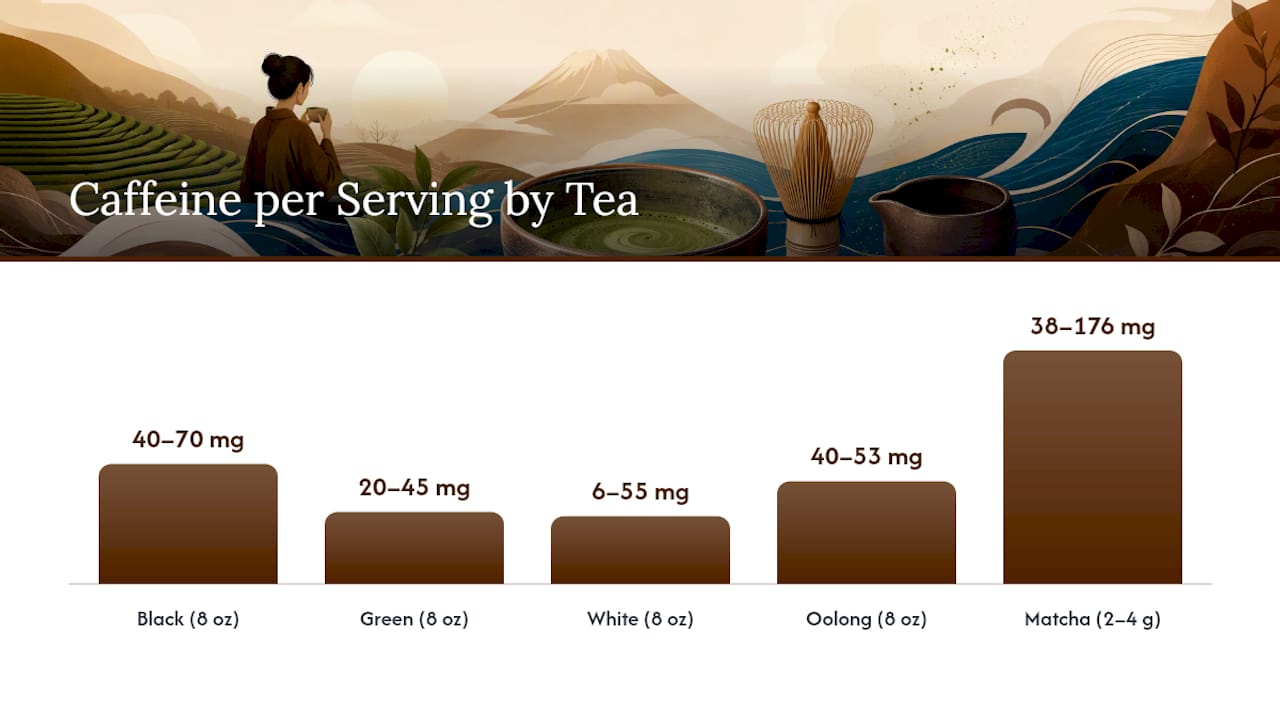
Caffeine by the cup: black tea runs about 40 to 70 milligrams per 8 ounces, green tea about 20 to 45, white tea as low as 6 and as high as 55, oolong around 40 to 53, and matcha anywhere from 38 to 176 milligrams per 2 to 4 gram serving, depending entirely on how much powder you use.
For adults, most guidance caps daily caffeine intake well below what causes real problems, but individual tolerance varies enormously. Children and teens are generally advised to avoid caffeine altogether, and anyone prone to anxiety or sleep trouble should watch their total intake across coffee, tea, and other sources combined, not just count cups of tea in isolation.
Matcha, Black Tea, Yerba Mate, Green, Oolong, White: What Each One Delivers
Here’s what actually separates these six teas beyond just “some have more caffeine than others.”
Matcha stands apart because you consume the entire leaf, stone ground into powder, rather than an infusion. That’s why a typical 2 to 4 gram serving carries such a wide caffeine range, about 38 to 176 milligrams. A ceremonial-grade, lightly measured serving gives gentle, sustained focus. A heavier culinary-grade scoop can rival a cup of coffee. Pick this if you want long, even mental clarity through a work session and are willing to weigh your powder rather than eyeball a spoonful.
Black tea is the expert pick for a straightforward energy boost. It generally provides the most caffeine among common teas, roughly 40 to 70 milligrams per 8-ounce cup, plus L-theanine for balance. Pick this if you want a familiar, strong morning cup with minimal fuss.
Yerba mate reports 53 to 107 milligrams per 8-ounce serving, with theobromine and theophylline layered on top of caffeine. That combination is why so many athletes reach for it before training. Pick this if your energy need is physical, not just mental, think a workout, a long hike, or a demanding shift on your feet.
Green tea sits in the moderate range, about 20 to 45 milligrams per cup, with a gentler, more gradual lift. Pick this if you want focus that lasts through the afternoon without feeling wired. Curious readers can dig deeper into exact caffeine ranges in green tea and how brewing changes them.
Oolong lands in a similar mid-range, around 40 to 53 milligrams, but its partial oxidation gives it a rounder, more complex flavor than green tea. Pick this if you want variety in your daily rotation without a big swing in caffeine.
White tea is the lightest touch, anywhere from 6 to 55 milligrams depending on the specific leaf and steep time. Pick this if you’re highly caffeine-sensitive or drinking your third cup of the day and don’t want to disrupt sleep. It also comes with its own set of documented benefits worth knowing beyond just the caffeine count.
How to Brew Tea for the Best Energy Boost
Steep time and temperature change more than flavor. They change how much caffeine actually ends up in your cup, and how bitter that cup tastes.
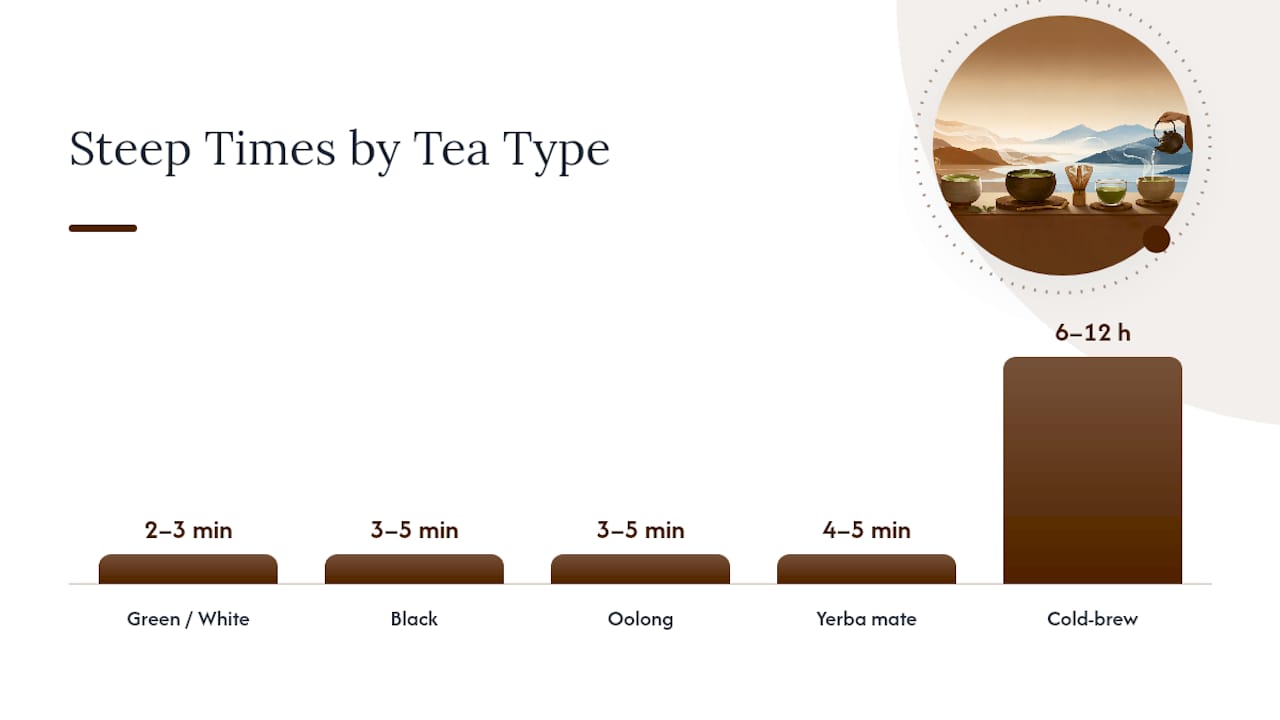
- Black tea: Use just-boiled water and steep 3 to 5 minutes. Longer extracts more caffeine but pushes the tannins into bitter territory fast.
- Green and white tea: Use water around 175°F, well off the boil, and steep 2 to 3 minutes. Hotter water scorches the leaf and turns the cup grassy or harsh.
- Oolong: Steep 3 to 5 minutes at around 195°F, and consider a second short steep. Many oolongs open up more on the second pour.
- Yerba mate: Steep 4 to 5 minutes just below boiling, or follow a traditional gourd-and-bombilla method if you have one.
- Matcha: Sift 2 to 4 grams into a bowl, add a small amount of hot (not boiling) water, and whisk briskly in a zigzag until frothy. For iced matcha, whisk with a splash of hot water first, then pour over ice, so the powder doesn’t clump.
Cold-brewing any of these, steeping in cold water for 6 to 12 hours in the fridge, tends to pull less caffeine and fewer tannins, giving you a smoother, less bitter result if you want a gentler afternoon option.
Timing matters as much as brewing. Save your strongest cup, matcha or black tea, for morning or a pre-workout window. Shift to green, oolong, or white in the afternoon, and stop caffeinated tea at least 6 to 8 hours before bed to protect your sleep.
Pro Tip: Weigh your matcha on a kitchen scale instead of eyeballing a teaspoon. A “heaping scoop” can easily double your intended caffeine dose without you realizing it.
What Leaf Quality Tells You Before You Even Brew
Not all leaf is created equal, and it shows up in your energy, not just your flavor. Where and how a tea is grown affects both its caffeine concentration and how clean the resulting lift feels. Younger leaves and buds, the kind used in higher grades of matcha and many single-origin black teas, tend to carry more caffeine than older, coarser leaves picked later in the season.
Single-origin sourcing and careful grading are important, choosing leaf lots for flavor and consistency rather than grabbing whatever’s cheapest on the commodity market. That kind of sourcing discipline is worth looking for whether you buy from us or anywhere else.
A few practical starting points if you’re building out your tea shelf:
- Start with a sample pack if you want to compare black tea, green tea, and matcha side by side before committing to a full bag.
- Choose whole-leaf or ceremonial-grade matcha over powdered “blends” if dose control matters to you.
- Weigh matcha rather than scoop it, and use the green tea caffeine breakdown as a reference point for calibrating your own cup.
Making Energizing Tea Part of a Routine That Actually Sticks
Rotating between black tea, matcha, and yerba mate through the week does two things: it keeps your palate interested, and it prevents the mild tolerance buildup that comes from leaning on the exact same caffeine dose every single morning.
Pair your cup with water and a bit of food, especially in the morning, since caffeine on an empty stomach is a common cause of the jittery feeling people blame on tea itself. And keep the bigger picture in view: tea can sharpen a tired afternoon, but it can’t substitute for sleep, movement, or a decent diet. Treat it as a lever you pull, not the whole machine.
— jonathan
Try It Yourself: Where to Start With Thejcoffeecollection
You don’t need to guess which tea fits your routine, you can just try a few side by side. Thejcoffeecollection curates single-origin teas and naturally flavored options with the same care we put into our coffee, so you’re comparing real leaf quality, not commodity dust in a bag.

The simplest starting point is a sample pack: brew one cup of black tea in the morning, one matcha in the early afternoon, and note how each one feels over a week. From there, dial in your steep time and dose using the brewing guidance above. If you already know you want a stronger caffeine profile to start your day, our single-origin coffee selection is worth a look too, or grab a flavored coffee sample pack to test flavor alongside your tea rotation. Either way, start small, track how you feel, and adjust from there.