

Coffee Drinkers: Most Reishi Coffee Blends Fall Short of Trial Doses
Reishi coffee plausibly supports immune balance and antioxidant activity based on preclinical and small human studies, but the evidence in people remains thin, and most coffee blends contain far less reishi than the doses used in clinical trials. The realistic takeaway: it may be a reasonable addition to a healthy routine, but it is not a substitute for medical treatment or a proven cure for anything.
TL;DR:
- Most coffee blends contain significantly lower doses of reishi than those used in clinical trials, limiting potential health benefits.
- Human studies show small, inconsistent effects on immunity, antioxidants, fatigue, and cardiometabolic markers, with no conclusive proof.
- Reishi’s safety is generally good at typical doses, but it can interact with blood thinners and diabetes medications, with rare cases of liver injury reported.
- To ensure effectiveness, look for products with stated milligram amounts and specific extract types, preferably with third-party testing.
- Reishi coffee should be viewed as a healthy addition rather than a cure or substitute for medical treatment.
Table of Contents
- Reishi Coffee Benefits: What Each Claim Is Actually Backed By
- What the Clinical Research Actually Shows
- How Reishi Coffee Differs From Supplements and Extracts
- Reishi Coffee Side Effects and Drug Interaction Risks
- How to Try Reishi Coffee Safely
- Our Approach to Mushroom Coffee at The J Coffee Collection
- Try Reishi Coffee Without the Guesswork
- Sources
- FAQ
Reishi Coffee Benefits: What Each Claim Is Actually Backed By
Reishi mushroom (Ganoderma lucidum) has been used in traditional medicine for centuries, but modern research tells a more measured story than the marketing around mushroom coffee suggests. Some claims hold up better than others once you look at the actual studies behind them.
Immune modulation is the best-supported claim. A PMC-published analysis of medicinal mushrooms found consistent mechanistic plausibility for immune effects, though the human trials behind it tend to be small and vary widely in design. That gap between “how it works in a petri dish” and “what it does in your body” runs through nearly every benefit on this list.
Antioxidant and anti-inflammatory effects show a similar pattern. Reishi’s triterpenoids and polysaccharides demonstrate antioxidant activity in cell studies, and some researchers link this to long-term markers like inflammatory blood proteins. Whether that translates into a felt difference for a healthy adult drinking one cup a day is not something current research answers with confidence.
Fatigue, mood, and sleep claims rest on some of the thinnest evidence in the reishi world. A handful of small studies report subjective improvements in fatigue and mood, but sample sizes are often under 50 people, and self-reported outcomes are notoriously easy to skew with placebo effects.
Cardiometabolic markers, including blood sugar, cholesterol, and blood pressure, show occasional positive signals in limited trials, but nothing close to a consistent, replicated effect.
- Immune support: moderate mechanistic evidence, limited human confirmation
- Antioxidant activity: strong in lab studies, unclear real-world impact
- Fatigue and mood: small, inconsistent human data
- Cardiometabolic effects: occasional signals, not a reliable pattern
Quick fact: Some literature cites safe reishi doses as high as 1,400 to 5,000 milligrams per day, a range far above what a typical mushroom coffee packet delivers.
Traditional use and modern research aren’t the same thing. Centuries of use tell you reishi has a long safety track record in various forms, not that it delivers a specific, measurable health outcome in a cup of coffee.
What the Clinical Research Actually Shows
Most of what we know about reishi comes from cell and animal studies, not human trials. That distinction matters more than most product labels let on. Lab and rodent research has shown liver protection and anti-tumor activity in controlled settings, according to the Merck Manual’s consumer guide on reishi, but the same source is blunt about the gap: those findings have not consistently carried over into well-designed human trials.
The human research that does exist tends to share a few limitations:
- Small sample sizes, frequently under 100 participants
- Short durations, often a few weeks to a few months
- Inconsistent dosing and extraction methods between studies, making comparisons difficult
- Mixed or null results on hard clinical endpoints like blood pressure or cholesterol, even when subjective symptoms improved
Representative PubMed reviews covering beta-glucans and triterpenoids find mechanistic plausibility for immune and antioxidant action, but the authors themselves flag inconsistent clinical outcomes as a recurring problem. Some trials find modest benefits; others find nothing distinguishable from placebo.
The honest summary is this: reishi looks promising in a lab dish and in mice, and it shows some encouraging signals in small human studies, but nothing here rises to the level of proof. Larger, longer, better-controlled randomized trials would need to confirm these effects before anyone could call reishi coffee a reliable health intervention rather than a reasonable bet.
How Reishi Coffee Differs From Supplements and Extracts
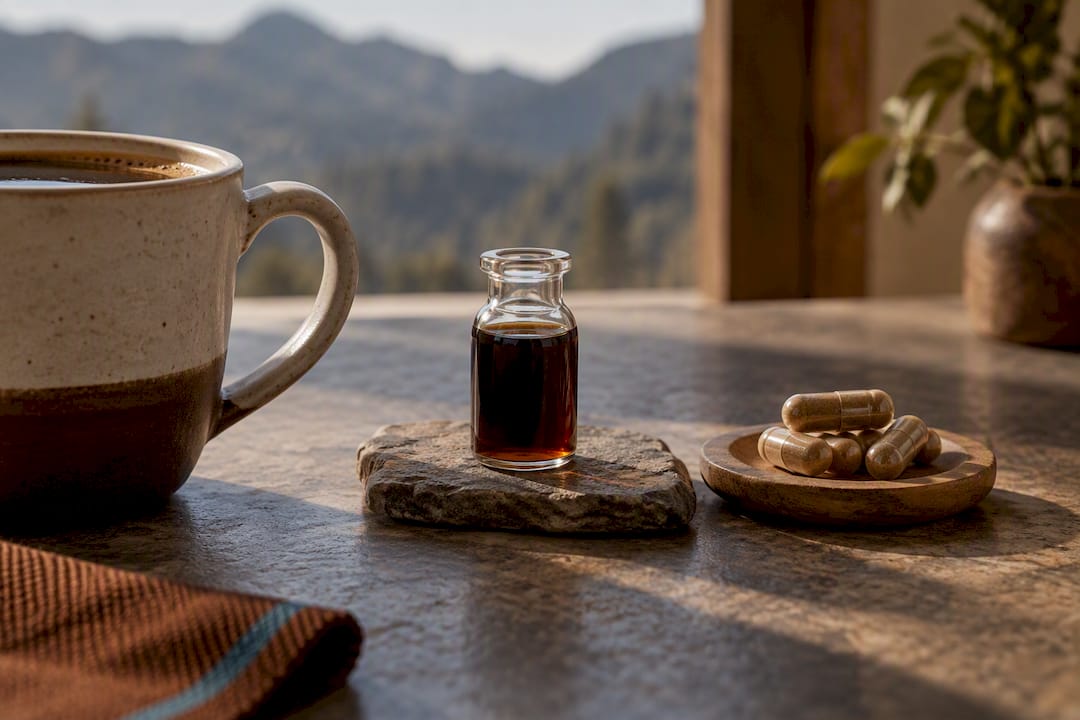
This is where a lot of consumer confusion starts. Clinical studies on reishi typically use standardized extracts in the range of hundreds to a few thousand milligrams per dose. A serving of mushroom coffee, by contrast, often contains a fraction of that amount blended into instant coffee or grounds, according to a Verywell Health safety overview of mushroom coffee. Lower dose generally means both lower potential benefit and lower potential risk.
Extraction method matters too. Water extraction concentrates polysaccharides, including beta-glucans, the compounds tied to immune activity. Alcohol or dual extraction pulls out more triterpenoids, linked to some of the anti-inflammatory and liver-related lab findings. A coffee product rarely tells you which method it used, which makes comparing products difficult.
- Check for a stated milligram amount per serving, not just “contains reishi”
- Look for the extract type (water, dual, or mycelium versus fruiting body)
- Favor brands that mention third-party testing for potency or contaminants
- Note the caffeine content, since many mushroom coffee blends cut caffeine to roughly half a normal cup, which changes the energy and sleep experience independent of any reishi effect
Pro Tip: Read the ingredient panel the same way you would a nutrition label. “Reishi mushroom powder” listed low on the ingredient list, with no milligram figure anywhere, usually means you’re getting a trace amount, not a clinical dose.
Reishi Coffee Side Effects and Drug Interaction Risks
Reishi is generally well tolerated at typical doses, but it isn’t risk-free, and the interaction warnings deserve real attention. The Merck Manual’s professional reference flags reishi’s potential to interact with blood thinners, raising bleeding risk, and with some diabetes medications, where it may compound blood sugar drops. Case reports have also linked reishi supplements to rare instances of liver injury, a concern echoed by Cleveland Clinic’s review of mushroom coffee.
Common, milder side effects include:
- Gastrointestinal upset, including nausea or stomach discomfort
- Allergic reactions, particularly in people sensitive to fungi
- Sleep disturbances in some users, especially at higher doses
- Dry mouth or throat irritation, reported occasionally in supplement form
Who should be more cautious: pregnant or breastfeeding individuals, people with weakened immune systems, and anyone taking anticoagulants (like warfarin) or medications that lower blood sugar. If you’re on any prescription medication, a conversation with your doctor before adding reishi coffee to your routine is a reasonable precaution, not an overreaction.
Watch for red flags like unusual bruising or bleeding, symptoms of low blood sugar (shakiness, confusion, sweating), or unexplained fatigue paired with yellowing skin or eyes, which can signal liver stress. Stop use and seek medical attention if any of these appear.
How to Try Reishi Coffee Safely
If you want to experiment with reishi coffee, treat it like any new supplement, not just a flavor variation on your usual cup.
- Start low and slow. Try one serving a day for a week before increasing frequency, and keep a simple symptom log for two to four weeks noting energy, digestion, and sleep.
- Mind the timing. If your blend has reduced caffeine, drinking it later in the day is less likely to disrupt sleep than a full-strength brew would.
- Read the label closely. Look for a stated reishi extract amount, the extraction type, and any mention of third-party testing before buying.
- Know your stop signals. Discontinue use and talk to a clinician if you notice unusual bleeding, unexplained fatigue, or if you have surgery scheduled, since reishi’s effect on blood clotting can matter in a surgical setting.
Pro Tip: If you take any prescription medication for blood sugar or clotting, bring the product label to your next appointment rather than asking generically about “mushroom supplements.” The extract type and dose on the label are what your doctor actually needs to assess interaction risk.
Our Approach to Mushroom Coffee at The J Coffee Collection
We built our Mushroom Coffee line the same way we build every collection: sourcing meticulously, roasting to order, and refusing to inflate what a cup can realistically do for you… Browse our product pages for ingredient specifics and testing details, and read more on our blog.
Try Reishi Coffee Without the Guesswork
Thejcoffeecollection’s advantage isn’t a bold health claim, it’s transparency about what’s actually in the cup. Our approach centers on meticulous sourcing and specialty-grade beans, so you know your reishi coffee comes from a roaster that treats mushroom blends with the same care as a single-origin pour-over, not as an afterthought bolted onto cheap robusta.
Our Mushroom Coffee collection comes in instant, ground, and pod formats, so you can pick whatever fits your morning routine. If you want to start with a specific blend, the Mushroom Coffee Medium Roast with Lion’s Mane, Cordyceps, and Reishi is a practical entry point, formulated as a wellness-support beverage rather than a medical treatment. For a bioavailability angle on functional ingredients more broadly, Wild Foodz’s breakdown of absorption science is worth a look. Ready to taste the difference sourcing makes? Visit the mushroom coffee collection and pick your format today.
Sources
- Reishi - Special Subjects - Merck Manual (Professional)
- PMC article on medicinal mushrooms and health effects
- Should you be drinking mushroom coffee? - Cleveland Clinic Health
FAQ
What Does Reishi Do for the Body?
Reishi’s beta-glucans and triterpenoids show immune-modulating and antioxidant activity in lab and animal studies, and some small human trials report similar signals. The Merck Manual notes that promising lab findings, including liver protection and anti-tumor activity, have not consistently translated into confirmed human benefits.
How Long Does It Take for Reishi to Work?
There’s no established timeline, since most human studies run only a few weeks to a few months and measure different outcomes. Any noticeable effect, like changes in energy or digestion, would likely take at least two to four weeks of consistent use to assess, which is why keeping a symptom log matters.
What Are the Potential Side Effects of Reishi Coffee?
Common side effects include mild gastrointestinal upset, allergic reactions in sensitive individuals, and occasional sleep disturbance. More serious concerns include interactions with blood thinners and certain diabetes medications, plus rare case reports of liver injury noted by Cleveland Clinic.
Does Reishi Get Rid of Belly Fat?
No human research supports reishi as a fat-loss tool. The evidence base focuses on immune and antioxidant activity, with cardiometabolic signals like blood sugar and cholesterol showing only occasional, inconsistent improvement in small trials.
Is Reishi Coffee Good for You?
It may support immune balance and antioxidant status for some people, but it isn’t a medical treatment or a proven cure. Choosing a brand that lists reishi extract amounts and testing details, like Thejcoffeecollection’s mushroom coffee line, helps you know what you’re actually drinking.