

Rare Coffee Varietals Explained for True Enthusiasts
Rare coffee varietals are defined as genetically distinct cultivars that produce cup profiles unavailable in any commercial commodity coffee. These are not marketing labels. They are specific plant genetics, shaped by centuries of isolation, selective cultivation, or natural mutation, that create flavors no standard Arabica blend can replicate. The specialty coffee world recognizes categories like heirloom landraces, legendary named cultivars such as Geisha and Bourbon, and obscure regional selections like SL28 and Maragogype. Understanding rare coffee varietals explained through the lens of genetics, terroir, and processing gives enthusiasts the tools to taste with intention and buy with confidence.
What are rare coffee varietals and why do they matter?
A coffee varietal is a specific genetic variety of the Coffea arabica species, the same way a Pinot Noir grape differs from a Cabernet Sauvignon. The term “varietal” is the industry-standard word; “variety” is used interchangeably in casual conversation, but specialty roasters and green coffee buyers use “varietal” to signal precision. Rare varietals matter because coffee flavor profiles vary significantly based on genetics, altitude, soil, microclimate, and processing methods. That variation is not subtle. A Geisha grown at 1,900 meters in Panama tastes nothing like a Typica from the same altitude in Jamaica.
The rarity comes from three sources: low yield, disease vulnerability, and geographic restriction. Varietals like Geisha and Eugenioides require up to 50% more labor than standard commercial cultivars due to sensitivity to disease and low cherry output. That labor cost, combined with limited growing regions, drives auction prices to levels that shock newcomers to the specialty market. Rarity is not manufactured scarcity. It is a direct result of the biology of the plant.
What is heirloom coffee and why does it matter?
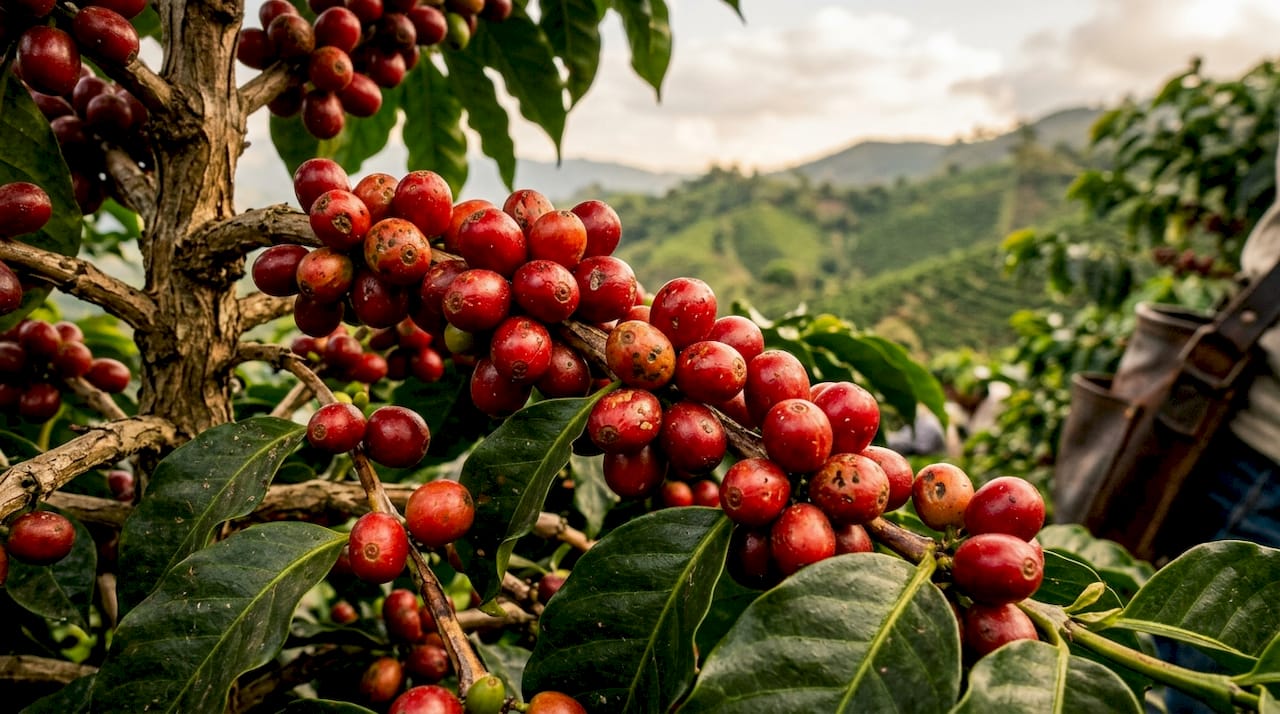
Heirloom coffee is defined as naturally occurring, indigenous landrace varieties found primarily in Ethiopia, without any commercial breeding or human selection. Ethiopia holds over 10,000 distinct uncatalogued coffee varieties, a level of genetic diversity that no other coffee-producing country comes close to matching. That diversity is the product of thousands of years of wild coffee evolution in the forests of Kaffa and Jimma. When you drink an Ethiopian heirloom, you are tasting genetics that predate modern agriculture.
The word “heirloom” is widely misused in coffee marketing. It is not a single variety. Some Ethiopian coffees labeled heirloom contain dozens of distinct genetics, which causes inconsistent flavor between harvests from the same farm. That inconsistency is not a defect. It is the nature of landrace genetics. But it does mean that two bags labeled “Ethiopian Heirloom” from the same region can taste completely different.
The geographic specificity of the term matters enormously. Coffees labeled heirloom from Colombia or Central America generally derive from imported known varieties like Typica and Bourbon, not from indigenous landraces. Using “heirloom” on a Colombian bag is a marketing choice, not a botanical fact. Enthusiasts who understand this distinction avoid paying premiums for vague labels.
Key distinctions to know:
- Landrace: A wild or semi-wild population that evolved naturally in a specific region, with no human selection for specific traits.
- Heirloom: In coffee, this refers specifically to Ethiopian and Yemeni landraces with deep indigenous genetic roots.
- Named varietal: A cultivar identified, catalogued, and selected for specific traits, such as Geisha, Bourbon, or SL28.
- JARC selections: Varieties developed by the Jimma Agricultural Research Center in Ethiopia, which provide sourcing transparency through numbered identifiers.
Pro Tip: When buying Ethiopian coffee, look for JARC selection numbers on the bag or from the roaster. A number like 74110 or 74112 tells you the varietal has been identified and tracked, giving you far more flavor predictability than a generic “heirloom” label.
What makes Geisha, Bourbon, and Typica so legendary?
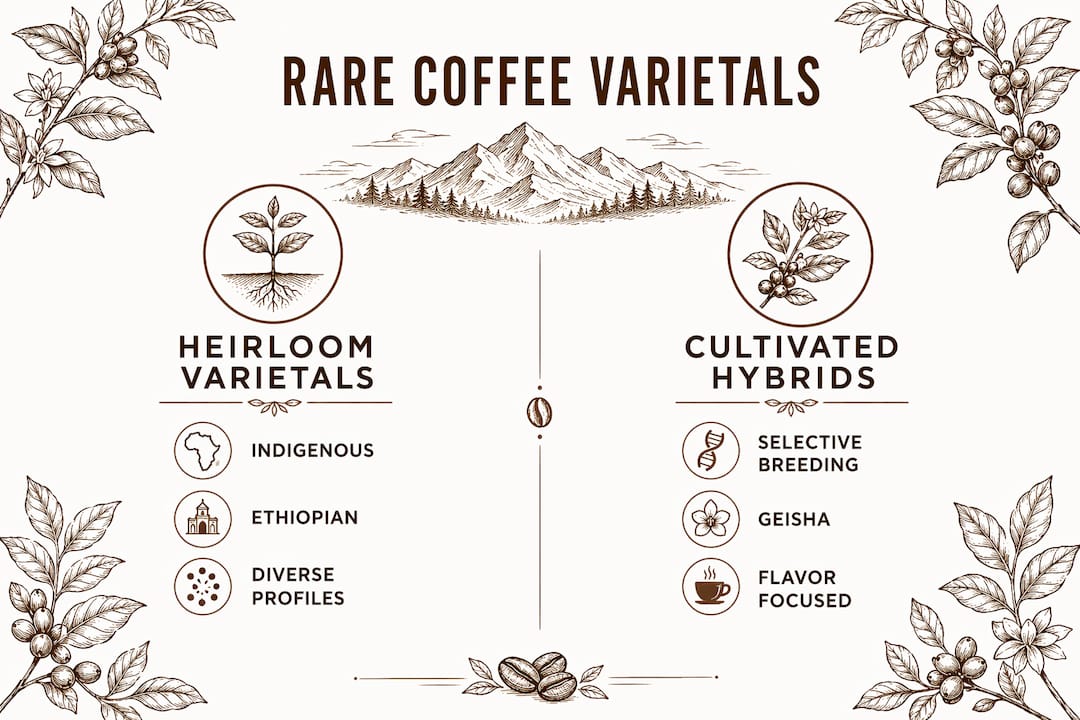
These three varietals form the backbone of rare coffee history, and each one tells a different story about genetics, geography, and flavor.
Typica is the genetic ancestor of most commercially important Arabica varieties grown outside Ethiopia. It traveled from Yemen to India, then to Java, and eventually to the Americas in the 18th century. Typica lots are increasingly rare and prized for elegant, restrained cup profiles, but the plant is highly susceptible to coffee leaf rust. Farmers who grow Typica accept lower yields and higher disease risk in exchange for a cup that specialty buyers describe as clean, refined, and historically significant.
Bourbon is a natural mutation of Typica that developed on the island of Réunion, formerly called Bourbon. It produces a balanced sweetness with notes of caramel, stone fruit, and mild acidity. Bourbon offers balanced sweetness that makes it one of the most approachable rare varietals for enthusiasts new to single-origin exploration. Its variants, including Yellow Bourbon, Pink Bourbon, and Caturra, each carry slightly different flavor expressions shaped by further mutation and regional adaptation.
Geisha, also spelled Gesha, is the varietal that changed the specialty coffee market permanently. Originally from the Gesha region of Ethiopia, it was brought to Panama in the 1960s and largely ignored until a 2004 competition revealed its extraordinary aromatic complexity. Auction prices for ultra-rare Geisha can reach thousands per pound due to scarcity and labor intensity. The flavor profile is unlike any other coffee: jasmine, bergamot, peach, and a tea-like delicacy that experienced tasters describe as closer to a fine oolong than a traditional espresso.
| Varietal | Origin | Flavor profile | Key challenge |
|---|---|---|---|
| Typica | Yemen via India | Clean, elegant, restrained | High disease susceptibility |
| Bourbon | Réunion Island | Balanced sweetness, stone fruit | Lower yield than modern cultivars |
| Geisha/Gesha | Ethiopia, cultivated in Panama | Floral, jasmine, peach, tea-like | Extremely low yield, high labor cost |
| SL28 | Kenya | Blackcurrant, citrus, bright acidity | Requires specific Kenyan terroir |
| Maragogype | Brazil | Mild, smooth, large bean size | Very low productivity |
| Pacamara | El Salvador | Complex, fruity, full body | Inconsistent ripening |
How do genetics, terroir, and processing shape rare coffee flavors?
Genetics set the ceiling for what a coffee can taste like. Terroir and processing determine how close to that ceiling the final cup gets. Genetics provide potential while environment and processing techniques realize flavor outcomes. This is why two bags of the same varietal from different farms can taste markedly different. The plant’s DNA is identical, but the soil chemistry, rainfall pattern, and drying method are not.
The three-factor framework works like this:
- Genetics: The varietal determines the base flavor compounds available in the bean. Geisha produces high concentrations of linalool, a floral aromatic compound. SL28 produces elevated malic and citric acids, which create its signature blackcurrant brightness. No amount of perfect terroir will make a Robusta taste like a Geisha.
- Terroir: Altitude, soil mineral content, shade cover, and microclimate all influence how flavor compounds develop during the growing season. Environmental factors termed terroir profoundly influence flavor development beyond genetics, especially in heirloom Ethiopian lots grown at elevations above 1,800 meters.
- Processing: Washed processing strips the fruit before drying, producing clean, bright, varietal-forward cups. Natural processing dries the whole cherry, adding fermented fruit notes that can amplify or mask the varietal’s genetic character. Honey processing sits between the two. Washing vs. natural processing can dramatically shift cup flavors even within the same varietal grown on the same farm.
Pro Tip: If you want to isolate a varietal’s genetic character, start with a washed example. Natural and honey processing add fruit-forward complexity that makes it harder to identify the varietal’s baseline flavor signature.
For a deeper look at how these methods interact, the coffee processing methods guide at Thejcoffeecollection breaks down washed, natural, and honey processing with regional examples. The coffee terroir explainer covers how altitude and soil chemistry translate directly into the cup.
How do you identify and appreciate rare varietals as a consumer?
Reading a coffee bag correctly is the first skill. Most specialty roasters print the varietal name, processing method, and farm or region on the label. If none of that information appears, the coffee is almost certainly a commercial blend with no traceable genetics. Transparency is the baseline signal of a serious roaster.
What to look for when buying rare varietal coffees:
- Varietal name: Look for Geisha, Bourbon, Typica, SL28, Pacamara, or a JARC number for Ethiopian selections. Generic terms like “heirloom” without further detail are a yellow flag.
- Processing method: Washed, natural, or honey should be stated. This context is necessary to interpret the flavor notes on the label.
- Farm or cooperative name: Single-farm traceability is a strong indicator of authenticity. Regional labels like “Yirgacheffe” or “Huila” are useful but less specific.
- Altitude: Higher altitude generally means slower cherry development and more complex sugars. Geisha performs best above 1,700 meters.
- Harvest year: Rare varietals are seasonal. A bag without a harvest date may be older stock, which affects freshness and flavor integrity.
Developing your palate for rare varietals requires tasting them side by side. Buy a single-origin sample pack that includes coffees from multiple regions and varietals, then brew each one identically using a pour-over or Aeropress. Removing brew variables lets the varietal’s character speak clearly. Keep notes on acidity, body, sweetness, and aroma. Over time, you will recognize Bourbon’s caramel sweetness or Geisha’s jasmine lift without needing the label. For guidance on sourcing authentic options, the guide to buying single-origin coffee at Thejcoffeecollection covers what questions to ask and what red flags to avoid.
Key Takeaways
Rare coffee varietals deliver their most distinctive flavors only when genetics, terroir, and processing all align, making sourcing transparency the single most important factor for enthusiasts.
| Point | Details |
|---|---|
| Heirloom is not one variety | Ethiopian heirloom coffees contain dozens of distinct genetics, so flavor varies between harvests. |
| Geisha commands premium prices | Labor costs run 30–50% higher than standard cultivars, explaining auction prices that reach thousands per pound. |
| Terroir realizes genetic potential | The same varietal grown on different hillsides produces measurably different flavor profiles. |
| Processing changes the cup | Washed processing reveals varietal character; natural processing adds fruit complexity that can mask genetics. |
| Label transparency signals quality | Bags listing varietal name, processing method, farm, and harvest year indicate a traceable, authentic product. |
Why varietal knowledge changes everything about how you drink coffee
Most coffee drinkers spend years chasing roast levels and brew ratios without ever asking what plant they are actually drinking. I did the same thing for longer than I care to admit. The shift happened when I tasted a washed Geisha from Boquete, Panama, next to a natural Ethiopian from Yirgacheffe. Both were extraordinary. But they were extraordinary in completely different directions, and understanding why required knowing the genetics behind each cup.
The uncomfortable truth about rare varietals is that the market has a noise problem. “Heirloom” appears on bags from origins where the term has no botanical meaning. Auction-grade Geisha gets used as a marketing phrase for coffees that share only the name. Enthusiasts who do not understand the difference between a landrace and a named cultivar are easy targets for premium pricing on ordinary coffee. Varietal literacy is not elitism. It is consumer protection.
What I find genuinely exciting is how much variation still exists within a single varietal. A Pink Bourbon from Huila, Colombia, processed as a natural can taste like strawberry jam and hibiscus. The same Pink Bourbon, washed, from a farm 20 kilometers away tastes like white peach and brown sugar. Neither is wrong. Both are correct expressions of the same genetics under different conditions. That variability is what makes rare varietals worth pursuing. You are never tasting the same coffee twice.
My advice: stop buying varietals based on price alone. Start asking your roaster for the JARC number on Ethiopian lots, the farm name on Geisha, and the processing method on anything labeled Bourbon. Those three questions will tell you more about what is in your cup than any tasting note ever will.
— jonathan
Premium rare varietals, curated and ready to brew
Thejcoffeecollection sources single-origin coffees with the traceability and varietal specificity that serious enthusiasts need. Every selection in the premium coffee collection includes origin details, processing method, and flavor notes, so you know exactly what you are brewing before the bag is open.
For enthusiasts who want to taste across regions and varietals without committing to full bags, the single-origin sample pack puts six distinct origins in one order. It is the most direct way to build varietal recognition through side-by-side tasting. Thejcoffeecollection’s sourcing process prioritizes freshness and transparency, which means the coffees arrive with the flavor integrity that rare varietals demand.
FAQ
What is a rare coffee varietal?
A rare coffee varietal is a genetically distinct cultivar of Coffea arabica that produces unique flavor compounds unavailable in commercial commodity coffee. Rarity results from low yield, disease vulnerability, or geographic restriction to specific growing regions.
What does heirloom mean in coffee?
Heirloom coffee refers to naturally occurring, indigenous landrace varieties found primarily in Ethiopia, without commercial breeding. The term is often misused on coffees from Colombia or Central America, where plants derive from imported Typica or Bourbon genetics rather than true indigenous landraces.
Why is Geisha coffee so expensive?
Geisha requires 30–50% more labor than standard cultivars due to low yields and disease sensitivity. Auction prices can reach thousands of dollars per pound, reflecting both the scarcity of properly grown Geisha and the extraordinary aromatic complexity it delivers in the cup.
How does processing affect a rare varietal’s flavor?
Washed processing produces clean, varietal-forward cups that highlight the plant’s genetic character. Natural processing adds fermented fruit notes that can amplify or mask the varietal’s baseline flavor, making the same genetics taste dramatically different depending on the drying method used.
How can I tell if a coffee bag is genuinely a rare varietal?
Look for the varietal name, processing method, farm or cooperative name, altitude, and harvest year on the label. Bags that list only a country of origin or use “heirloom” without further detail lack the traceability that authenticates a rare varietal claim.
Recommended
- Coffee Terroir and Flavor: What Every Enthusiast Must Know – The J Coffee Collection
- Coffee Processing Methods Compared: A 2026 Flavor Guide – The J Coffee Collection
- Single Origin vs Blend Coffee Explained – The J Coffee Collection
- Coffee Cupping Process Explained for Beginners – The J Coffee Collection