

Your Complete Pre-Portioned Coffee Options Guide
Six formats, one clear starting point: if you want speed without sacrificing too much flavor, coffee pods or capsules handle the morning rush, and single-serve pour-over packets step up when you have two extra minutes and want a noticeably better cup. That pairing covers most situations.
Before picking a format, run through these four considerations:
- Equipment you already own. K-Cup-style pods need a single-serve drip machine; Nespresso-style capsules need a capsule espresso machine; pour-over packets and instant need nothing but hot water.
- Taste priority. Pour-over packets and ESE pods tend to produce cleaner, more nuanced flavor. Instant is fast but flatter.
- Cost per cup. Instant and sachets run cheapest; Nespresso-compatible capsules sit at the high end.
- Environmental trade-offs. Single-use plastic pods generate the most waste; compostable pods, sachets, and pour-over packets are lighter on landfill.
Thejcoffeecollection covers all four categories: coffee pods, instant coffee in 30-serving packs, a single-origin sample pack, and a mushroom instant coffee line for health-conscious drinkers.
Key Takeaways
The most practical move in this pre-portioned coffee options guide is to match your format to your equipment first, then optimize for taste and budget from there.
| Point | Details |
|---|---|
| Match format to equipment | No machine? Use instant or pour-over packets. Single-serve drip? K-Cup pods. Capsule espresso? Nespresso or ESE. |
| Pour-over packets win on flavor | Single-serve pour-over packets deliver noticeably better flavor than basic pre-ground and need zero equipment. |
| Freshness signals to check | Look for a roast date, one-way valve, and resealable closure before buying any pre-portioned format. |
| Storage extends shelf life | Keep all formats cool, dark, and airtight; opened sachets decline in 7–14 days, instant lasts 1–3 months. |
| Thejcoffeecollection sample pack | The single-origin sample pack is the lowest-risk way to find your preferred format and flavor before committing. |
Table of Contents
- What are the main pre-portioned coffee formats?
- How do you choose the right pre-portioned format?
- Brewing tips that actually improve your cup
- How long does pre-portioned coffee stay fresh?
- Why Thejcoffeecollection curates pre-portioned options
- Thejcoffeecollection pre-portioned products worth trying
- Sources
What are the main pre-portioned coffee formats?
Every format in this pre-portioned coffee options guide brews differently, costs differently, and produces a different cup. Here is what you are actually choosing between.
K-Cup-style pods
Drop one into a single-serve drip machine, press a button, done in under a minute. The sealed plastic-and-foil pod holds pre-ground coffee at a fixed dose. Flavor ranges from thin to genuinely good. A 40-pod taste test found several inexpensive K-Cups delivered strong, balanced cups, so premium price does not always mean better taste. Cost per cup typically runs in the mid-range price category. Shelf life unopened is generally several months.
- Pros: dead-simple, no mess, huge variety
- Cons: plastic waste, limited espresso-style options, fixed dose
- Best for: busy weekday mornings, offices
Nespresso-style capsules
Aluminum or plastic capsules designed for capsule espresso machines that push water through at higher pressure. The result is a short, concentrated shot with crema. Cost per cup runs at a relatively higher price point. These capsules are machine-specific, so check compatibility before buying.
- Pros: espresso-style output, consistent pressure extraction
- Cons: machine lock-in, higher cost, recycling requires mail-back programs
- Best for: espresso drinkers, lattes, cappuccinos
ESE pods (pucks)
A 44mm paper-wrapped puck of tamped espresso-grind coffee. Works in any espresso machine with an ESE-compatible portafilter basket. Cleaner than loose grounds, easier than tamping yourself. Cost per cup is moderately priced in the mid-range.
- Pros: paper-based (more eco-friendly), espresso quality, no tamping
- Cons: less common in U.S. retail, requires an espresso machine
- Best for: home espresso setups, eco-conscious espresso drinkers
Single-serve pour-over packets
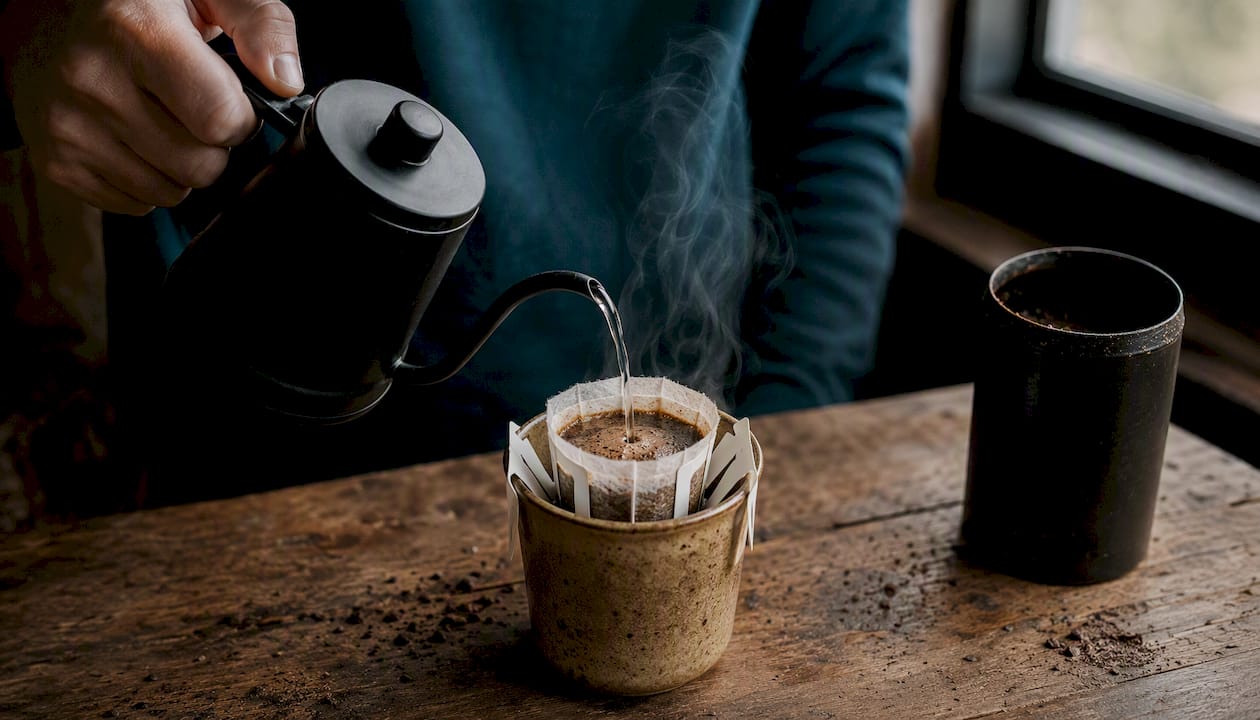
A filter bag with pre-dosed ground coffee that hangs over your mug. Pour hot water slowly and you get a pour-over profile with zero equipment. Reviewers consistently find these packets deliver noticeably better flavor than basic pre-ground options and are especially useful for travel and minimalist setups. Cost per cup is on the higher side compared to other formats.
- Pros: excellent flavor, no machine needed, compact for travel
- Cons: takes 3–5 minutes, pricier per cup, more packaging than sachets
- Best for: travel, camping, hotel rooms, flavor-first drinkers
Pre-portioned ground sachets and sticks
A sealed foil or paper packet holding one dose of pre-ground coffee, usually for drip or French press. Cheaper than pour-over packets, more flexible than pods. Cost per cup tends to be affordable, but varies by product.
- Pros: low cost, no machine required for some formats, compact
- Cons: requires a brewer or press, less flavor protection than sealed pods
- Best for: budget-conscious drinkers, camping, office drip machines
Instant and soluble coffee
Freeze-dried or spray-dried granules that dissolve in hot or cold water. No equipment at all. Quality has improved considerably, especially with specialty-grade instant. Cost per cup is on the lower end among brewing options.
- Pros: fastest possible prep, lightest to pack, long shelf life (2+ years)
- Cons: flavor ceiling lower than brewed formats, some bitterness
- Best for: travel, camping, emergency backup, health-focused blends
Ready-to-drink (RTD)
Canned or bottled coffee, cold brew, or lattes. No prep at all. Cost per cup is typically higher than brewed options. Shelf life: 6–12 months refrigerated.
- Pros: zero prep, consistent, portable
- Cons: most expensive per serving, refrigeration needed, heavier to carry
- Best for: commutes, gym bags, hot-weather mornings
Pro Tip: Some single-serve machines, like certain Ninja models, accept both pods and loose grounds, giving you format flexibility without buying a second brewer.
How do you choose the right pre-portioned format?
Work through this in order and you will have a clear answer in under a minute.
- Start with what you own. No machine? Instant, pour-over packets, and RTD are your only real options. Have a single-serve drip machine? K-Cup pods. Have a capsule espresso machine? Nespresso-style capsules or ESE pods.
- Decide how much flavor matters today. If you want the best cup possible from a pre-portioned format, pour-over packets and ESE pods win. If speed is the priority, pods and instant win.
- Set a per-cup budget. Under $0.50 points you toward instant or sachets. $0.50–$1.00 covers most pods. Above $1.00 gets you pour-over packets or Nespresso capsules.
- Factor in waste. If sustainability matters, look for compostable pods, paper-based ESE pucks, or pour-over packets with recyclable components. Check for certifications: Fair Trade, USDA Organic, and third-party compostable labels (look for BPI or TÜV certification, not just “eco-friendly” marketing copy).
- Check the label before buying. A roast date, one-way degassing valve, and resealable closure are the three signals that a brand takes freshness seriously. Bags with roast dates and one-way valves stay near-peak for roughly 2–3 months unopened.
Three quick diagnostic questions:
- Do I have a machine, and which type? (Narrows format immediately.)
- Am I making this at home, traveling, or both? (Travel favors pour-over packets or instant.)
- Do I want espresso-style or drip-style? (Espresso points to capsules or ESE; drip points to pods or sachets.)
Red flags to avoid: no roast date on the packaging, vague grind labeling (“fine” with no method guidance), non-resealable bags, no recycling or compostability instructions, and plastics with no BPA-free claim.
Brewing tips that actually improve your cup
Pods and capsules
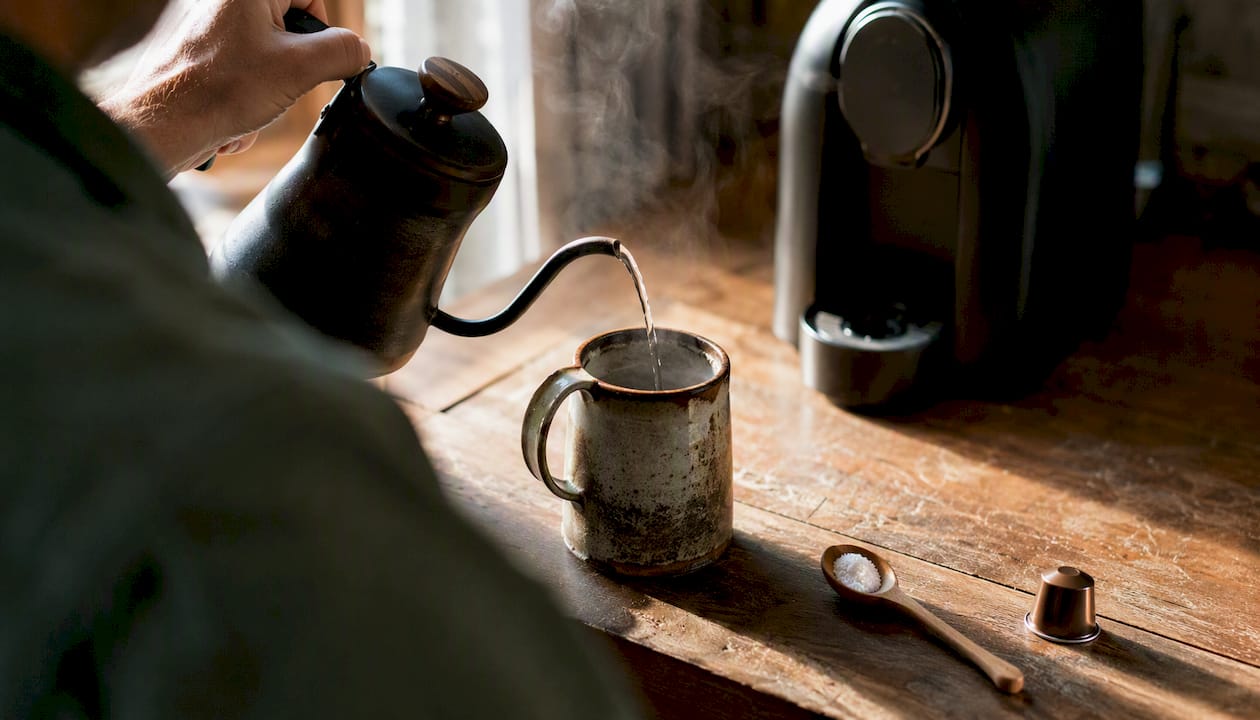
Preheat your mug with hot water before brewing. Cold ceramic drops the cup temperature fast, and testing shows temperature retention is one of the biggest factors separating a rich cup from a flat one. Choose the smallest brew-size option your machine offers for stronger flavor; the larger sizes dilute the fixed dose. For coffee extraction basics, the dose-to-water ratio matters even in a sealed pod.
Pour-over packets
Water temperature is the lever. Aim for 195–205°F (just off the boil). Pour in slow, steady circles, starting from the center. Let the grounds bloom for 30 seconds before continuing. This single step noticeably reduces bitterness.
Sachets and pre-ground
Bloom the grounds with a small pour of hot water, wait 30 seconds, then add the rest. Stir once at the end. Grind size matters even in pre-portioned formats: a sachet labeled “medium” works for drip; using it in a French press will over-extract.
Instant coffee
Use water at 175–185°F, not boiling. Boiling water scorches instant granules and amplifies bitterness. Stir thoroughly until fully dissolved before tasting.
Pro Tip: To cut bitterness across any format, reduce brew size by one step or add a small pinch of salt to the grounds before brewing. Salt suppresses bitter compounds without adding flavor.
How long does pre-portioned coffee stay fresh?
Shelf life varies, with storage conditions playing a significant role.
- Sealed pods and capsules: 8–12 months unopened; use within days once the foil is punctured.
- Pour-over packets: 6–12 months sealed; use immediately after opening.
- Instant coffee: 2+ years sealed; 1–3 months after opening if stored airtight.
- Pre-ground sachets: 3–6 months sealed; 7–14 days after opening.
- RTD bottles/cans: 6–12 months; refrigerate after opening and use within 24 hours.
Storage checklist: keep all formats in a cool, dark spot away from heat and humidity. Never store near the stove or in direct sunlight. Airtight containers extend life for opened sachets and instant. Buying in smaller quantities or through a subscription that ships frequently prevents the stale-grounds problem that plagues bulk buyers.
Freshness signal: Packaging with a nitrogen flush, a one-way degassing valve, and a resealable zipper closure indicates the brand engineered for freshness, not just shelf presence.
On sustainability: standard plastic K-Cups are the worst offenders for landfill waste. Compostable pods (look for BPI certification), paper ESE pucks, and pour-over packets with paper filters are meaningfully better. Some capsule brands offer mail-back recycling programs. Refillable capsule inserts are another option for capsule espresso machine owners who want to use their own grounds.
On health and materials: look for “BPA-free” on any plastic pod or capsule. Food-grade plastics are standard in reputable brands, but it is worth confirming, especially for capsules exposed to high-pressure hot water.
Why Thejcoffeecollection curates pre-portioned options
The pre-portioned coffee category is crowded with products that prioritize shelf life over cup quality. Thejcoffeecollection takes a different approach: every pre-portioned product in the lineup is selected with extraction in mind, which means roast-date transparency, sealed packaging that protects freshness, and sourcing that traces back to the origin.
The product range maps directly to the formats in this guide. The coffee pods deliver consistent single-serve convenience. The 30-serving instant coffee pack is specialty-grade, not the flat commodity instant most people associate with the format. The single-origin sample pack lets you taste across origins before committing to a full bag, which is the lowest-risk way to find your preferred flavor profile. The mushroom instant coffee (Lion’s Mane, Cordyceps, Reishi) serves the health-conscious drinker who wants functional ingredients without sacrificing morning ritual.
Thejcoffeecollection pre-portioned products worth trying
The four products below map directly to the formats and use-cases covered in this guide.
Coffee Pods handle the speed-first morning with no compromise on sourcing quality. Instant Coffee (30 Servings) is the travel and camping pick, specialty-grade and ready in under a minute. The Single Origin Sample Pack is the smartest starting point if you are undecided: six world regions, low commitment, and a clear way to identify which origin and roast level you actually prefer before buying a full bag. The Mushroom Instant Coffee (Lion’s Mane, Cordyceps, Reishi) fits the health-conscious drinker who wants more from their morning cup than caffeine alone.
Browse the full coffee collection to match a format to your setup and taste priorities.
Sources
- The 7 Best Single-Serve Coffee Makers of 2026, Tested & Reviewed
- Top Pre-ground Coffee For Flavor And Convenience 2026
- Best Single-Serve Pour Over Coffee Packets Reviewed
Before purchasing any pre-portioned format, check the product page for a roast date, packaging type, and recycling or compostability details. That information tells you more about cup quality than the marketing copy does.
Recommended
- Types of Ready to Drink Coffee: Your 2026 Guide – The J Coffee Collection
- A Smart Guide to Buying Coffee Online – The J Coffee Collection
- Coffee Flavor Profile Comparison: A Complete Guide – The J Coffee Collection
- Travel-Friendly Coffee Formats Explained for Gourmet Travelers – The J Coffee Collection