

Travel-Friendly Coffee Formats Explained for Gourmet Travelers
The best travel-friendly coffee formats are equipment-free options: instant coffee sticks, single-serve sachets, and soft paper pods. These formats deliver genuinely good coffee without a machine, a grinder, or a power outlet. Coffee analyst James Hoffmann has made the point plainly: brand-dependent pod systems like Nespresso are built for home kitchens, not carry-ons. For travelers who care about flavor, the formats below are the ones worth knowing.
Here is a quick map of what you will find across the category:
- Instant coffee sticks: Single-serve packets of soluble or microground coffee that dissolve in hot water. Three main types exist: pure soluble, microground, and 3-in-1 blends, each with a distinct flavor profile.
- Single-serve sachets: Tea-bag style pouches that steep in hot water. Many use nitrogen flushing and compostable packaging to lock in freshness.
- Soft paper pods: Pre-ground coffee sealed in filter paper. Cleaner extraction than plastic capsules, no machine required for the basic steep-style versions.
- Reusable capsules: Stainless-steel inserts for compatible machines. Lower waste and cost per cup, but they need cleaning and a machine to function.
Thejcoffeecollection curates gourmet options across these formats, including single-origin sachets, naturally flavored sticks, and mushroom coffee blends built for travelers who will not settle for airport drip.
Table of Contents
- What makes equipment-free coffee formats ideal for travel?
- Pros and cons of each portable coffee format
- How to choose the right format for your travel style
- Why popular pod systems fall short for real travel
- Key Takeaways
- Gourmet travel coffee without the compromise
What makes equipment-free coffee formats ideal for travel?
Single-serve coffee packets slip into a jacket pocket, a carry-on, or a day bag. They require nothing more than hot water and a cup, which means a hotel kettle is all the equipment you need. The quality gap between a well-made sachet and a home setup has narrowed considerably for brands that invest in sourcing and packaging.

Instant coffee sticks come in three distinct forms. Spray-dried granules produce a bright, clean cup with some roast bitterness. Microground sticks blend soluble coffee with finely ground beans, giving you more body and texture, closer to what comes out of a proper brewer. The 3-in-1 format combines coffee, creamer, and sugar in one stick, which is convenient but masks origin character entirely.
Single-serve sachets function like tea bags. You drop the pouch into a mug, pour hot water over it, steep for three minutes, and pull it out. Brands that use nitrogen flushing and plant-based packaging preserve aroma far better than a standard foil packet. For travelers who want specialty-grade coffee without any gear, this format is the strongest option.
Soft paper pods spread grounds across a flat, wide shape, giving water more even contact during brewing. The result tends to be a cleaner, more aromatic cup than a rigid plastic capsule produces. They are also lighter and simpler to dispose of.
- Sticks work for: hotel rooms, office drawers, camping kits, airport lounges
- Sachets work for: business travel, remote work, any trip where flavor matters
- Paper pods work for: travelers who already own a compatible pod brewer at home
Pro Tip: Heat water to 195°F–205°F before steeping a sachet. Hotel kettles usually reach this range naturally. Water that is too hot scorches the grounds; water that is too cool under-extracts and tastes flat.
Thejcoffeecollection’s travel-friendly coffee guide covers how processing methods affect flavor in portable formats, which matters when you are choosing between a washed Ethiopian sachet and a natural-process Brazilian stick.
Pros and cons of each portable coffee format
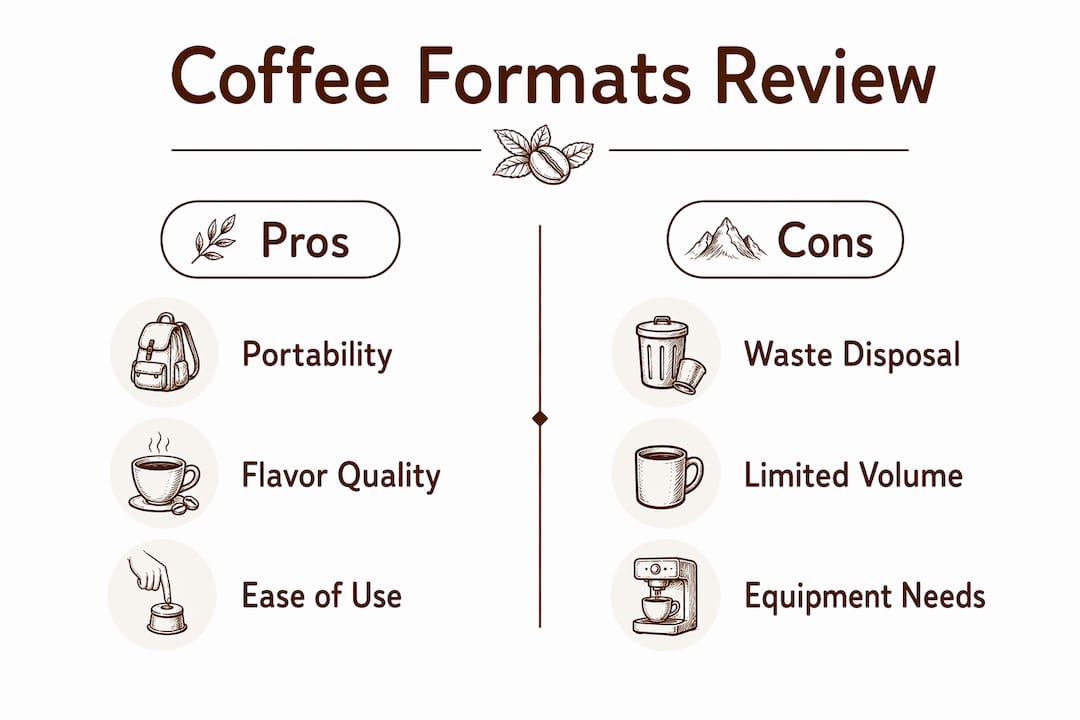
No format is perfect. The right one depends on what you prioritize: flavor clarity, convenience, sustainability, or cost.
Instant coffee sticks
- Pros: zero cleanup, consistent dosing, dissolve in any temperature water, widely available
- Cons: soluble-only versions lack aroma depth; 3-in-1 sticks hide origin character behind sweeteners
Single-serve sachets
- Pros: specialty-grade sourcing possible, nitrogen flushing preserves freshness, compostable options available, steep-and-dunk method needs no equipment
- Cons: steeping time adds two to three minutes; flavor depends heavily on brand quality
Soft paper pods
- Pros: cleaner extraction than plastic capsules, biodegradable, interchangeable across most pod brewers
- Cons: require a compatible brewer for best results; limited retail availability in the U.S.
Reusable stainless-steel capsules
- Pros: lowest long-term cost per cup, minimal waste, lets you choose your own grounds
- Cons: require a compatible machine, need rinsing after each use, flavor consistency varies with tamping technique
For premium travelers, sachets and microground sticks offer the best balance of flavor and portability. Sachets made with independently tested, specialty-grade beans, verified through published Certificates of Analysis, give you the same quality assurance you would expect from a bag of whole beans at home.
How to choose the right format for your travel style
The decision comes down to four factors: flavor preference, trip length, what you are packing, and how much effort you want to put in at 6 AM in a hotel room.
- Flavor first: If origin character matters to you, go with a single-origin sachet or a microground stick. If you want something sweet and fast, a 3-in-1 stick works fine.
- Trip length: Short trips of one to three days are easy to cover with a handful of sachets. Longer trips benefit from a resealable multi-pack of sticks, which takes up less space per serving.
- Packaging: Look for nitrogen-flushed, resealable, or individually wrapped options. Freshness degrades fast once a sachet is exposed to air and light.
- Sustainability: Sachets made from plant-based bioplastics or compostable materials reduce the single-use footprint that comes with most pod formats.
Pro Tip: Before committing to a full box, order a sampler. Thejcoffeecollection’s single-origin sample pack lets you test six regional profiles before you decide which one travels with you.
A compact insulated mug and a small travel kettle round out the kit for anyone going somewhere without reliable hot water. For health-conscious travelers, mushroom coffee blends that combine Lion’s Mane and Cordyceps with instant coffee are worth considering as a functional alternative to a standard stick.
Thejcoffeecollection also carries a flavored coffee sample pack with six naturally flavored options, which is a practical way to keep variety in your bag without carrying multiple full-size bags.
Why popular pod systems fall short for real travel
Nespresso and Keurig machines are genuinely good home brewers. They are not travel gear. Both rely on electricity, counter space, and brand-specific capsules that are difficult to source outside major U.S. cities, let alone abroad.
The practical problems stack up fast:
- Machine weight and fragility make them impractical for checked or carry-on luggage
- Capsules are not interchangeable across systems, so sourcing them mid-trip is unreliable
- Power compatibility varies internationally, adding adapter complexity
- Used capsules create packaging waste with no recycling option in most hotels or airports
James Hoffmann’s position on this is direct: equipment-free, independently branded formats give travelers genuine portability that machine-dependent systems cannot. A sachet or a microground stick does not care where you are or whether there is an outlet nearby.
The ecological picture adds another layer. Plastic and aluminum capsules are difficult to recycle because they combine organic waste with hard packaging materials. Paper-based sachets and compostable pods sidestep most of that problem. For travelers who already think about their footprint, the format choice and the environmental choice point in the same direction.
Thejcoffeecollection’s pod alternatives guide goes deeper on why equipment-free formats consistently outperform capsule systems for travelers who prioritize both quality and convenience.
Key Takeaways
Equipment-free formats like single-serve sachets and microground sticks deliver specialty-grade coffee anywhere, without machines, adapters, or brand-locked capsules.
| Point | Details |
|---|---|
| Best formats for travel | Sachets and microground sticks outperform pod systems for portability and flavor. |
| Ideal brewing temperature | Heat water to 195°F–205°F to avoid bitter or flat extraction from sachets. |
| Pod systems fall short | Nespresso and Keurig require machines, electricity, and brand-specific capsules impractical for travel. |
| Freshness signals to look for | Nitrogen flushing and compostable packaging indicate a brand has invested in quality preservation. |
| Thejcoffeecollection | Offers single-origin sachets, flavored sticks, and mushroom coffee blends curated for discerning travelers. |
Gourmet travel coffee without the compromise
Thejcoffeecollection is built for coffee drinkers who refuse to accept a bad cup just because they are away from home. The collection covers single-origin blends from six world regions, naturally flavored options, and functional mushroom coffees with Lion’s Mane, Cordyceps, and Reishi, all in formats that pack flat and brew with nothing but hot water.
Every product is curated for flavor first. That means specialty-grade sourcing, transparent ingredient lists, and no filler blends that hide behind convenience. Whether you want a clean Ethiopian sachet for a morning flight or a mushroom instant coffee that doubles as a wellness ritual on the road, the range covers it. Browse the full premium coffee collection and find the formats that fit how you actually travel.