

61% Lower Heart Risk? Oolong Tea Benefits, 2–4 Cups and Brewing
Oolong tea most plausibly supports heart health, modest metabolic changes, calm mental focus, and long-term dental and bone strength, according to cohort studies and short-term clinical trials. None of this makes oolong a treatment for disease. It sits in the same category as other whole-diet habits: a small, cumulative advantage backed by promising research, best taken with two to four cups a day and a clear eye on caffeine.
TL;DR:
- Drinking at least 8 ounces of oolong daily is associated with a 61% lower risk of heart disease, but this is based on observational data and not a guaranteed effect.
- Oolong provides only a small boost to metabolic rate and fat oxidation, so it should be used to replace high-calorie drinks rather than rely on for significant weight loss.
- Regular oolong consumption may modestly support blood sugar control, but effects are small and depend on overall lifestyle, especially for those with diabetes or prediabetes.
- Moderate caffeine intake from oolong (up to 4 cups a day) is generally safe for healthy adults, but sensitive individuals or those with health conditions should monitor their response.
Table of Contents
- Oolong Tea Benefits for Heart Health: What the Evidence Shows
- Oolong Tea and Weight Loss: How Much Does It Really Help?
- Does Oolong Tea Help Control Blood Sugar?
- How Does Oolong Tea Affect Brain Function and Mood?
- Oolong Tea, Dental Health, and Bone Density
- Oolong’s Antioxidants and the Truth About Cancer Claims
- Oolong Tea Caffeine Content and Safety Limits
- Oolong Tea Brewing Guide: How to Get Consistent Benefits
- Why Trust This Guide on Oolong Tea Benefits
- Oolong Tea and Digestive Health
- Can Oolong Tea Improve Skin Health?
- Oolong Tea for Stress and Mood Support
- Oolong vs Green Tea vs Black Tea vs White Tea: Which Wins?
- How I Actually Drink Oolong (and What I Tell Customers)
- Try Thejcoffeecollection’s Oolong and Loose-Leaf Tea Selection
- Sources
- FAQ
Oolong Tea Benefits for Heart Health: What the Evidence Shows
The strongest data point on oolong is cardiovascular. A cohort study of Japanese adults found that men drinking at least 8 ounces (240 mL) of oolong tea daily had a 61% lower risk of heart disease compared to those who drank less. That is an association, not a causal proof, but it’s a large enough effect to take seriously.
The mechanism is plausible on its own terms. Oolong carries a mix of catechins and theaflavins from its partial oxidation process, and both compound families have been linked to improved lipid handling and modest bile-acid modulation, which affects how the body clears cholesterol. A broader review of oolong’s experimental literature backs this up, pointing to measurable vascular and antioxidant effects across multiple studies, alongside benefits in dental and general antioxidant activity.
Statistic Callout: Habitual oolong drinkers in the Japanese cohort study saw a 61% lower heart disease risk at just 8 ounces a day, roughly one standard cup.
What this means in practice:
- Regular oolong drinking is associated with lower cardiovascular risk in observational data, not a guaranteed reduction for any one person.
- The effect appears tied to consistency over years, not a single cup before a doctor’s appointment.
- Two to three cups daily lines up with the intake levels used in the research showing benefit.
- Oolong is not a substitute for cholesterol medication or standard cardiac care.
If you’re drinking oolong purely for heart health, treat it as a supporting habit layered onto diet and exercise, not a standalone fix.
Oolong Tea and Weight Loss: How Much Does It Really Help?
Short-term trials show oolong can bump metabolic rate and fat oxidation by a small percentage, according to a WebMD review of oolong research. That is real, but small. A few percentage points of extra calorie burn will not undo a poor diet, and it will not replace a calorie deficit built through food and activity.
The more useful framing is substitution. Swapping a sugary soda or a flavored latte for a cup of oolong removes real calories from your day, every day, and that adds up faster than any metabolic bump from the tea itself. The polyphenols in oolong appear to interact with fat digestion and possibly gut bacteria, but the effect size in humans is nowhere near what supplement marketing implies.
Here’s what actually moves the needle when you add oolong to a weight-management routine:
- Drink it in place of sugar-sweetened beverages, not on top of your existing intake.
- Expect a small metabolic assist, not a dramatic shift in body composition.
- Time it earlier in the day if you’re caffeine-sensitive, since afternoon cups can affect sleep and indirectly hurt weight goals through poor rest.
- Pair it with resistance or cardio training, since the tea’s effect is additive at best.
Pro Tip: Brew a stronger pot in the morning and keep it cold in the fridge for an afternoon iced version. You get the calorie-free swap without adding a new caffeine dose late in the day.
Does Oolong Tea Help Control Blood Sugar?
Cohort research links regular tea drinking, including oolong, to a lower risk of type 2 diabetes, but controlled trials on oolong specifically show mixed results. Some intervention studies find measurable improvements in fasting glucose; others find no significant change once researchers control for diet and activity. This inconsistency doesn’t mean the effect is fake. It means the effect is probably real but small, and easily swamped by other lifestyle factors in a short trial.
The proposed mechanism involves oolong’s polyphenols slowing glucose absorption in the gut and possibly reducing low-grade inflammation tied to insulin resistance. Some researchers also point to gut microbiome shifts as a contributing pathway, though this area is still developing.
- If you’re on insulin or a glucose-lowering medication, talk to your doctor before making oolong a daily habit, since tea polyphenols can interact with how some diabetes drugs are processed.
- If you’ve been diagnosed with prediabetes or type 2 diabetes, oolong is worth discussing as a complementary habit, not a replacement for prescribed treatment.
- Healthy adults without a diagnosis can reasonably treat oolong as a low-risk, potentially protective daily habit.
How Does Oolong Tea Affect Brain Function and Mood?
Oolong pairs moderate caffeine with L-theanine, an amino acid that appears to smooth out caffeine’s jittery edge while supporting sustained attention. Short-term studies on this caffeine and L-theanine combination show measurable improvements in attention and alertness compared to caffeine alone. That combination is why people who get anxious or shaky on coffee often tolerate oolong better.
This is sometimes called “calm alertness,” and it’s one of the more consistently reported subjective benefits among regular drinkers, even if the formal research base is still limited to short-term trials rather than years-long cognitive tracking.
Practical dosing to actually get this effect:
- One to two cups in the morning or early afternoon covers most of the documented cognitive window.
- Avoid oolong within six hours of bedtime if you notice any sleep disruption. Caffeine sensitivity varies widely between individuals.
- If you already get headaches or racing thoughts from coffee, start with a single half-strength cup of oolong and adjust from there.
- Full-leaf, higher-quality oolong tends to deliver a more balanced caffeine to L-theanine ratio than low-grade tea bags, since more of the leaf’s natural compounds survive processing.
Oolong Tea, Dental Health, and Bone Density
Long-term tea drinkers, including habitual oolong drinkers, show small increases in bone mineral density compared to non-drinkers in some cohort data. Tea also appears to reduce plaque and gingivitis markers over time, likely tied to its natural fluoride content and polyphenol activity against oral bacteria.
Fluoride levels in brewed tea vary by leaf age and origin, and the amount you get from a normal cup is modest. Fluoride only becomes a genuine safety concern at extremely high volumes, generally above a liter of strong tea daily, sustained over years. For context on how caffeine intake separately interacts with skeletal health, this overview of caffeine and bone density is worth a look if you’re already tracking bone health closely.
- Don’t treat oolong as a substitute for brushing, flossing, or regular dental checkups.
- The BMD and dental gains show up over years of habitual drinking, not weeks.
- Unsweetened oolong is the version studied. Adding sugar undercuts the dental benefit entirely.
Oolong’s Antioxidants and the Truth About Cancer Claims
Oolong’s partial oxidation leaves it with a genuinely distinct chemical profile. It retains some of the catechins found in green tea while also producing theaflavins typically associated with black tea, a hybrid mix that comparative tea chemistry research says likely explains its somewhat different metabolic and antioxidant behavior.
On cancer specifically, the picture is suggestive but far from settled. A Chinese epidemiologic study found lower rates of oral squamous cell carcinoma among habitual oolong drinkers, with heavier consumption tied to a larger risk reduction. Other cohort research on different cancer types shows inconsistent results, some protective, some null.
- Treat any cancer-risk finding as associative, not causal. Diet, smoking status, and genetics all confound these studies heavily.
- Oolong may contribute to an overall protective dietary pattern the same way vegetables or fiber do.
- No credible source frames tea as a cancer prevention therapy, and neither should you.
Oolong Tea Caffeine Content and Safety Limits
An 8-ounce cup of oolong typically contains a moderate amount of caffeine around 30 to 50 milligrams, depending on leaf variety, oxidation level, and steep time. Current guidance treats up to about 4 cups of oolong daily as likely safe for most healthy adults, staying comfortably under the widely cited 400 mg daily caffeine ceiling used across general population guidance.
Statistic Callout: Roughly 4 cups of oolong a day keeps most healthy adults within the standard 400 mg caffeine ceiling, factoring in oolong’s moderate caffeine content per cup.
Past that range, or in caffeine-sensitive individuals, side effects show up predictably: insomnia, heart palpitations, headaches, and jitteriness. People with diagnosed arrhythmias, anxiety disorders, or pregnancy should keep intake lower and check with a doctor first, the same caution that applies to any regular caffeine source during pregnancy.
Before making oolong a daily habit, run through this quick check:
- List any prescription medications you take, particularly blood thinners, diabetes medications, or stimulant-based drugs, since tea polyphenols and caffeine can both interact with how these are metabolized.
- Note your current daily caffeine total from coffee, soda, and other tea before adding oolong on top of it.
- If you have a heart rhythm condition, are pregnant, or are highly caffeine-sensitive, ask your doctor before making oolong a daily habit rather than assuming “it’s just tea” makes it automatically safe.
- Start with one cup and observe your response for a week before increasing frequency.
Oolong Tea Brewing Guide: How to Get Consistent Benefits
Water temperature and steep time change how much of oolong’s polyphenol and caffeine content actually ends up in your cup, so brewing technique isn’t just about taste.
- Use water around 195 to 205°F (90 to 96°C), cooler than boiling, which protects delicate aromatics without stunting extraction.
- Steep 2 to 3 grams of leaf per 8 ounces of water for 2 to 4 minutes on the first infusion.
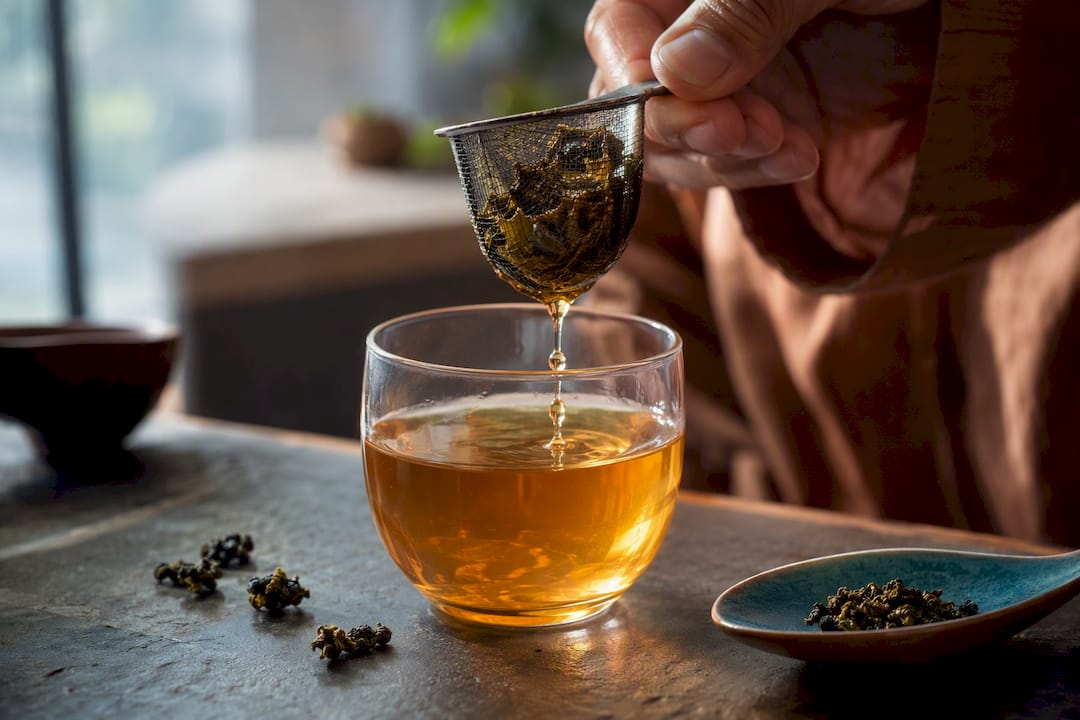
- Oolong leaves are famously forgiving. Most rolled oolongs can be re-steeped three to five times, with each infusion adding a small amount of caffeine and polyphenols to your daily total, so count multiple short infusions in one sitting as roughly one full serving.
Two routines worth building into your week: a “calm alert morning” cup brewed light around 8 a.m. for focus without jitters, and a lighter, shorter “post-meal digestive sip” after lunch or dinner. For a deeper dive into multiple-infusion brewing, the gongfu tea ceremony method is worth learning even for casual drinkers.
Pro Tip: If your second infusion tastes weak, you steeped the first one too long. Shorten steep time and let the leaf itself, not the clock, tell you when to stop.
Why Trust This Guide on Oolong Tea Benefits
This guide leans on cohort studies, controlled trials, and chemistry research rather than marketing claims, cross-checked against practical brewing knowledge from Thejcoffeecollection’s own tea coverage, including its breakdowns of black tea benefits and white tea benefits for comparison across the Camellia sinensis family.
Sourcing and leaf quality matter more than most articles admit. A low-grade, overprocessed oolong will not deliver the same polyphenol profile as a fresh, properly oxidized leaf, which is exactly why brewing skill and sourcing get equal attention here alongside the clinical research.
Oolong Tea and Digestive Health
Oolong has a long history as a post-meal digestive aid in Chinese tea culture, and there’s a plausible biological basis behind that tradition. Its polyphenols appear to support the growth of beneficial gut bacteria while mildly inhibiting certain digestion-slowing enzymes, which may explain why many drinkers report less bloating and heaviness after fatty meals.
The tea’s moderate caffeine content also stimulates gastric motility, the wave-like muscle contractions that move food through the digestive tract, though this same property means oolong can aggravate acid reflux in people already prone to it. If you notice heartburn after drinking tea on an empty stomach, that’s a signal to shift your cup to after meals rather than before them.
- Drink oolong alongside or shortly after meals rather than on an empty stomach if you have a sensitive gut or reflux history.
- The digestive benefit is subtle and works best as a habitual pattern, not a one-time fix for an upset stomach.
- Oversteeped, bitter oolong tends to be harsher on the stomach lining than a properly timed, lighter steep.
None of this replaces medical care for diagnosed digestive conditions like IBS or GERD, but as a gentle daily habit, oolong fits comfortably alongside a normal diet.
Can Oolong Tea Improve Skin Health?
Oolong’s polyphenol content, the same catechins and theaflavins responsible for its cardiovascular signals, also shows antioxidant activity relevant to skin aging. Oxidative stress from UV exposure and pollution breaks down collagen over time, and polyphenol-rich beverages are consistently studied as one small lever against that process.
The evidence here is indirect. Most research measures oolong’s antioxidant capacity in a lab setting or through blood markers, not through direct, long-term skin outcome trials. That’s an important distinction: a strong antioxidant profile doesn’t automatically translate to visibly firmer or clearer skin, even if the underlying biology is plausible.
What’s more consistently observed is a secondary effect: people who swap sugary drinks or alcohol for tea often see skin improvements driven by lower sugar intake and better hydration habits, not the tea’s polyphenols alone. Oolong gets some credit here simply by being the healthier substitution.
- Treat oolong as a small contributor to an antioxidant-rich diet, alongside colorful vegetables and fruit, not a skincare product replacement.
- Hydration from drinking tea (versus dehydrating options like soda or excess alcohol) plays its own quiet role in skin appearance.
- No current research supports drinking oolong as a stand-alone anti-aging treatment.
Oolong Tea for Stress and Mood Support
The same caffeine and L-theanine combination that supports focus also shows up in mood research. L-theanine has documented calming properties on its own, and when paired with a moderate caffeine dose like oolong provides, several short-term studies report reduced perceived stress and improved mood ratings compared to caffeine alone.
Part of this effect might be behavioral rather than purely chemical. The ritual of brewing tea, slowing down, waiting for a steep, sitting with a warm cup, mirrors practices used in mindfulness-based stress reduction. Separating the biochemical effect from the ritual effect is difficult in existing research, and honestly, it may not matter much for the person actually drinking the tea.
- A regular oolong habit can function as a built-in pause point during a stressful workday, independent of any chemical effect.
- The mood benefit appears strongest with moderate, consistent intake rather than large single doses.
- If anxiety worsens with caffeine specifically, even oolong’s gentler profile may not be the right fit. Consider a decaffeinated tea instead.
Oolong vs Green Tea vs Black Tea vs White Tea: Which Wins?
None of these teas “wins” outright. They come from the same plant, Camellia sinensis, and differ mainly in oxidation level, which changes both flavor and the balance of active compounds.
| Tea type | Oxidation level | Standout compound profile | Best suited for |
|---|---|---|---|
| White tea | Minimal | Highest catechin preservation, gentlest flavor | Lightest caffeine load, subtle antioxidant support |
| Green tea | Unoxidized | Rich in EGCG, a potent catechin | Readers prioritizing a specific, well-studied antioxidant |
| Oolong tea | Partial (varies widely) | Hybrid of catechins and theaflavins | Balanced flavor, calm alertness, multiple infusions |
| Black tea | Full | Highest theaflavin content | Bolder flavor, stronger caffeine kick |
Green tea tends to edge out oolong specifically on EGCG content, since that compound degrades during oxidation. If your goal is maximizing that one well-researched antioxidant, green tea’s catechin profile has the edge. But oolong’s partial oxidation gives it a flavor complexity and multi-infusion capacity that green tea generally can’t match, along with a caffeine and L-theanine balance many drinkers find more forgiving than black tea’s stronger jolt.
The honest answer: pick based on your goal. Cardiovascular and calm-focus benefits point toward oolong. Maximum EGCG points toward green. Boldness and a bigger caffeine hit points toward black. Gentleness points toward white.
How I Actually Drink Oolong (and What I Tell Customers)
My own routine is simple: one gongfu-style session most mornings, three to four short infusions, wrapped up well before noon. It’s a small habit inside a much bigger picture of sleep, food, and movement, not a fix on its own.
What I’d tell you: test your own tolerance for a week, watch how late-day cups affect your sleep, and adjust timing before you adjust dosage.
— jonathan
Try Thejcoffeecollection’s Oolong and Loose-Leaf Tea Selection
If the brewing steps above sparked some curiosity, the easiest next move is starting with leaf quality that actually rewards the technique. A quality selection of single-origin and specialty loose-leaf teas, including oolong, is important because low-grade leaf can’t deliver multiple clean infusions the way a properly processed one can.

Everything in the brewing section above, from steep time to re-infusion counts, depends on starting with whole, fresh leaf rather than dust-grade tea bags. That’s the whole reason sourcing gets treated as seriously as the science here. Browse the full tea collection to find an oolong suited to your morning routine, or start with something milder like the Moroccan Mint or Earl Grey if you’re easing into loose-leaf tea for the first time. Sample packs make it simple to figure out what fits your taste and your caffeine tolerance before committing to a full bag.
Sources
- Oolong Tea Benefits: Nutrition, Heart Health, and More | Healthline
- Oolong Tea benefits overview | WebMD
- Multifunctional health-promoting effects of oolong tea and its products | ScienceDirect
FAQ
Does Oolong Tea Have More Caffeine Than Green Tea?
Oolong generally contains slightly more caffeine than green tea due to its longer oxidation and withering process, though both fall well below coffee’s caffeine content per cup.
Can Drinking Oolong Tea Help You Lose Weight?
Oolong can produce a small, single-digit percentage boost in metabolic rate and fat oxidation, but the more reliable weight benefit comes from using it to replace higher-calorie drinks rather than expecting the tea alone to burn fat.
Is Oolong Tea Safe to Drink Every Day?
About 4 cups daily is considered likely safe for most healthy adults, keeping total caffeine intake under the commonly cited 400 mg daily ceiling.
How Is Oolong Tea Different From Green and Black Tea?
Oolong sits between green and black tea in oxidation level, giving it a hybrid mix of catechins and theaflavins, while green tea retains more EGCG and black tea has the highest theaflavin content.
Which Oolong Tea Is Best for Health Benefits?
Whole-leaf, minimally processed oolong tends to preserve more of the polyphenol content tied to cardiovascular and antioxidant benefits than low-grade bagged tea, which is why leaf quality matters as much as the variety itself.