

30–50 mg Caffeine in Chai Tea and How to Cut It
Yes, chai tea has caffeine, because it’s made with black tea. An 8-ounce cup typically delivers around 30 to 50 mg, though some tea bag blends and concentrates push that to 61 mg. That’s meaningfully less than a cup of brewed coffee’s 80 to 100 mg, and roughly in line with any other brewed black tea.
TL;DR:
- A typical 8-ounce cup of chai contains 30 to 50 mg of caffeine, with stronger concentrates reaching up to 61 mg, depending on the tea leaf amount and preparation.
- The caffeine content varies with tea type, steep time, and dilution, making homemade chai generally lower in caffeine than cafe versions with concentrates or espresso shots.
- Most healthy adults can comfortably consume multiple cups of chai daily without nearing caffeine safety limits, but pregnant individuals should limit intake to around four to six cups.
- Steeping chai for only 2 minutes at a full boil reduces caffeine extraction, and switching to decaffeinated or rooibos bases significantly cuts caffeine levels.
- Stronger cafe chai, especially with added espresso, can approach coffee’s caffeine content, but standard chai generally remains much lower than an 8-ounce brewed coffee.
Table of Contents
- How Much Caffeine Is in Chai Tea?
- What Changes Chai’s Caffeine Content?
- Chai vs. Coffee: How Do the Numbers Compare?
- Does a Chai Latte Have More Caffeine Than Regular Chai?
- Is Chai Tea Caffeine Safe? Sleep, Sensitivity, and Limits
- How to Make Lower-Caffeine Chai
- A Publisher’s Take on Chai and Caffeine Confusion
- Want Chai Flavor Without the Full Caffeine Load?
- Sources
- FAQ
How Much Caffeine Is in Chai Tea?
The 30 to 50 mg figure is the number most nutrition sources land on for an 8-ounce cup of home-brewed chai, and it tracks with Mayo Clinic’s caffeine chart, which lists brewed black tea at roughly 48 mg per 8 ounces. Chai starts as black tea, so it inherits that baseline before any spices, milk, or sugar get involved.
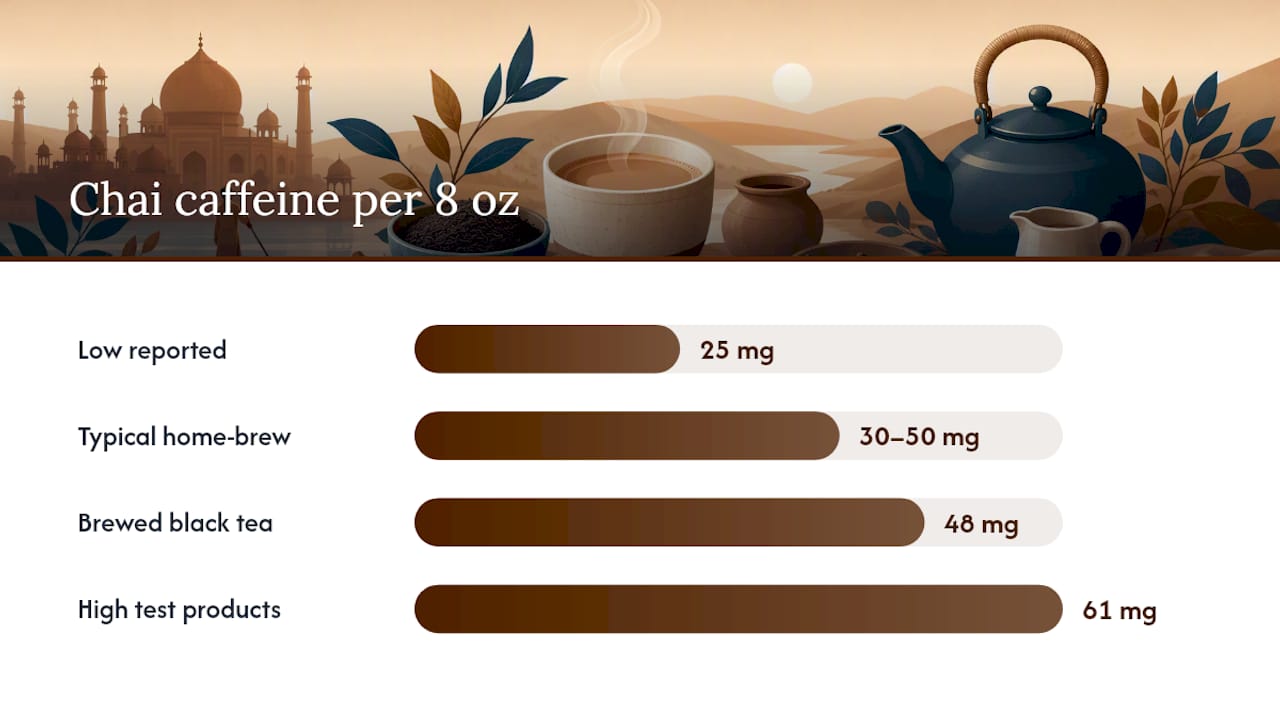
Not every source agrees on the ceiling, though. Some chai tea bags and bottled concentrates test closer to 61 mg per 8 ounces, which is why you’ll see ranges quoted as 25 to 61 mg depending on where you look. The gap usually comes down to how much actual tea leaf is in the product versus how much is spice filler.
Serving size changes the math fast:
- A small cafe cup (8 oz) lands near the 30 to 50 mg baseline.
- A medium chai serving can have moderately more caffeine.
- A large chai latte typically contains more caffeine depending on the concentrate ratio.
None of this is exotic guesswork. It’s the same logic Harvard Health applies when comparing tea and coffee: more liquid and more tea solids means more caffeine, full stop.
What Changes Chai’s Caffeine Content?
Chai isn’t one fixed recipe, so its caffeine isn’t one fixed number. A few variables do most of the work.
- Tea base: Assam, the black tea most traditional chai recipes use, runs higher in caffeine than lighter black teas like Darjeeling.
- Steep time and heat: longer steeping and hotter water pull more caffeine out of the leaf, a pattern confirmed by preparation research on tea versus coffee extraction.
- Leaf amount: more tea per cup, or a commercial concentrate built to be strong, raises caffeine per ounce.
- Milk and dilution: chai is usually cut with milk, which lowers caffeine per ounce even though it doesn’t remove any of the caffeine already extracted.
- Bagged vs. loose leaf: bagged chai uses finely cut leaf that extracts faster, while loose-leaf blends vary more by brand and steep habit.
Pro Tip: If you’re brewing loose-leaf chai at home, a 3 to 4 minute steep at a full boil will extract noticeably more caffeine than a quick 90 second dunk. Cut the steep time if you want the spice flavor without the full caffeine hit.
Chai vs. Coffee: How Do the Numbers Compare?
Coffee wins the caffeine race by a wide margin. Brewed coffee typically runs 80 to 100 mg per 8-ounce cup, according to Harvard Health’s comparison of coffee and tea, while chai sits at roughly 30 to 50 mg for the same serving. Put another way, you’d need close to two cups of chai to match one cup of coffee.
- Brewed coffee: caffeine content significantly higher per 8 oz
- Brewed black tea: moderate caffeine level per 8 oz
- Chai tea: moderate caffeine level per 8 oz, somewhat variable with concentrates
The overlap shows up in specific situations, not typical ones. A strong concentrate, a long steep with extra leaf, or a “dirty chai” with espresso added can all push a cup into coffee territory. For most people drinking two or three regular chai cups a day, total intake stays well under coffee-heavy habits and comfortably below the FDA’s daily caffeine guidance for healthy adults.
Does a Chai Latte Have More Caffeine Than Regular Chai?
Cafe chai isn’t always the same drink as home-brewed chai, and that’s where a lot of confusion comes from.
- Concentrates: most coffee shops use a pre-made chai concentrate mixed with milk, and concentrate strength varies by brand, so a cafe chai latte can run higher or lower than a home cup depending on the mix ratio.
- Dirty chai: adding an espresso shot typically adds about 63 mg of caffeine per shot, stacking directly on top of the chai’s own 30 to 50 mg.
- Iced vs. hot: iced chai made from hot-brewed tea cooled down carries roughly the same caffeine as the hot version; cold-brewed chai concentrates tend to extract less caffeine over the same time.
- Lower-caffeine ordering: ask for a smaller size, request half concentrate and half milk, or skip the espresso add-in entirely.
Is Chai Tea Caffeine Safe? Sleep, Sensitivity, and Limits
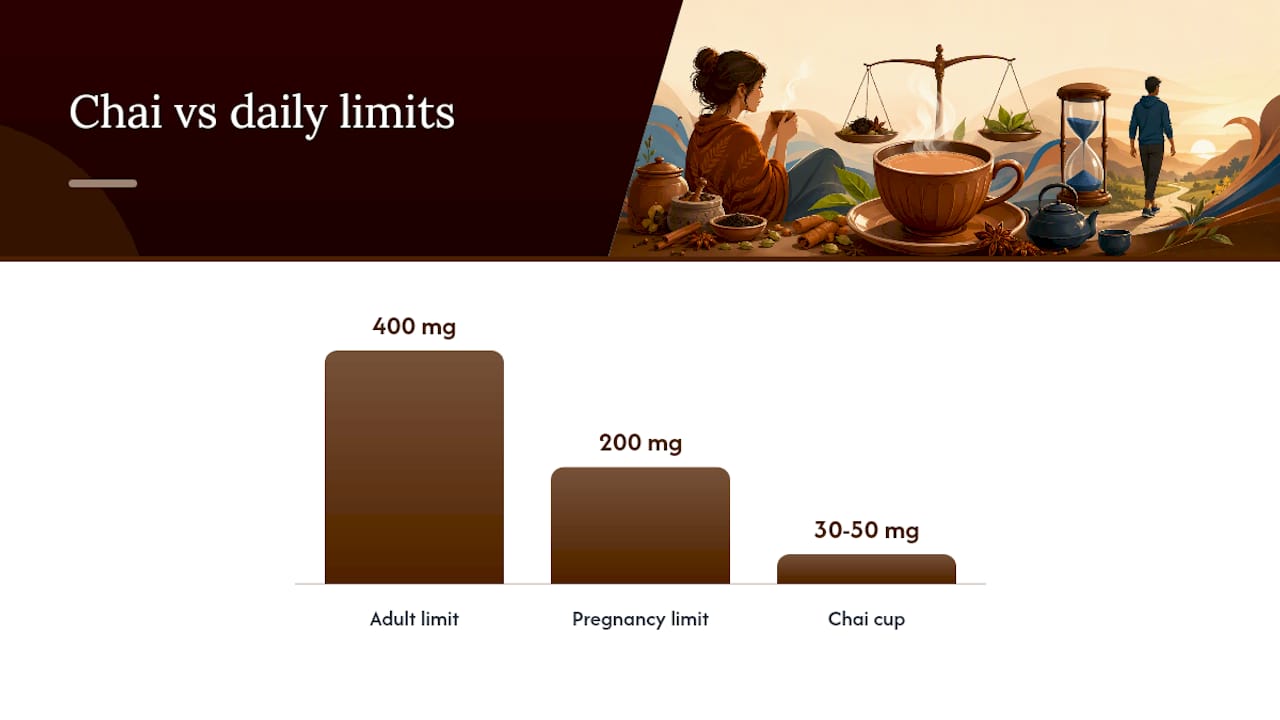
Most healthy adults can safely take in about 400 mg of caffeine a day, and pregnant people should stay closer to 200 mg, according to FDA guidance. At 30 to 50 mg per cup, you’d need eight or more cups of chai to approach the adult limit, which is a lot of tea. Pregnant readers hit their 200 mg ceiling faster, closer to four to six cups, so it’s worth counting chai alongside any coffee or soda in the same day.
Sensitivity varies by person more than by beverage. Caffeine has a half-life of roughly 5 to 6 hours in most adults, so a chai after dinner can still be active in your system at bedtime. A practical rule: stop caffeinated drinks, chai included, at least 6 hours before you plan to sleep.
Tea carries an advantage coffee doesn’t: theanine. This amino acid, found naturally in tea leaves, appears to smooth out caffeine’s stimulant effect rather than blocking it, which is part of why a chai buzz tends to feel steadier than a coffee buzz for a lot of people. Kids and anyone especially sensitive to stimulants should still treat chai as a real caffeine source, not a “safe” substitute for coffee.
How to Make Lower-Caffeine Chai
You don’t have to give up the cinnamon and cardamom to cut the caffeine. A few swaps get you most of the flavor with a fraction of the buzz.
- Swap in decaffeinated black tea or rooibos, which is naturally caffeine-free, as your chai base.
- Try a half-caff blend: mix equal parts decaf and regular black tea leaves for a middle-ground cup.
- Cut steep time to 2 minutes or less, and use slightly less tea leaf than the recipe calls for.
- At a cafe, ask for half concentrate and half milk, order a smaller size, and skip the espresso shot in dirty chai.
Pro Tip: Rooibos “chai” tastes closer to the real thing than most people expect, since the spice blend does most of the flavor work anyway. It’s a solid pick for an evening cup.
A Publisher’s Take on Chai and Caffeine Confusion
Most of the confusion around chai’s caffeine content comes from treating “chai” like a single fixed product instead of a category that spans weak tea bags, strong concentrates, and espresso-spiked cafe drinks. That range is the real story, not any one number. If you brew your own with a short steep and a light hand on the leaves, you’re drinking closer to 30 mg. Order a large dirty chai and you’re closer to a small coffee. For more on how black tea’s caffeine baseline works, see our black tea benefits guide, and for a side-by-side on lighter options, check out how green tea caffeine stacks up.
— jonathan
Want Chai Flavor Without the Full Caffeine Load?
If you love chai’s spice but want to control how much caffeine goes with it, the fix isn’t giving up the drink, it’s changing the base. There are decaf and naturally low-caffeine options available that let you enjoy the cardamom and clove flavors without adding caffeine on top of your morning coffee.

A decaf black tea or rooibos base lets you keep the flavor profile that makes chai worth drinking in the first place, just without the mg count climbing every time you refill your mug. And if chai is actually your afternoon pick me up rather than your wind down drink, our Max Caf high caffeine coffee blend is worth a look for when you need more than tea can deliver. Browse the full lineup at Thejcoffeecollection and pick the base that matches how you actually want to feel after the cup is empty.
This article is general information, not a substitute for advice from a qualified doctor. Consult a qualified healthcare professional about your own circumstances before acting on anything here.
Sources
- Caffeine content for coffee, tea and more - Mayo Clinic
- Coffee vs tea coverage — Harvard Health
- Spilling the beans: How much caffeine is too much? - FDA
- Coffee vs. tea — Verywell Health
- Caffeine in tea vs. coffee — Healthline
FAQ
Is Chai Tea More Caffeine Than Coffee?
No. Chai typically has 30 to 50 mg of caffeine per 8-ounce cup, while brewed coffee runs 80 to 100 mg for the same serving.
Is Chai Tea Good for Sleep?
Chai still contains real caffeine, so it can interfere with sleep if consumed within about 6 hours of bedtime, even though its theanine content may make the effect feel milder than that of coffee.
Will Chai Keep You Awake?
It can, especially in larger sizes or dirty chai versions with added espresso, though its lower caffeine load makes it less likely than coffee to cause a late night jolt.
Is Chai Better for You Than Coffee?
Neither is universally “better.” Chai offers lower caffeine and spices with some antioxidant properties, while coffee delivers a stronger caffeine effect. The right choice depends on your caffeine tolerance and what time of day you’re drinking it.