

Stay Productive with Better Coffee: A Focus Guide
Coffee is the most widely used cognitive enhancer among professionals and students worldwide, and the difference between a productive day and a sluggish one often comes down to how you drink it, not just how much. Staying productive with better coffee means treating caffeine as a precision tool rather than a background habit. The European Food Safety Authority (EFSA) recognizes 75 mg of caffeine as the threshold dose for measurable cognitive improvement. Your cortisol awakening response, the natural hormone surge that peaks 30–45 minutes after waking, determines whether your first cup helps or hurts. Get the timing right, and coffee becomes one of the most effective focus tools you have.
How to stay productive with better coffee: timing and cortisol
Cortisol is your body’s built-in alertness system. It peaks naturally 30–45 minutes after waking, giving you a free window of sharp focus before caffeine even enters the picture. Drinking coffee during that window blunts the cortisol surge and trains your body to rely on caffeine for alertness it could generate on its own.
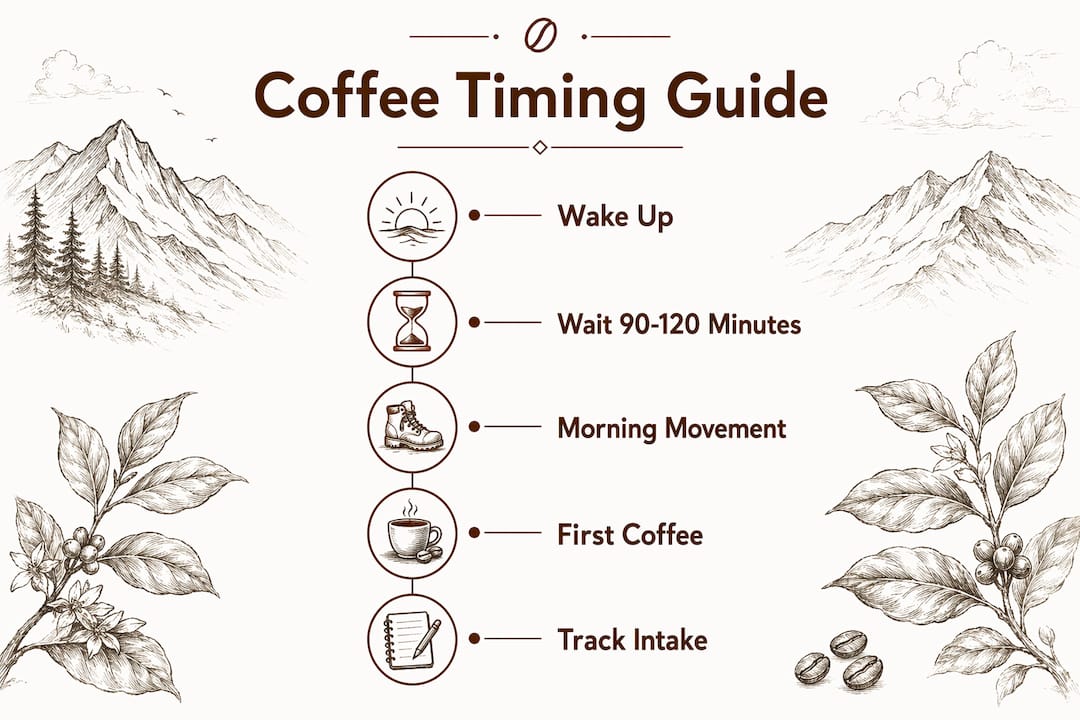
The fix is straightforward. Delaying your first cup by 90–120 minutes after waking produces 24% higher focus scores and 28% increased alertness compared to drinking coffee immediately. That gap is not trivial. It means your caffeine hits a brain that is already alert, compounding the effect rather than substituting for it.

Research using the Psychomotor Vigilance Task (PVT), a standard test for sustained attention, and the Pittsburgh Sleep Quality Index (PSQI) confirms that delayed coffee intake also improves nighttime sleep quality. Better sleep the night before directly raises your cognitive baseline the next morning. The two benefits stack.
Individual variation matters here. The CYP1A2 gene controls how fast your liver metabolizes caffeine. Fast metabolizers clear caffeine quickly and can tolerate later doses. Slow metabolizers carry caffeine in their system for hours longer, meaning an afternoon cup can still disrupt sleep at midnight.
- Wait 90–120 minutes after waking before your first cup
- Drink a full glass of water immediately after waking to support cortisol production
- Get 10 minutes of natural light before coffee to reinforce your circadian rhythm
- Track your alertness on days you delay versus days you drink early to see your personal difference
Pro Tip: Pair the delay with five minutes of morning movement. Light exercise amplifies the cortisol peak, so your natural alertness window lasts longer before you need caffeine at all.
How do you personalize caffeine for your metabolism and workload?
Most daily coffee drinkers are not enhancing their productivity. A 2016 review found that caffeine benefits diminish after two to three weeks of consistent daily use. Habitual drinkers are largely preventing withdrawal symptoms, not gaining a cognitive edge. That is a critical distinction.
The solution is personalization through tracking. Log your coffee intake time, dose in milligrams, and a simple 1–10 focus rating for each 90-minute work block over one to two weeks. Patterns emerge quickly. You will see which doses sharpen your thinking and which ones produce jitters or a mid-afternoon crash.
Microdosing for steady alertness
Microdosing caffeine means taking small doses of 20–50 mg every 90–120 minutes rather than one large cup. Microdosing prevents sharp peaks and crashes, supporting prolonged focus without jitters. A standard espresso shot contains roughly 63 mg, so a half-shot or a small cup of lighter-roast coffee fits this range well.
- Start with your baseline. Note your current daily caffeine total and how you feel at each point in the day.
- Reduce your morning dose by 30%. Replace part of your usual cup with water or herbal tea.
- Add a small dose at the 90-minute mark into your first deep work block.
- Set a hard cutoff. Stop caffeine 4–8 hours before bedtime based on your metabolism speed.
- Take one caffeine-free day per week. This resets tolerance and restores caffeine’s full cognitive effect.
Caffeine cycling is the practice of using caffeine only on high-demand days and avoiding it on lighter days. Treating caffeine as a precision tool rather than a daily baseline maintains its effectiveness and avoids the tolerance spiral that traps most habitual drinkers.
Pro Tip: If you are a slow metabolizer, move your afternoon cutoff to noon or 1:00 PM. Even a 2:00 PM cup can reduce your deep sleep by 20 minutes, which compounds into a focus deficit the next day.
What types of coffee work best for focus and performance?
Not all coffee delivers the same cognitive experience. Brewing method, roast level, and what you pair with your cup each shape how caffeine affects your focus and your body.
Brewing methods and caffeine profiles
Pour-over and Aeropress methods produce clean, bright cups with moderate caffeine and high clarity of flavor. Cold brew concentrates caffeine significantly, making it easy to overshoot your target dose without realizing it. Espresso delivers a fast, concentrated hit that suits short sprint tasks. For best coffee for work across a full day, a medium-roast pour-over or Aeropress brew gives you control over dose and a smooth energy curve.
Mushroom coffee is a category worth serious attention. Products blending coffee with Lion’s Mane, Cordyceps, and Reishi mushrooms, like those offered by Thejcoffeecollection, provide a noticeably smoother energy profile than standard coffee. Lion’s Mane supports nerve growth factor production, which is linked to sustained cognitive function. The result is focus without the sharp spike and drop that a straight espresso can produce.
L-theanine pairing
Combining caffeine with L-theanine in a 1:1 to 2:1 ratio reduces jitters and improves the quality of focus. L-theanine is an amino acid found naturally in green tea. It promotes calm alertness by increasing alpha brain wave activity without causing drowsiness. A 100 mg caffeine dose paired with 100–200 mg L-theanine is the most studied and consistently effective combination for sustained cognitive work.
| Coffee type | Best for | Caffeine level |
|---|---|---|
| Pour-over / Aeropress | All-day focus, steady energy | Moderate |
| Espresso | Short sprints, fast tasks | High, concentrated |
| Cold brew | Morning boost, hot weather | High, easy to overdose |
| Mushroom coffee | Extended focus, reduced jitters | Moderate, smoother curve |
| Ready-to-drink options | Convenience, on-the-go work | Variable, check label |
Ready-to-drink coffees and specialty instant options have improved significantly. High-quality instant coffee now preserves much of the flavor and caffeine accuracy of brewed coffee, making it a practical choice for professionals who need a reliable dose without brewing equipment.
How to build coffee into your daily productivity routine
Timing caffeine 30 minutes before deep work aligns peak plasma concentration with the start of your focused session. Caffeine reaches peak blood levels 30–60 minutes after intake. Starting a focused work block at that peak means your attention and processing speed are at their highest exactly when you need them.
The caffeine nap
The caffeine nap is one of the most underused productivity tools available. Drink a cup of coffee immediately before a 20-minute nap. Caffeine takes 20–30 minutes to cross the blood-brain barrier, so it begins working just as you wake up. The nap clears adenosine, the chemical that causes sleepiness, from your brain receptors. Caffeine then blocks those receptors when they are already partially cleared, producing sharper alertness than either the nap or the coffee would alone.
A sample daily schedule
- 7:00 AM Wake up. Drink water. Get natural light. No coffee yet.
- 8:30 AM First coffee (moderate dose, 75–100 mg). Start your first deep work block at 9:00 AM.
- 10:30 AM Second small dose (20–50 mg microdose) to extend focus through the late morning.
- 12:30 PM Lunch. Hydrate. Move for 10 minutes.
- 1:30 PM Optional caffeine nap if needed. Coffee immediately before a 20-minute rest.
- 3:00 PM Final small dose if metabolism allows. Hard cutoff after this.
- After 3:00 PM Water, herbal tea, or calming tea options to wind down without disrupting sleep.
Pro Tip: Use caffeine as a signal to your brain that focused work is starting. The ritual of brewing and drinking coffee can itself prime your attention before the caffeine even kicks in.
Common mistakes that undermine this system:
- Drinking coffee within the first hour of waking
- Using large single doses instead of split doses
- Ignoring your personal metabolism speed when setting a cutoff time
- Relying on caffeine to compensate for poor sleep instead of fixing sleep
Higher caffeine consumption above 220 mg per day correlates with roughly 50% fewer cognitive failures compared to lower consumption, according to a Cardiff University study. That benefit only holds when the caffeine is timed well and sleep is protected.
Key Takeaways
Staying productive with better coffee requires precise timing, personalized dosing, and the right coffee type for your biology and workload.
| Point | Details |
|---|---|
| Delay your first cup | Wait 90–120 minutes after waking to let cortisol peak naturally before adding caffeine. |
| Track and personalize | Log intake time, dose, and focus ratings for two weeks to find your optimal caffeine window. |
| Microdose for steady focus | Use 20–50 mg doses every 90–120 minutes instead of one large cup to avoid crashes. |
| Match coffee type to task | Use espresso for sprints, mushroom coffee or pour-over for extended all-day focus. |
| Protect your sleep | Stop caffeine 4–8 hours before bed; poor sleep erases every productivity gain caffeine provides. |
Coffee as a precision instrument, not a daily ritual
I have spent years watching professionals and students treat coffee like a utility bill: something you pay every morning without thinking about it. That approach is exactly why most daily drinkers are not getting smarter or sharper. They are just staying even.
The shift that changed my own relationship with caffeine was treating each cup as a deliberate decision. I started asking: what am I about to do, and does caffeine actually help this task? Writing and deep analysis? Yes, timed well, caffeine is genuinely useful. Answering emails or attending a meeting? Honestly, no. The cognitive demand is low enough that caffeine adds anxiety more than it adds clarity.
Tolerance resets are uncomfortable but worth it. Taking two or three caffeine-free days every few weeks feels rough on day one and noticeably better by day three. When you return to coffee after a reset, the focus effect is sharper than anything you get from daily use. That contrast alone is enough to convince most people to change their habits.
The professionals I have seen get the most from coffee are not the ones drinking the most. They are the ones who know exactly when they need it, what dose works for them, and when to stop. That level of self-knowledge takes a few weeks of tracking to build. The payoff is a tool that actually works instead of one that just feels necessary.
— jonathan
Thejcoffeecollection: coffee built for how you actually work
Thejcoffeecollection curates coffee for professionals and students who want more from their cup than a caffeine hit.

The full coffee collection includes single-origin packs from six world regions, naturally flavored blends, and mushroom coffee with Lion’s Mane, Cordyceps, and Reishi for a smoother, more sustained focus experience. The mushroom instant coffee is a practical option for busy mornings when brewing is not possible but quality still matters. Every product is carefully selected for flavor clarity and consistency, so your dose is predictable and your focus is repeatable. If you are ready to apply the timing and dosing strategies in this article, starting with the right coffee makes every step easier.
FAQ
How long should I wait before my first coffee of the day?
Wait 90–120 minutes after waking. This allows your cortisol to peak naturally, and research shows it produces 24% higher focus scores compared to drinking coffee immediately.
What is caffeine microdosing and does it work?
Caffeine microdosing means taking small doses of 20–50 mg every 90–120 minutes instead of one large cup. It prevents energy spikes and crashes, supporting steadier alertness across a full workday.
Does daily coffee actually improve productivity?
For habitual drinkers, daily coffee mainly prevents withdrawal-related performance drops rather than enhancing cognition. Strategic, intermittent use on high-demand days produces stronger and more reliable cognitive benefits.
What is the best coffee type for all-day focus?
Mushroom coffee or a medium-roast pour-over provides the most consistent energy for extended focus. Pairing either with L-theanine in a 1:1 to 2:1 ratio further reduces jitters and improves focus quality.
When should I stop drinking coffee each day?
Stop caffeine 4–8 hours before bedtime. Slow metabolizers should cut off by noon or 1:00 PM. Fast metabolizers can tolerate a later cutoff, but protecting sleep quality is the single most important factor in next-day productivity.