

Five Minute Pod, Decades of Waste: U.S. Steps for Recyclable Coffee Pods
Yes, many coffee pods can be recycled or composted, but the correct route depends entirely on the material and what your local hauler accepts. The immediate action after brewing: peel off the lid, dump the grounds (compost them if you can), rinse the shell, and either toss it in curbside recycling if your city takes it or route it through a brand mail-back program. Everything else is detail.
TL;DR:
- Aluminum pods are recyclable only through dedicated metals processors, not curbside recycling, due to their small size and screening issues.
- Polypropylene #5 plastic pods vary globally in acceptability, and compostable pods require specific industrial or backyard conditions to decompose properly.
- Rinsing and separating grounds from shells are crucial steps for proper recycling and composting of all pod types; skipping this often leads to landfilling.
- Mail-back programs like TerraCycle or brand-specific drop-off points offer reliable disposal options when curbside collection is unavailable or unsuitable.
- Buying pods with clear labeling and certified end-of-life options ensures proper disposal, especially when local recycling or composting capabilities are limited.
Table of Contents
- What Makes a Coffee Pod Recyclable Coffee Pods vs. Compostable Ones
- How Do You Recycle K-Cups, Nespresso Pods, and Compostable Pods?
- What Are Mail-Back and Take-Back Programs for Coffee Pods?
- How to Choose Recyclable or Compostable Coffee Pods
- What Do Studies Say About Coffee Pod Recycling Success Rates?
- Why Clear End-of-Life Guidance Should Be a Buying Criterion
- Shop Coffee Pods Built With Disposal in Mind
- Sources
- FAQ
What Makes a Coffee Pod Recyclable Coffee Pods vs. Compostable Ones
Not all pods are built the same way, and the material determines what happens after you brew. Three families dominate the single-serve market, and each has a different end-of-life path.
- Aluminum pods (like Nespresso’s) are technically infinitely recyclable, but they need to go through a dedicated metals stream, not your household bin, because their small size gets them screened out by sorting machinery.
- Polypropylene #5 plastic pods (the material Keurig uses for its K-Cup pods) are accepted by a growing number of municipal programs, but coverage is inconsistent across the country.
- Compostable pods are made from plant-based materials designed to break down, but only under the right conditions.
That last point trips up a lot of buyers. A pod certified “OK Compost Home” will actually decompose in a backyard bin. One certified only for industrial composting needs a commercial facility with controlled heat and humidity. Toss it in a home compost pile and it might sit there for years, barely changed. And a pod labeled “recyclable” on the package doesn’t guarantee your city will take it. Packaging claims describe what’s technically possible, not what your municipal contract actually processes. That gap between print and pickup causes more confusion than the material science itself.
How Do You Recycle K-Cups, Nespresso Pods, and Compostable Pods?
The mechanics differ slightly by material, but the core habit is the same: separate, empty, rinse. Skipping that step is the single biggest reason pods end up in a landfill instead of a recycling stream.
- K-Cup style pods: Peel back the foil lid and set it aside. Empty the grounds into your compost bin or food scraps container. Rinse the plastic shell to remove residue, then check whether your city accepts #5 polypropylene curbside. If it doesn’t, Keurig’s K-Cycle mail-in program gives you a way to send pods back instead of tossing them.
- Nespresso aluminum capsules: Empty the grounds for composting, then collect the empty shells separately. Curbside recycling almost always rejects these because they’re too small and light for sorting equipment to catch. Use a brand drop-off point or a mail-back bag instead.
- Compostable pods: Confirm whether the packaging says “OK Compost Home” or “industrial only,” then route it accordingly. Guessing wrong means either months of a pod sitting intact in your backyard bin or a perfectly compostable pod going straight to a landfill.
Pro Tip: Keep a small dedicated container by your coffee maker for empty pod shells. Batching them for a weekly rinse and sort takes thirty seconds and dramatically increases the odds they actually get recycled instead of thrown out in a rush.
Disassembly and rinsing matter more than most people assume. Consumer Reports notes that coffee residue and un-separated materials are common reasons pods get rejected at sorting facilities, even in cities that technically accept the plastic.
What Are Mail-Back and Take-Back Programs for Coffee Pods?
When curbside isn’t an option, mail-back and take-back programs pick up the slack. These work like a subscription in reverse: instead of a company shipping you something, you ship material back to them.
- Zero-waste boxes: TerraCycle’s coffee capsule box lets you order a container, fill it with used pods over time, seal it, and ship it back using a prepaid label. Guidelines on what’s accepted and how to pack it specify exactly how many pods fit and how they need to be prepared before shipping.
- Brand mail-back bags: Keurig’s K-Cycle program works similarly, giving households without local #5 plastic recycling a direct channel back to the manufacturer.
- Store drop-off points: Some retailers and coffee brands maintain physical collection bins as a lower-effort alternative to mailing anything.
Cost varies. TerraCycle’s zero-waste boxes are a paid product since they fund sorting and processing that municipalities won’t do for a low-volume item. Brand-run mail-back programs are often free because the company absorbs the cost as part of its sustainability commitment. Curbside is free too, when it’s actually accepted. Weigh convenience against the certainty that your pods get processed, not landfilled.
How to Choose Recyclable or Compostable Coffee Pods
Buying decisions made at the shelf determine most of what happens at the bin later. Six checks separate genuinely disposable pods from greenwashed ones:
- Material labeling: Look for explicit callouts like aluminum, #5 polypropylene, or a compostability certification, not vague “eco-friendly” language.
- Certification specificity: OK Compost Home and OK Compost Industrial are different claims. Check which one applies before assuming your backyard bin will work.
- A real take-back program: Brands with clear, accessible mail-back or drop-off instructions are more trustworthy than ones that just print a recycling symbol and leave you to figure out the rest.
- Minimal outer packaging: Cardboard sleeves and cartons should themselves be recyclable, not laminated in a way that blocks curbside pickup.
- Match to your infrastructure: If your area has no industrial composting access, a recyclable aluminum or supported mail-back option beats a compostable pod with nowhere to go.
- Machine compatibility and taste: Sustainability means nothing if the pod doesn’t fit your brewer or tastes thin. Compare options in Thejcoffeecollection’s guide to compostable pods before committing to a full case.
What Do Studies Say About Coffee Pod Recycling Success Rates?
The single-serve coffee market remains a massive and growing category, which is exactly why disposal habits matter at scale. One household skipping the rinse step is a rounding error. Millions doing it is a supply chain problem.
Municipal variability is real and well documented. The Recycling Partnership tracks how differently cities handle small, mixed-material items like pods, and local guidance pages, such as Cuyahoga County’s, openly tell residents that pods often aren’t accepted curbside at all, pointing them toward mail-back instead.
Compostable packaging only delivers on its promise when it reaches a facility built to process it. A pod sitting in a landfill, compostable or not, breaks down the same slow, oxygen-starved way as anything else buried there.
Aluminum’s advantage is durability of the material itself, not ease of collection. It can be recycled indefinitely, but only if it actually reaches a metals processor instead of a landfill.
Why Clear End-of-Life Guidance Should Be a Buying Criterion
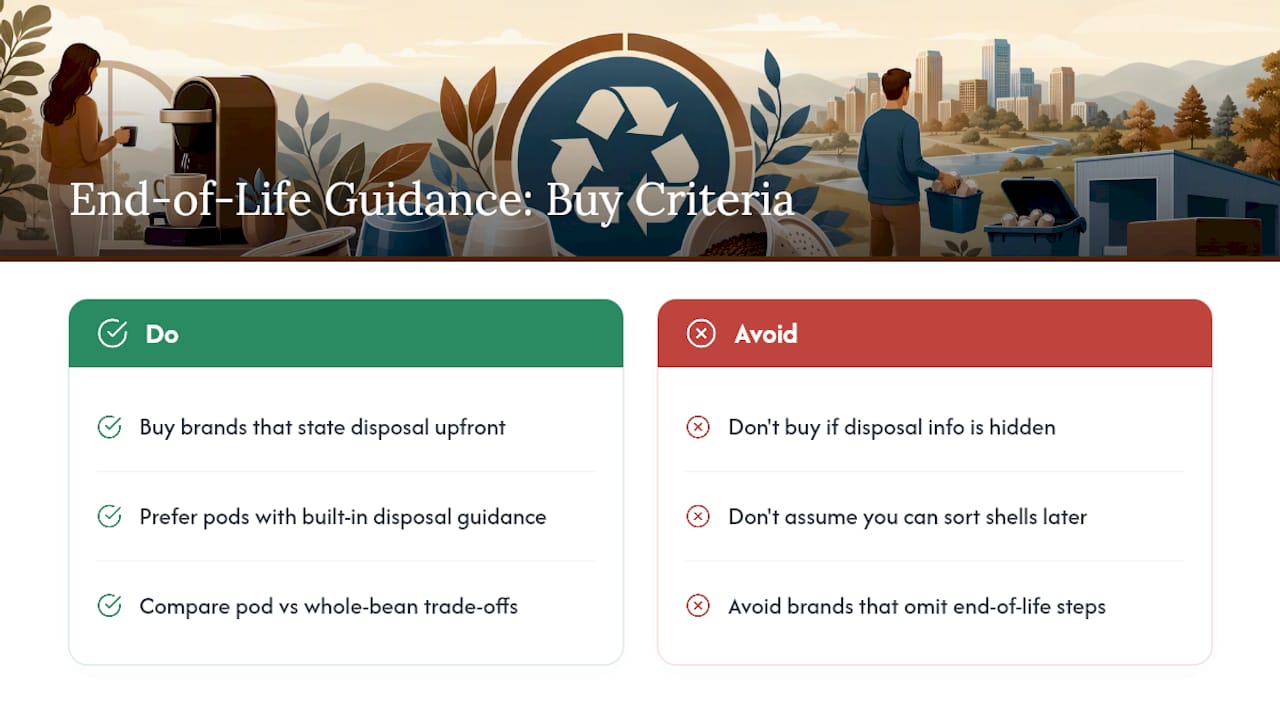
Most pod brands treat disposal as an afterthought, printed in small text if it’s mentioned at all. That’s backwards. A pod is a five-minute product with a decades-long packaging footprint if it ends up in the wrong stream, and the brand selling it should tell you exactly where it belongs before you buy, not after you’re stuck holding a shell with no clear next step.
Thejcoffeecollection treats that guidance as part of the product, not a footnote. Readers weighing pods against other formats can compare trade-offs in the pods versus whole beans breakdown, and anyone ready to cut pods out entirely has options laid out in the non-pod alternatives guide. The goal isn’t to convince every reader that pods are the answer. It’s to make sure whoever chooses them knows what to do with the shell.
— jonathan
Shop Coffee Pods Built With Disposal in Mind
Thejcoffeecollection’s approach to pods starts with a simple idea: you shouldn’t need a research project to figure out what happens after your last sip. The Coffee Pods collection is built for readers who want single-serve convenience without abandoning the disposal habits covered above.

If you’re curious how a specific pod performs before committing to a full case, the 12-pack single-serve capsules is a straightforward way to test one at home. Prefer to brew outside the pod format entirely? The single-origin coffee collection covers whole bean and ground options with the same sourcing standards. Either way, the next step is the same: pick a format, check the disposal instructions on the bag, and brew with a plan for the shell before you ever peel the lid.
Sources
- How to recycle K-Cups, Nespresso capsules & coffee pods - Consumer Reports
- Keurig Recycling - Recyclable K-Cup Pods & Recycling Information
- The Recycling Partnership
- Single-serve coffee market - Statista
FAQ
What are the most environmentally friendly coffee pods?
Aluminum pods with a genuine collection pathway and pods certified OK Compost Home tend to have the clearest disposal outcomes, since both avoid dependence on inconsistent curbside plastic programs.
How do you dispose of old coffee pods?
Peel the lid, empty and compost the grounds where possible, rinse the shell, then recycle it curbside if your city accepts the material or send it through a brand mail-back program like K-Cycle or a TerraCycle zero-waste box.
Are there any coffee pods that are not plastic?
Yes. Aluminum capsules and plant-based compostable pods are both widely available alternatives to standard plastic pods, though each requires its own specific disposal route to actually break down or get recycled.
What can I do with old coffee pods?
Beyond recycling or composting, empty and rinsed pods can sometimes be reused for small craft projects or seed starters, but for volume disposal, a mail-back program remains the more reliable option.
Does Thejcoffeecollection sell recyclable or compostable pods?
Thejcoffeecollection’s Coffee Pods collection includes single-serve options selected with end-of-life disposal in mind; current pricing and specific material details are listed on the product pages.