

Home Brewers: Safe Cold Brew Tea, 1 Tsp per Cup, 6–12 Hours
Cold brew tea means steeping tea leaves or bags in cold water in the refrigerator instead of hot water on the stove, and the extraction happens slowly over hours instead of minutes. For a first pitcher, start with about 1 teaspoon of loose leaf tea or 1 tea bag per cup of cold water, then refrigerate for several hours depending on the tea type. The payoff is a smoother cup with fewer bitter tannins than hot-brewed iced tea, but always keep it refrigerated and treat it like the perishable drink it is.
TL;DR:
- Black tea and white tea require 8 to 12 hours of steeping, with black tea producing a bolder flavor and potentially higher caffeine content.
- Use filtered water and double strain if necessary to prevent cloudiness and ensure a clear, flavorful brew.
- Shorter steeping times risk weaker flavors, while extended steeping can lead to bitterness, especially with fannings or broken leaves.
- For low-caffeine options, select herbal or decaffeinated teas, as longer steep times increase caffeine extraction regardless of water temperature.
- Adding fruit, herbs, or sweeteners after straining enhances flavor without muddying the liquid during steeping.
Table of Contents
- How to Make Cold Brew Tea: Equipment, Tea, and Water
- Step-by-Step Method for a One-Quart Pitcher
- How Long Should You Steep Different Teas?
- Flavoring and Recipes: Building Your Own Blend
- Storage and Caffeine: What the Research Actually Says
- Troubleshooting Cold Brew Tea Like a Pro
- Why Cold Brew Deserves a Spot in Your Weekly Rotation
- Where to Start Buying Tea for Your Cold Brew Pitcher
- Sources
- FAQ
How to Make Cold Brew Tea: Equipment, Tea, and Water
You don’t need special gear to make cold brew tea at home. A clean glass pitcher or mason jar with a tight lid, a fine mesh strainer or built-in infuser, a measuring spoon or kitchen scale, and a few clean storage bottles will cover almost every recipe you try.
Loose leaf tea generally gives you more control over strength and produces less fine sediment than tea bags, especially if you strain twice. Tea bags are more convenient and work fine for beginners, though cheaper bags packed with fannings (broken leaf bits) can cloud the brew faster. Water quality matters more than most people assume: use filtered water straight from the fridge, since chlorine and mineral content can dull flavor over a long steep.
Keep a short list of flavoring add-ins on hand once you’re ready to experiment:
- Fresh citrus (lemon, orange, or lime slices)
- Soft herbs (mint, basil, or lemon verbena)
- Ripe fruit (peaches, berries, or cucumber)
- A neutral sweetener like simple syrup or honey syrup
Step-by-Step Method for a One-Quart Pitcher
This is the same basic ratio Better Homes & Gardens uses in its own tested cold brew method, scaled for a standard 4-cup pitcher.
- Measure 4 teaspoons of loose leaf tea (or 4 tea bags) into your pitcher.
- Add 4 cups of cold, filtered water.
- Cover tightly with a lid or plastic wrap to keep out refrigerator odors.
- Refrigerate for 6 to 12 hours, depending on tea type (more on that below).
- Taste a small sample at the low end of the time range.
- Strain out the leaves or bags once the flavor tastes right to you.
- Serve over ice, or bottle and refrigerate for later.
If you’re short on time, a hot+ice hybrid gets you close to a cold brew profile fast. Steep leaves in a small amount of hot water for a minute or two, then pour over a full glass of ice. Research comparing steeping methods found this shortcut can approximate some of cold brew’s antioxidant and color properties in a fraction of the time.
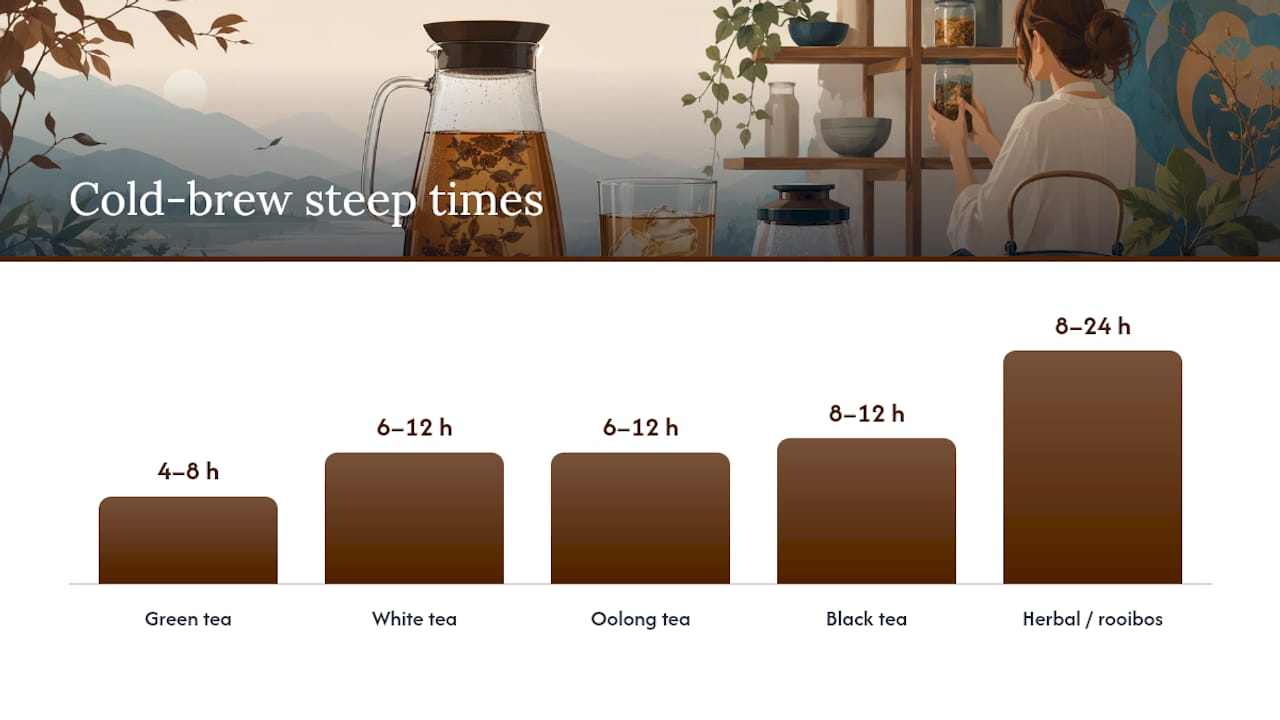
How Long Should You Steep Different Teas?
Steep time and dose aren’t one-size-fits-all. Leaf size, oxidation level, and tea family all change how fast flavor and caffeine pull out of the leaf.
- Green tea: 4 to 8 hours, 1 teaspoon per cup
- White tea: 6 to 12 hours, 1 teaspoon per cup
- Oolong tea: 6 to 12 hours, 1 teaspoon per cup
- Black tea: 8 to 12 hours, 1 teaspoon per cup (add a bit more for a bolder, tannic cup)
- Herbal or rooibos: 8 to 24 hours or longer, 1 to 2 teaspoons per cup
Fannings and broken leaf (common in many tea bags) have more surface area exposed to water, so they extract faster than whole leaf and can turn bitter if you go past the recommended window. If you’re brewing a large-leaf loose tea, lean toward the longer end of the range or add slightly more leaf.
Caffeine doesn’t disappear just because the water is cold. Research on tea extraction shows caffeine and related compounds generally increase the longer tea steeps, regardless of water temperature. A 12-hour black tea cold brew can carry a real caffeine load. If you’re watching your intake, check the caffeine profile of your specific tea rather than assuming cold brew runs low.
Flavoring and Recipes: Building Your Own Blend
A simple formula covers most successful cold brew tea recipes: one tea, one fruit, one citrus, one herb. It’s the same pattern recipe developers lean on because it balances sweetness, acidity, and aroma without overcomplicating the pitcher.
A few combinations worth trying first:
- Green tea, lemon slices, and mint
- White tea, sliced peach, and basil
- Oolong tea, orange peel, and basil
- Herbal blend with mixed berries and a lime wedge
Add fruit and herbs at the start of the steep if you want their flavor fully infused, or add them after straining if you want a cleaner, less muddy pitcher. Soft berries especially can turn mushy and slightly fermented-tasting if left in for the full 12 hours, so many home brewers add those toward the last hour or two instead.
For sweetness, stir in simple syrup, honey syrup, or a splash of fruit juice after straining, not before. Milk pairs surprisingly well with black tea or a mild rooibos cold brew concentrate. Brew it a little stronger than usual, then dilute with milk the same way you would with a coffee concentrate.
Storage and Caffeine: What the Research Actually Says
Cold brewing skips the boiling step that would normally kill bacteria in hot tea, which changes how you need to handle it. University food-safety guidance from SDSU Extension recommends refrigerating below 40°F, using clean equipment, and avoiding vacuum-sealed or canned storage for home batches.
Follow these steps every time:
- Refrigerate immediately after straining, never leave the pitcher on the counter.
- Make small batches you’ll finish within 2 to 3 days.
- Label the container with the date you brewed it.
- Discard anything with an off smell, sliminess, or unusual film.
On caffeine, the same extraction research cited above holds: longer steep times pull more caffeine out of the leaf. If you want a genuinely low-caffeine cold brew, reach for herbal tea or a labeled decaf rather than assuming the cold water does the work for you.
Troubleshooting Cold Brew Tea Like a Pro
Two problems show up more than any others: watered-down flavor and cloudy tea. Both have simple fixes.
Pro Tip: If you know your iced tea is headed for a glass full of melting ice, brew your pitcher slightly stronger than you’d drink it straight, or use large ice cubes and pre-chilled glasses to slow the dilution.
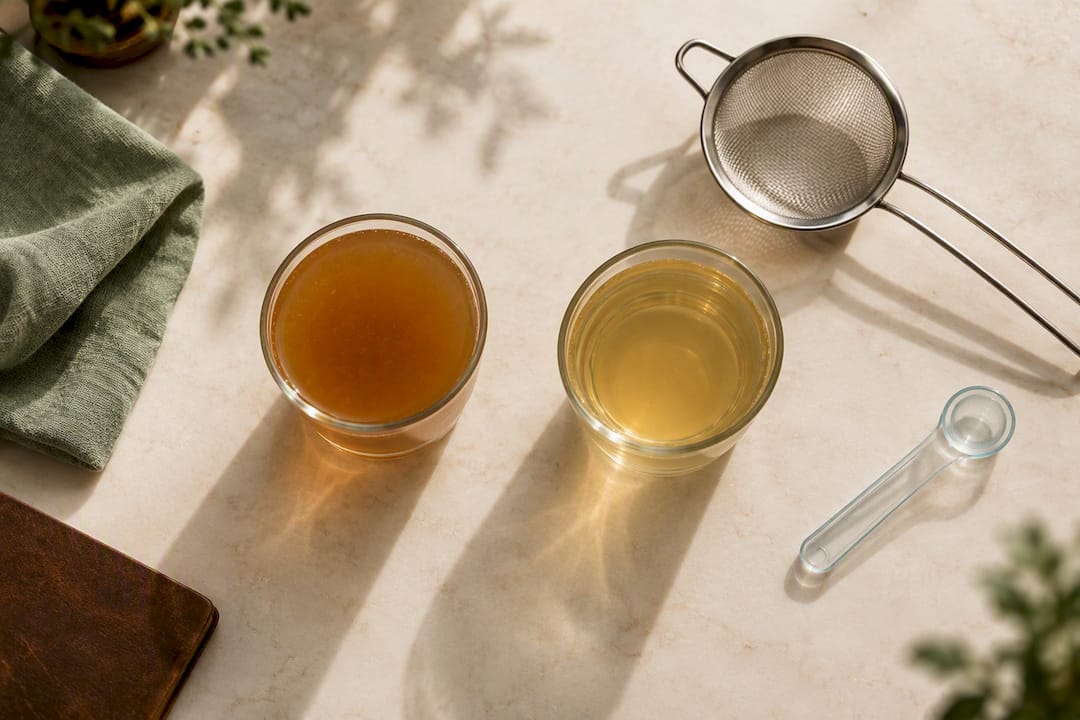
Cloudiness usually comes from very fine broken leaf particles or mineral content in your water, not spoilage. A double strain through a fine mesh sieve, or a final pass through a coffee filter, clears most pitchers right up.
- Taste at the low end of the time range before committing to a full 12-hour steep.
- Adjust the next batch by a teaspoon of leaf or an hour of time, not both at once.
- Reach for the hot+ice method when you need iced tea in minutes rather than overnight.
Why Cold Brew Deserves a Spot in Your Weekly Rotation
Once you’ve dialed in your ratio, cold brew tea becomes the easiest drink in your fridge: no kettle, no timer, just a pitcher waiting for you. Consistency is the real reward, and a rotation of a few reliable tea varieties makes that consistency effortless.
— jonathan
Where to Start Buying Tea for Your Cold Brew Pitcher
A tea collection built around this kind of experimentation, featuring single-origin and naturally flavored teas curated so you’re not guessing which bag or leaf actually holds up to a 12-hour steep.

If you’re new to cold brewing, start with something forgiving: a mild green tea, a soft white tea, a caffeine-free rooibos, or a fruit and herbal blend. Rooibos in particular is close to impossible to over-steep, which makes it a low-risk way to learn your fridge’s timing before you commit to pricier oolongs. A tea like the Moroccan mint blend works well cold, since the mint holds its brightness even after a long steep.
Not sure which direction to go first? A cold brew gift kit bundles a few tea styles together so you can run side-by-side pitchers and compare results without buying full bags of each. Browse the Tea collection and pick two or three teas to test this week.
Sources
- How to Cold Brew Tea the Easy Way — Better Homes & Gardens
- How to make cold-brewed teas safely — SDSU Extension
- Effects of alternative steeping methods on composition, antioxidant property and colour of green, black and oolong tea infusions — PMC
- Study on storage and steeping effects on tea compound extraction — ScienceDirect
FAQ
Is It Okay to Cold Brew Tea?
Yes, cold brewing tea is safe as long as you refrigerate it below 40°F and treat it like a perishable drink rather than a pantry item. SDSU Extension recommends clean equipment, small batches, and discarding anything left at room temperature for an extended time.
What Is the Point of Cold Brew Tea?
Cold brewing extracts flavor more slowly than hot steeping, which pulls out less of the bitter tannins and produces a smoother, naturally sweeter cup. It also skips the step of cooling hot tea down before serving it over ice.
Is Cold Brew Tea the Same as Iced Tea?
No. Traditional iced tea is brewed hot then cooled or poured over ice, while cold brew tea steeps entirely in cold water in the refrigerator for hours. The two methods pull out different compounds, and a hot+ice hybrid sits somewhere in between if you’re short on time.
How Do You Make Cold Brew Tea?
Combine about 1 teaspoon of loose leaf tea or 1 tea bag per cup of cold water in a covered pitcher, then refrigerate for 6 to 12 hours depending on the tea type, following the ratio Better Homes & Gardens recommends. Strain out the solids once it tastes right, then serve over ice or bottle it for later.
Does Cold Brew Tea Have Less Caffeine?
Not necessarily. Longer steep times generally increase caffeine extraction according to peer-reviewed research, so a 12-hour black tea cold brew can carry as much or more caffeine than a quick hot cup. Choose an herbal or decaf tea if you specifically want a low-caffeine pitcher.