

What Makes a Coffee Gift Premium: The 2026 Guide
What actually makes a coffee gift premium?
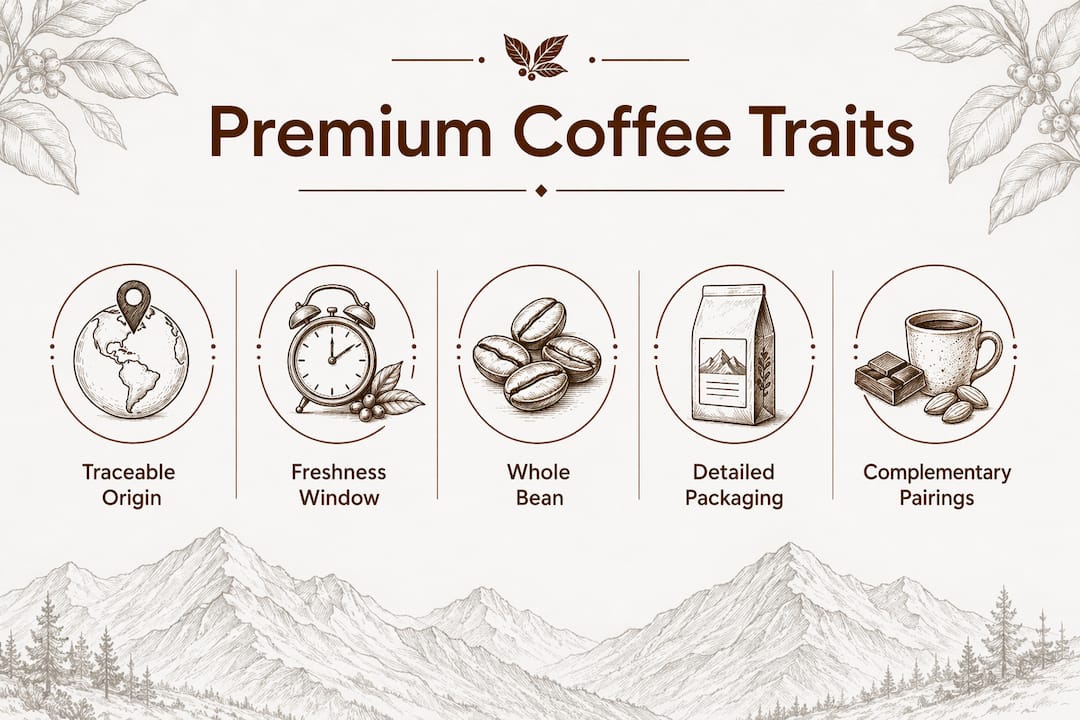
A premium coffee gift comes down to six things: single-estate coffee with traceable provenance, a clearly stamped roast date, whole beans or grind-to-order, complementary pairings matched to the coffee’s flavor profile, packaging that tells the coffee’s story, and presentation tailored to the occasion. Get all six right, and you have something genuinely worth giving. Miss even one, and the gift slides back toward ordinary.
Here is what separates a thoughtful, high-end coffee gift from a generic basket with a bow:
- Single-estate origin: Beans traced to one specific farm or estate, not a regional blend or commercial mix
- Verifiable freshness: A roast date stamped on the bag, confirming the coffee is within its peak flavor window of 2–4 weeks post-roast
- Whole beans or grind-to-order: Pre-ground coffee loses aroma within minutes of grinding; whole beans hold flavor for weeks
- Flavor-matched pairings: Single-origin dark chocolate, artisanal honey, or other items chosen to echo the coffee’s tasting notes, not just fill space
- Narrative packaging: Labels that name the estate, altitude, harvest season, roast profile, and brewing guidance
- Occasion-appropriate presentation: Custom message cards, tailored outer packaging, and personalized origin notes that signal the gift was chosen for this specific person
These elements work together. A beautifully packaged box with commodity beans inside is not a premium gift. Neither is excellent coffee stuffed into a generic brown bag. The experience has to hold up at every layer.
What goes inside a truly premium coffee gift set?
The contents of a high-end coffee gift do more than fill a box. Each component should earn its place by contributing to the overall sensory experience.
- Single-origin or single-estate beans: Traceable to one farm, with a named region and altitude. This is the foundation. Single-estate coffee offers a distinct, irreplaceable flavor profile that a commodity blend simply cannot replicate.
- A visible roast date: Not a best-before date. A roast date. Premium coffee tastes best shortly after roasting, and displaying that date signals transparency and craftsmanship.
- Whole beans: Ground coffee oxidizes fast. Whole beans, stored in a valve-sealed bag away from light and heat, hold peak flavor considerably longer.
- Thoughtfully paired accompaniments: Complementary pairings like single-origin dark chocolate or raw artisanal honey are chosen to mirror or heighten the coffee’s natural tasting notes, not just add bulk to the gift.
- Optional brewing accessories: A quality hand grinder, a gooseneck kettle, or a set of double-walled espresso cups can round out the gift for recipients who are building their home brewing setup.
Pro Tip: Complementary pairings are not extras. They are the difference between a gift that gets consumed and a gift that gets remembered. A piece of single-origin dark chocolate with matching flavor notes turns the first sip into a deliberate tasting experience.
Why provenance and freshness define premium coffee gifts
Provenance is the story behind the cup. When a coffee can be traced to a specific farm, at a specific altitude, harvested in a specific season, that information transforms the beans from a commodity into something with genuine character. The recipient is not just drinking coffee. They are drinking a particular place.
Freshness is where many gifts quietly fail. Coffee at peak flavor is a narrow window, typically 2–4 weeks after roasting. A gift that arrives without a roast date gives the recipient no way to know whether the coffee is at its best or well past it. That missing detail is not a minor oversight. It is a quality failure that undercuts everything else in the box.
Whole bean coffee holds its nuanced flavor far longer than pre-ground because grinding releases aromatic compounds that oxidize rapidly. A premium gift respects this by delivering whole beans, or by offering to grind to the recipient’s exact brewing specification. Understanding coffee terroir and flavor helps explain why origin details matter so much: altitude, rainfall, soil composition, and processing method all shape what ends up in the cup.
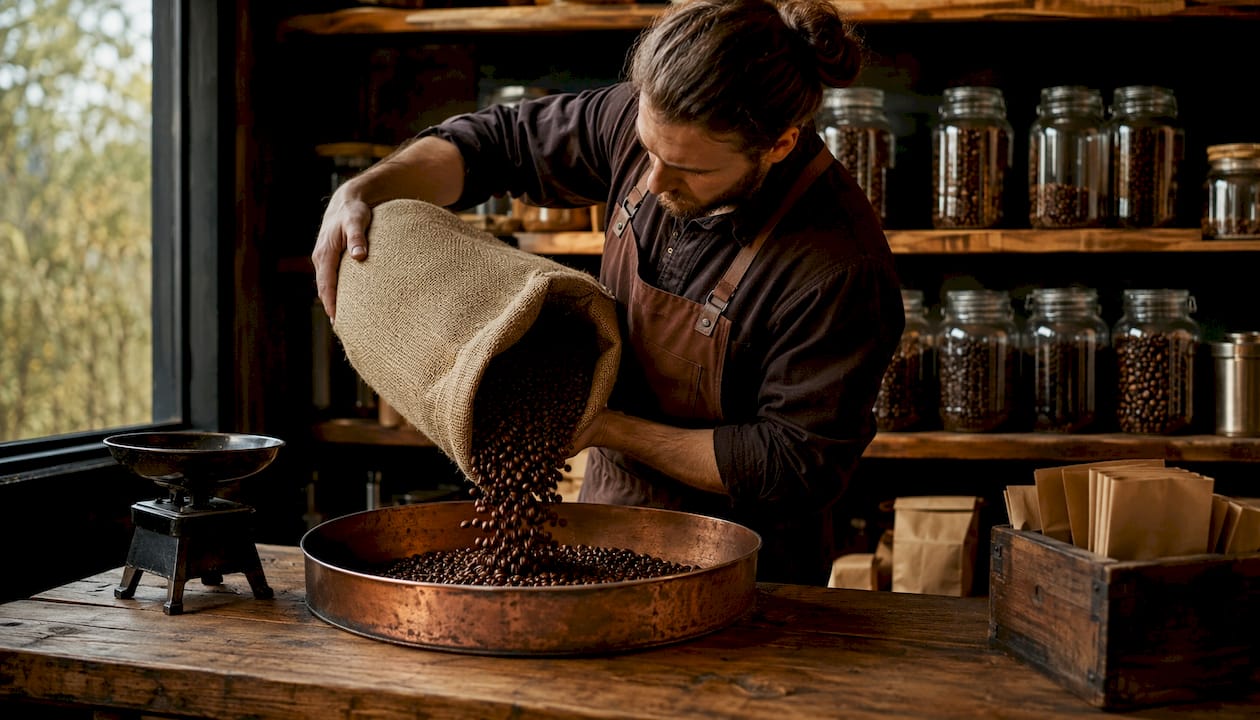
Packaging that includes origin notes, tasting descriptors, and brewing guidance does something important. It educates the recipient while they enjoy the gift, turning a one-time experience into a lasting appreciation for where great coffee comes from.
How luxury coffee gifts stand apart from standard sets
The gap between a premium coffee gift and a standard one is not just price. It is the quality of every decision behind the curation.
- Bean quality: Luxury gifts use specialty-grade beans scoring 83 or above on the Specialty Coffee Association (SCA) scale. Standard sets often use commodity-grade blends that score well below that threshold.
- Flavored versus natural: Flavored coffees, vanilla, hazelnut, caramel, tend to mask lower-quality beans. A genuinely premium gift highlights the coffee’s natural flavor, not a coating applied to hide defects.
- Origin storytelling: Premium gifts name the farm, the region, the altitude, and the harvest. Standard sets list a country of origin at best, and often nothing at all.
- Packaging purpose: Luxury packaging carries a narrative. It tells the recipient what they are about to taste and why it matters. Decorative packaging on a standard set is cosmetic. It adds nothing to the experience once the box is open.
- Curated pairings versus generic fillers: A premium set pairs items that genuinely complement the coffee’s flavor profile. A standard set adds cookies or candy because they fill space and photograph well.
The SCA 83+ threshold is worth understanding. The SCA scores coffee on a 0–100 scale, and anything above 80 qualifies as specialty grade. An 83+ score indicates a clean, well-developed cup with no defects. Most supermarket coffee scores well below 80. That gap is what you are paying for in a premium gift.
How to choose the best premium coffee gift for your recipient
Choosing well starts with knowing the person. A coffee connoisseur who already owns a burr grinder and a pour-over setup wants something different from someone who brews with a drip machine every morning.
- Match the beans to the brewing method: Whole beans are the right choice for anyone who already grinds at home. For recipients without a grinder, grind-to-order is the considerate option. Knowing the brewing method, espresso, French press, pour-over, lets you choose a roast profile that actually suits how they drink.
- Look for SCA 83+ certification: This is the clearest quality marker available. It tells you the beans passed a rigorous cupping evaluation and meet the standard for genuine specialty coffee.
- Prioritize provenance information: A gift with a named farm, a specific region, and an altitude listed on the bag gives the recipient a story to tell. That detail adds meaning that no amount of decorative packaging can manufacture.
- Evaluate the pairings honestly: Ask whether each complementary item was chosen to enhance the coffee experience or just to fill the box. Artisanal honey that mirrors the coffee’s floral notes belongs. Generic shortbread cookies probably do not.
- Consider the occasion: Occasion-appropriate presentation matters. A corporate gift calls for clean, professional packaging with a personalized note. A birthday gift can be warmer and more personal. The same coffee can read very differently depending on how it is presented.
For practical guidance on selecting quality beans that suit a specific recipient, the roast level and processing method are the two variables that most dramatically shift the flavor experience. A natural-processed Ethiopian will taste completely different from a washed Colombian, even at the same roast level.
Pro Tip: If you are unsure about the recipient’s brewing setup, a single-origin sample pack covering multiple regions lets them explore different flavor profiles without committing to a large bag of one variety. It is a gift that teaches as much as it satisfies.
What coffee experts say about crafting genuinely premium gifts
The unboxing experience is not a marketing concept. It is a functional part of what makes a premium coffee gift work. Packaging that tells the coffee’s story — farm name, altitude, harvest season, roast date, tasting notes, brewing guidance — transforms the moment of opening from a transaction into an education. The recipient learns something. That learning deepens their enjoyment of every cup that follows.
Flavored coffees are a consistent point of caution among specialty coffee professionals. Vanilla, hazelnut, and caramel additives tend to mask the nuanced flavors of high-quality Arabica beans. A genuinely premium gift does not need flavor additives because the coffee itself, sourced well and roasted carefully, already has complexity worth experiencing.
Whole beans are the near-universal choice in premium gifting for a practical reason. Grinding releases aromatic compounds that oxidize quickly, and pre-ground coffee in a gift box has often lost much of its character before the recipient even opens the bag. Whole beans, sealed in a valve bag, arrive with their flavor intact.
The finest complementary pairings do something specific. Single-origin dark chocolate chosen to echo a coffee’s chocolate or fruit notes does not just taste good alongside the coffee. It makes the coffee taste more like itself. That is the difference between a pairing and a filler. For anyone thinking about luxury client gifting at scale, this principle applies equally: every element in the gift should reinforce the others, not just occupy space.
Pro Tip: The narrative behind each element communicates care more effectively than price does. A $40 gift with a named farm, a roast date, and a handwritten note about why you chose that specific origin will land better than a $100 gift with no story attached to it.
Discover premium coffee gifts from Thejcoffeecollection
Thejcoffeecollection curates single-origin coffees from six world regions, each selected for traceable provenance and specialty-grade quality. Whether you are looking for a gift for a dedicated coffee enthusiast or someone just beginning to explore what great coffee actually tastes like, the collection covers the full range: from naturally processed light roasts with fruit-forward complexity to mushroom coffee blends with Lion’s Mane, Cordyceps, and Reishi for health-conscious recipients. Every product is chosen with the same standard: quality you can taste, provenance you can trace, and a story worth sharing.
Key Takeaways
A premium coffee gift is defined by traceable single-estate beans, verifiable freshness within 2–4 weeks of roasting, whole beans or grind-to-order, flavor-matched pairings, narrative packaging, and occasion-appropriate presentation.
| Point | Details |
|---|---|
| Single-estate provenance | Beans traced to one specific farm give the gift a story and a distinct, unrepeatable flavor profile. |
| Roast date freshness | Coffee peaks in flavor within 2–4 weeks post-roast; a visible roast date confirms the gift arrives at its best. |
| Whole beans over pre-ground | Whole beans preserve aroma and flavor far longer because grinding triggers rapid oxidation. |
| SCA 83+ quality threshold | Specialty Coffee Association scoring at 83 or above distinguishes genuine specialty beans from commodity-grade coffee. |
| Narrative packaging | Labels that name the farm, altitude, tasting notes, and brewing guidance turn a product into an experience. |