

Roasted Fresh to Order: The Buyer's Guide to Peak Flavor
“Roasted fresh to order” means exactly what it says: your beans aren’t touched by heat until after you place your order. The roaster pulls green beans, fires the drum, cools and packages the batch, then ships it directly to you. No warehouse shelf time, no mystery roast date. The result is coffee with noticeably brighter flavor, fuller aroma, and volatile compounds still intact.
Before you buy anywhere, check two things: the roast date printed on the bag and the roaster’s stated roast-to-ship window. Both numbers tell you more about what’s in that bag than any marketing copy.
- Roast date visible? Non-negotiable. If it’s not on the product page, skip it.
- Roast-to-ship timeline? Look for a short roast-to-ship window for consumer orders.
- Small-batch or single-origin language? Strong signal of genuine made-to-order roasting.
- Packaging type? Valve bags or nitrogen-flushed options preserve freshness in transit.
Thejcoffeecollection offers freshly roasted coffee with transparent roast-date practices and a range of single-origin and specialty options, including sample packs that let you taste the difference before committing to a full bag.
Pro Tip: Before you order, search the product page for the phrase “roasted on” or “roast date.” If a seller buries that information or omits it entirely, treat it as a red flag — genuine roast-to-order operations lead with it.
Table of Contents
- What does “roasted fresh to order” actually mean?
- Why roast-to-order delivers a noticeably better cup
- How to shop for freshly roasted coffee: the buyer checklist
- What to expect after you order: timelines and shipping
- How to store and brew freshly roasted beans
- How Thejcoffeecollection handles roast-to-order
- Key Takeaways
- The case for roast-to-order is stronger than most buyers realize
- Thejcoffeecollection: order roast-to-order coffee today
- Useful sources and further reading
What does “roasted fresh to order” actually mean?
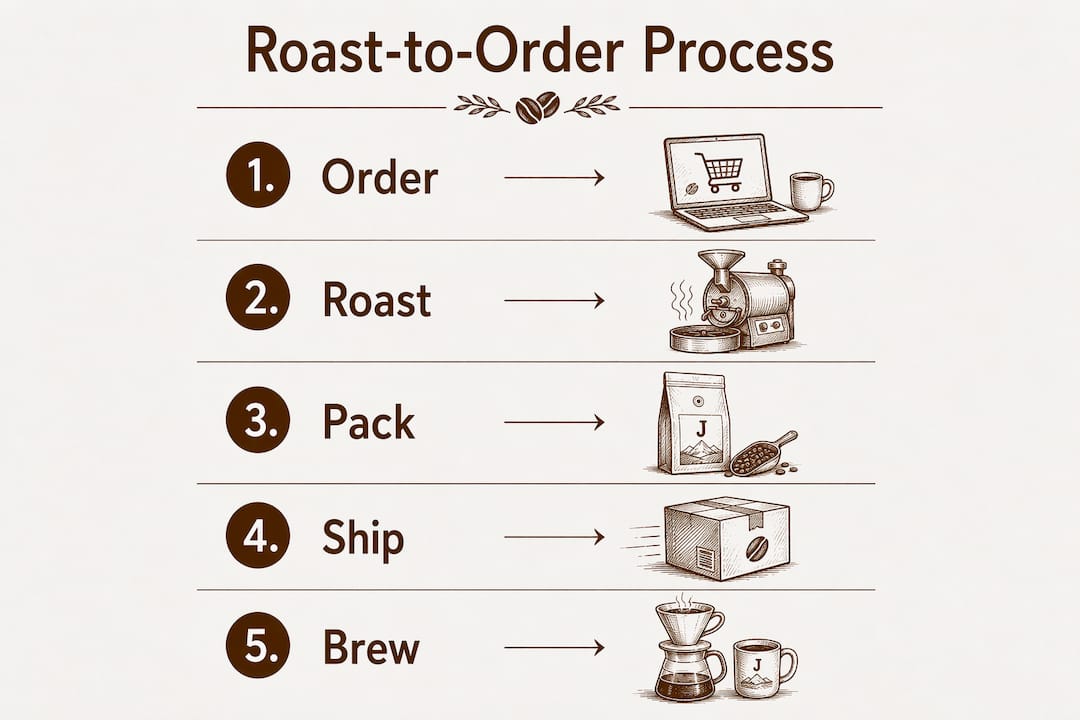
The phrase describes a specific production sequence. Green (unroasted) beans are sourced and held raw, then roasted only after a customer places an order. After roasting, the beans cool, degas briefly, get sealed in packaging with a one-way aroma valve, and ship. That sequence is what separates a true roast-to-order operation from a retailer that roasts in bulk, warehouses inventory, and ships whenever an order comes in.
The terminology on product pages can blur these lines fast. Here’s how the most common labels actually differ:
- “Roasted fresh to order” — beans roasted after your specific purchase; strongest freshness claim.
- “Small-batch roasted” — roasted in small quantities, but not necessarily triggered by your order; could still be sitting on a shelf.
- “Freshly roasted” — vague; could mean roasted this week or this month; always verify with a roast date.
- “Artisan” or “craft” roasted — describes method or philosophy, not timing; no freshness guarantee implied.
The roast date is the only objective data point. A ship date tells you when the package left the facility, not when the beans were roasted. Warehouse stock can carry a ship date from yesterday and a roast date from three months ago.
| Label | What it tells you | Freshness reliability |
|---|---|---|
| Roast date printed on bag | Exact day beans were roasted | High |
| Ship date only | When the package left | Low |
| “Freshly roasted” (no date) | Marketing language | Unverifiable |
| “Small-batch” (no date) | Production size, not timing | Medium |
| Roast-to-order with timeline | Roasted after your purchase | High |
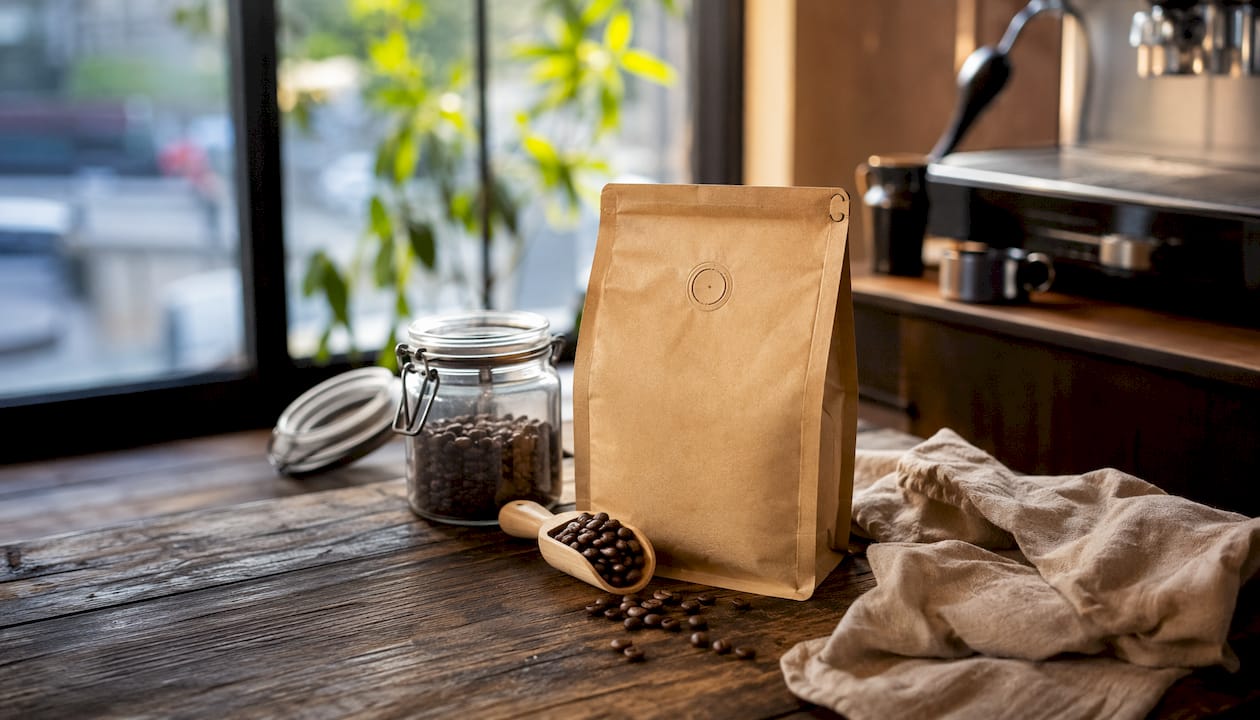
Good packaging reinforces the freshness claim. Aroma-valve bags, eco-conscious options, and nitrogen-flushed packaging all slow oxidation after roasting. A bag without a valve is a minor warning sign for a roaster claiming peak freshness.
Why roast-to-order delivers a noticeably better cup
Roasting triggers hundreds of chemical reactions that produce the aromatic compounds responsible for coffee’s flavor. The problem is those compounds start degrading the moment roasting ends. CO₂ off-gasses, volatile aromatics escape, and oils oxidize. Warehouse-roasted beans that sat for weeks before shipping have already lost a meaningful portion of what made them interesting.
Roast-to-order preserves that window. You get brighter acidity, clearer origin notes, and a fuller aroma in the cup. A light Ethiopian single-origin roasted to order will show its floral and citrus notes far more clearly than the same bean roasted six weeks earlier. That’s not a subtle difference — most coffee drinkers notice it on the first sip.
Freshness window: Specialty coffee experts recommend enjoying beans within about 3 months of roasting for peak flavor. The coffee remains drinkable longer, but the aromatic peak comes earlier. Nitrogen-flushed packaging can extend shelf life to 12–24 months, though the fresh-roast experience is still best in the first weeks.
Roast level also shapes how quickly beans hit their peak. Light roasts need a few extra days to degas before the cup clarity opens up. Dark roasts degas faster and taste best sooner after roasting. Roast-to-order services that let you choose your roast level for a specific brew method give you a meaningful advantage here.
Pro Tip: If you brew espresso, order a medium-dark roast and wait 5–7 days after the roast date before pulling your first shot. The crema will be noticeably more stable and the flavor more balanced than if you brew it the day it arrives.
How to shop for freshly roasted coffee: the buyer checklist
The roast date is the single most important thing to check. Everything else on this list matters, but a missing roast date disqualifies a listing before you read another word.
Before you add to cart, verify:
- Roast date visible on the product page or bag image
- Roast-to-ship timeline stated explicitly (1–5 days is strong for consumer orders; 3–4 weeks is standard for private-label production)
- Origin transparency: country, region, or farm name
- Roast level labeled (light, medium, dark) with a suggested brew method
- Grind options available (whole bean preferred for freshness)
- Small-batch language with a stated or implied batch size
- Certification labels if relevant to you: USDA Organic, Fair Trade, Rainforest Alliance
- Packaging type: one-way valve bag or nitrogen-flushed option
- Customer reviews that mention freshness or roast date
- Return or satisfaction policy
Learning to buy fresh coffee beans online takes one or two purchases to calibrate. A sample pack is the lowest-risk way to test a roaster’s freshness claims before ordering a larger bag.
Questions worth asking a seller directly:
- “When was this batch roasted?”
- “How many bags are in a typical batch?”
- “Do you roast and ship same-day or next-day?”
- “Is the roast date printed on the bag itself?”
On pricing: genuine roast-to-order coffee carries a modest premium over mass-market bags, reflecting the labor of small-batch production and faster fulfillment. Sample packs and subscription discounts are the most common ways to offset that cost. Many roasters also offer free shipping above a threshold, so bundling a few bags often makes sense.
What to expect after you order: timelines and shipping
Lead with the practical reality: turnaround varies significantly depending on the type of operation. Consumer-facing roasters with quick-dispatch models typically roast and ship within a short roast-to-ship window. Subscription services often batch roast on a weekly cycle, so your order ships a few days after placement. Private-label or large-scale production runs operate on a different timeline entirely.
| Order type | Typical roast-to-ship window | Expected freshness on arrival |
|---|---|---|
| Small roaster, quick dispatch | 1–5 days | Very fresh (days old) |
| Subscription / weekly batch | 2–5 days | Fresh (under 2 weeks) |
| Private-label production | 3–4 weeks | Acceptable (weeks old) |
Shipping speed matters less than roast-to-ship timing. A bag roasted yesterday and shipped via standard ground will arrive fresher than a bag roasted two weeks ago and sent overnight. Always confirm the roast-to-ship policy on the product page, not just the delivery estimate at checkout.
A few practical notes on shipping costs:
- Free-shipping thresholds typically fall within a moderate price range for U.S. orders.; bundling two or three bags usually clears that bar.
- Expedited shipping adds cost without meaningfully improving freshness if the roast-to-ship window is already tight.
- Subscriptions typically reduce per-shipment cost and lock in a regular roast-to-ship cadence, which is useful if you brew daily.
If you live near a local roaster, same-day pickup eliminates transit time entirely. For most U.S. buyers, though, a well-run online roast-to-order operation with a 1–5 day roast-to-ship window and standard ground shipping gets beans to your door in excellent condition.
How to store and brew freshly roasted beans
Once your order arrives, the clock is running. Freshly roasted beans are still off-gassing CO₂, which actually protects them from oxidation in the first few days. The goal is to preserve that window as long as possible.
Storage do’s and don’ts:
- Do keep beans in the original valve bag, sealed, in a cool dark place.
- Do transfer to an opaque, airtight container after opening.
- Don’t refrigerate beans repeatedly — moisture and odor absorption are real problems.
- Don’t leave beans in a clear canister on the counter; light accelerates staling.
- Do buy in quantities you’ll use within 2–4 weeks of opening for peak flavor.
For proper storage of freshly roasted coffee, the original sealed bag is usually your best option until you’re ready to brew regularly. Once opened, an airtight ceramic or stainless container beats a glass jar every time.
Brew timing by roast level matters more than most people realize:
- Light roast: Rest 3–7 days after the roast date before brewing. The cup clarity improves noticeably as CO₂ dissipates.
- Medium roast: 2–5 days of rest is usually enough; flavor opens up without losing brightness.
- Dark roast: 24–72 hours of degassing, then brew sooner rather than later for peak crema and body.
Grind just before brewing, always. Pre-ground coffee stales dramatically faster than whole bean. If you’re comparing whole bean vs. ground for a roast-to-order purchase, whole bean wins on freshness every time.
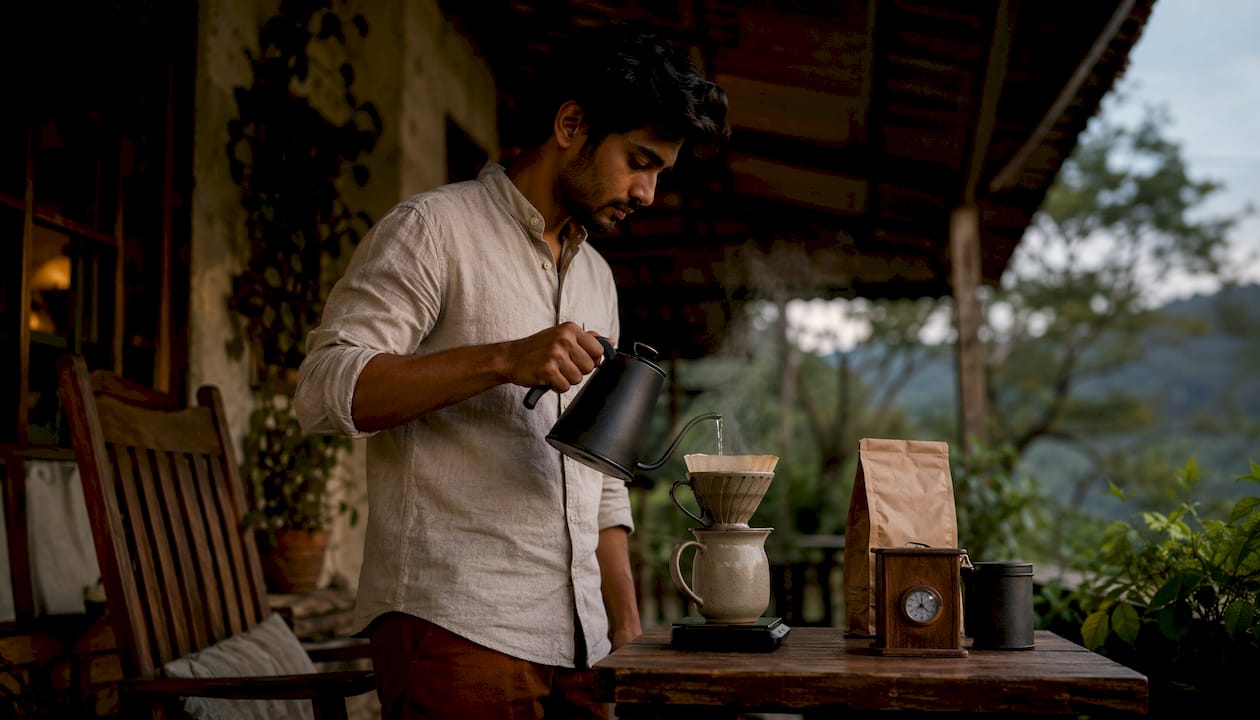
Pro Tip: Write the roast date on a small piece of tape and stick it to your storage container. When you open a new bag, note the date so you can track how flavor evolves over 2–3 weeks. After a few bags, you’ll know exactly when your preferred roast hits its personal peak.
How Thejcoffeecollection handles roast-to-order
Thejcoffeecollection offers freshly roasted options with transparent roast-date practices and a product range built around single-origin selections, naturally flavored roasts, and specialty blends including mushroom-infused coffees.
The process follows the roast-to-order model: green beans are sourced with origin transparency, roasted in small batches, packaged in valve bags to preserve freshness, and labeled with roast information so you know exactly what you’re getting. The product pages reflect that commitment, with roast level, origin notes, and brew-method guidance visible before you add anything to your cart.
The range covers more ground than most single-focus roasters:
- Single-origin selections sourced from distinct growing regions, with origin and flavor notes on each product page
- Sample packs covering multiple origins or flavor profiles, designed as low-commitment entry points
- Naturally flavored roasts for drinkers who want something beyond the standard lineup
- Mushroom coffee blends featuring Lion’s Mane, Cordyceps, and Reishi, for health-conscious buyers who want functional benefits alongside specialty-grade flavor
Trust signals to look for on any roast-to-order product page include visible roast dates, clear origin labeling, customer reviews that reference freshness, and educational content that explains the roasting and storage process. Thejcoffeecollection’s blog covers freshness, storage, and buying guidance in depth, which is exactly the kind of transparency that separates a credible roast-to-order operation from a generic coffee retailer.
Key Takeaways
Roast-to-order coffee delivers its best flavor when you verify the roast date, brew within the recommended freshness window, and store beans properly from the moment they arrive.
| Point | Details |
|---|---|
| Roast date is non-negotiable | Always confirm the roast date is visible on the product page before purchasing. |
| Peak flavor window | Enjoy beans within about 3 months of roasting; the aromatic peak comes in the first few weeks. |
| Roast-to-ship timing | Consumer orders typically ship within a short roast-to-ship window; confirm the policy before ordering. |
| Storage basics | Keep sealed in a valve bag or airtight container in a cool, dark place; avoid repeated refrigeration. |
| Thejcoffeecollection | Offers single-origin sample packs and specialty roasts with transparent roast-date labeling as a direct roast-to-order option. |
The case for roast-to-order is stronger than most buyers realize
Most coffee drinkers have never tasted a bean roasted within the past week. That’s not an exaggeration. The supply chain for mass-market coffee, from roasting facility to distribution center to grocery shelf to your cabinet, routinely adds weeks or months between roast and cup. By the time you brew it, you’re drinking something that was at its best a long time ago.
The conventional wisdom says “buy good beans.” The more useful advice is “buy beans with a roast date and drink them fast.” Origin, processing method, and roast profile all matter, but they can’t compensate for a bean that’s been sitting in a warehouse since before you thought about ordering.
What I find genuinely underappreciated is how much roast-to-order changes the entry-level experience. A mid-priced single-origin roasted to order and brewed within two weeks will outperform an expensive, award-winning bean that’s been on a shelf for two months. Freshness isn’t a premium feature. It’s the baseline condition for tasting what a coffee actually is.
The sample pack approach is the smartest move for anyone skeptical of the freshness difference. Order a small pack, note the roast date, brew it at the 5-day mark, and compare it to whatever you’ve been drinking. That one cup usually settles the debate.
Thejcoffeecollection: order roast-to-order coffee today
If you want freshly roasted beans without hunting through vague product pages for a roast date, Thejcoffeecollection is a direct option. The single-origin sample pack covers six world regions in one order, which makes it the lowest-friction way to taste roast-date differences across origins without committing to full bags.
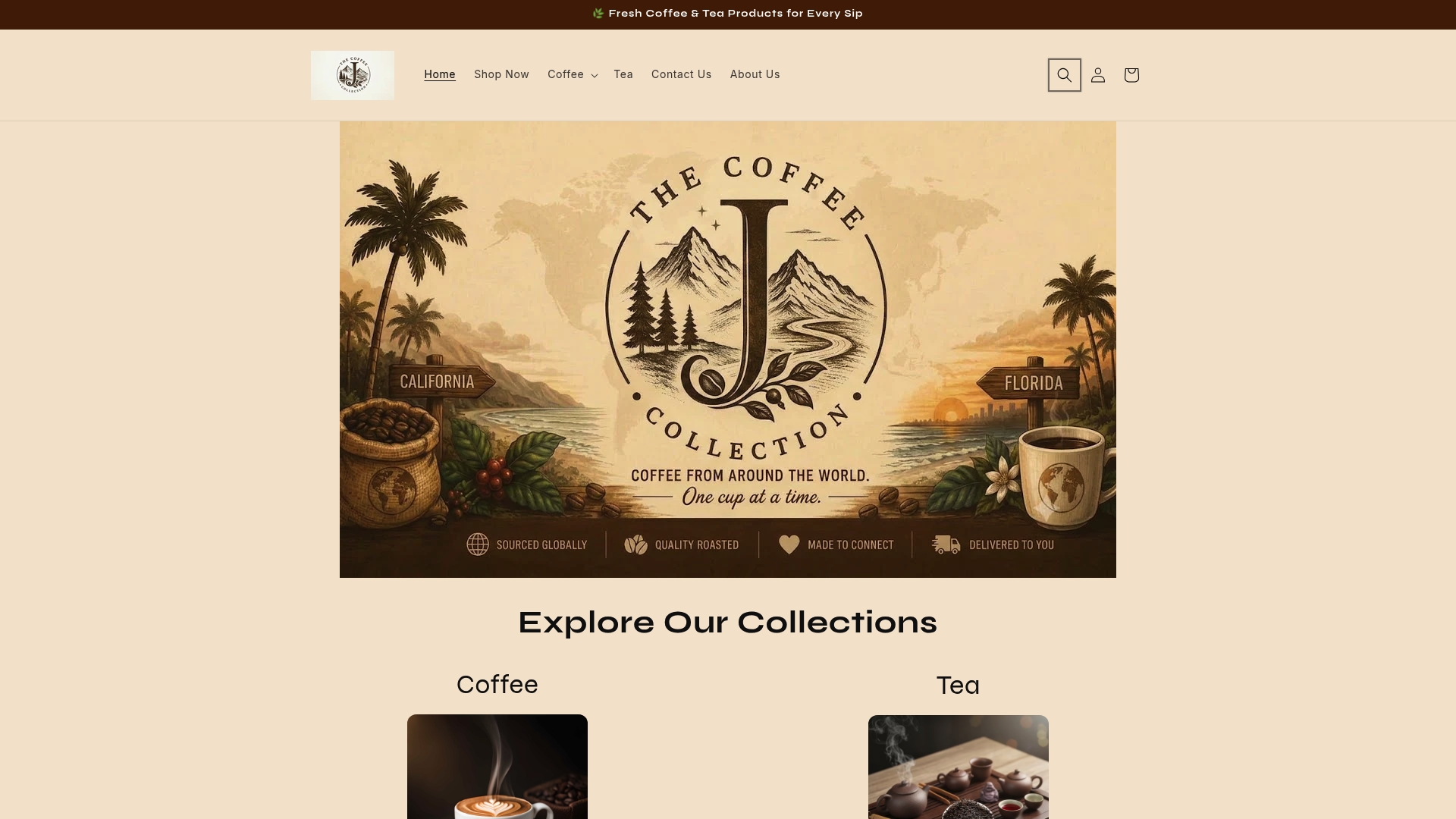
The full single-origin collection includes specialty beans with origin notes and roast-level guidance on every product page. For something outside the standard lineup, the mushroom coffee blends combine Lion’s Mane, Cordyceps, and Reishi with specialty-grade roasts. Naturally flavored options are available for drinkers who want something different without artificial additives.
Shipping thresholds apply for free delivery; bundling a sample pack with a full bag is usually the most cost-effective first order. Subscription options are available for buyers who want a regular roast-to-ship cadence without reordering manually each time.
Start with the six-region sample pack to taste the freshness difference directly, then use the roast date on arrival to track exactly how the flavor evolves over your first two weeks of brewing.
Useful sources and further reading
The claims in this article draw on the following sources. Internal editorial posts expand on specific topics for readers who want more depth.
Primary research:
- Roast-to-order coffee: freshness in every cup — process overview, packaging options, and timeline guidance for roast-to-order operations.
Internal educational posts from Thejcoffeecollection:
| Topic | Link |
|---|---|
| Why fresh-roasted delivery tastes better | Fresh roasted coffee delivery |
| Is freshly roasted coffee actually better? | Freshly roasted coffee: is it better? |
| Flavor guide for fresher beans | Why fresher coffee tastes better |
| Storage guidance for roast-to-order beans | How to store freshly roasted coffee |
| Buying fresh beans online | How to buy fresh coffee beans online |
| Shelf life for roasted beans | How long do coffee beans last? |
| Whole bean vs. ground freshness | Ground coffee vs. whole bean |
Ordering pages:
- Single-origin sample pack — six-region tasting entry point
- Single-origin collection — full catalog of origin-focused roasts
- Thejcoffeecollection homepage — primary landing page for all products