

Two Week Freshness Plan for Coffee Beans Backed by Science
Keep whole beans airtight, opaque, and away from heat, buy only what you’ll drink in one to two weeks, and grind right before brewing. Sealed bags hold their peak for weeks; once opened, that window shrinks to about seven to fourteen days. Start tonight by moving your beans out of any clear jar and into something opaque with a tight seal.
TL;DR:
- Buying small, fresh-roasted batches with a clear roast date and using them within one to two weeks maintains optimal flavor.
- Store beans in an opaque, airtight container away from heat and light to slow flavor loss caused by oxygen and oxidation.
- Avoid refrigerating beans due to moisture and odor absorption, but freezing portions in sealed containers can preserve freshness for two months.
- Grind beans immediately before brewing to prevent aromatic compound loss, which occurs rapidly once coffee is ground.
- Portioning beans into small amounts and using in order of opening maximizes freshness more effectively than expensive storage gadgets.
Table of Contents
- How long do coffee beans actually stay fresh?
- Why does coffee go stale? The role of CO₂ and oxygen
- What’s the best way to store coffee beans at home?
- Should you freeze or refrigerate coffee beans?
- Does grinding coffee beans early ruin the flavor?
- Smarter buying habits that protect freshness
- Storage mistakes that quietly ruin good coffee
- A simple freshness checklist
- Where this advice comes from
- What actually matters most in all this
- Sources
How long do coffee beans actually stay fresh?
Coffee has two separate clocks running at once: a safety clock and a flavor clock. The safety clock runs for months. The flavor clock runs for weeks, and it’s the one that actually matters to your morning cup.
A sealed, unopened bag of whole beans can hold its peak flavor for roughly three to four weeks from the roast date. That’s not a hard cutoff. It’s a general window, and the manufacturer’s printed “best by” date is a conservative estimate, not gospel. Once you break the seal, the clock speeds up considerably. Sealed whole beans have peak flavor for several weeks past the roast date. Opened whole beans have best flavor for about a couple of weeks after opening. Ground coffee, opened or not, loses aromatics within a few days or hours.
Beans that sit around for months or years won’t make you sick, but they will taste flat, papery, or downright rancid. Coffee stored for years turns thoroughly oxidized, losing nearly everything that made it interesting in the first place. Safe to drink and worth drinking are two different questions.
Why does coffee go stale? The role of CO₂ and oxygen
Two chemical processes drive every stale cup: degassing and oxidation. Understanding them tells you exactly why the storage rules below actually work.
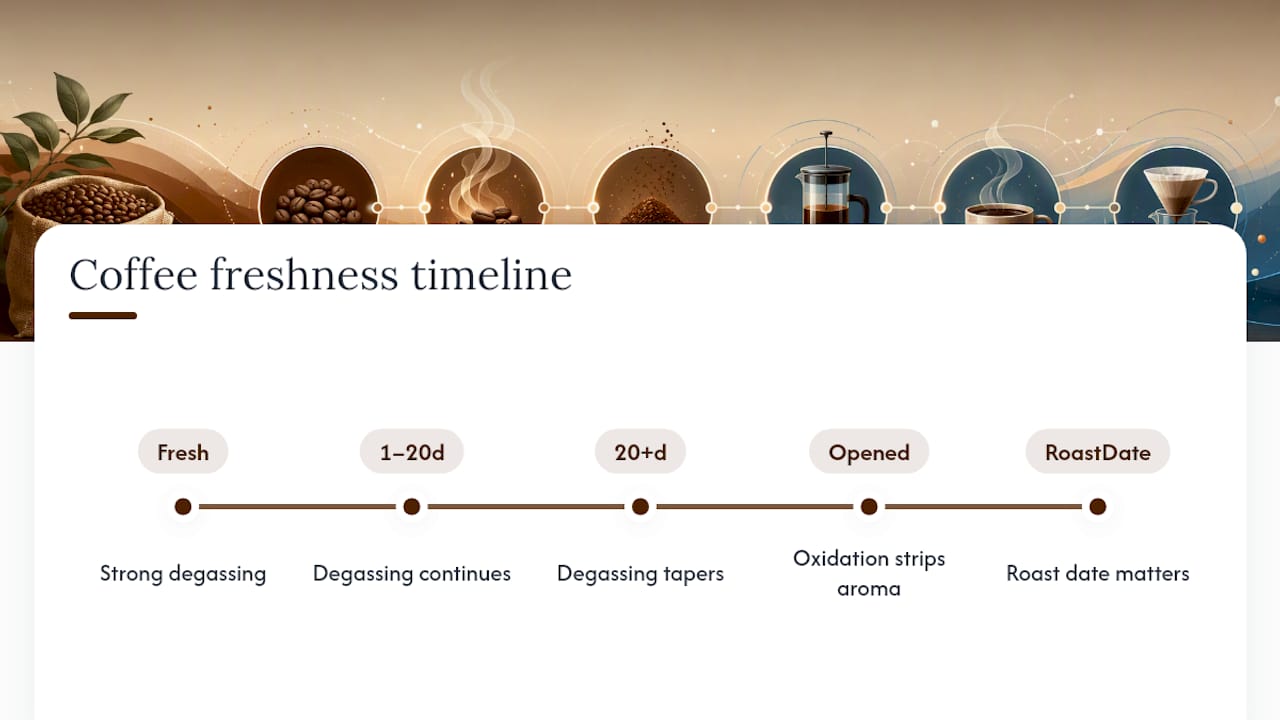
Freshly roasted beans are packed with carbon dioxide, a byproduct of roasting. That CO₂ escapes fastest in the first few days after roasting and continues releasing for roughly the first 20 days, then tapers off. This is why very fresh beans can taste sharp or “gassy” right off the roaster and why baristas often let beans rest a few days before brewing. Resting isn’t superstition. It’s chemistry.
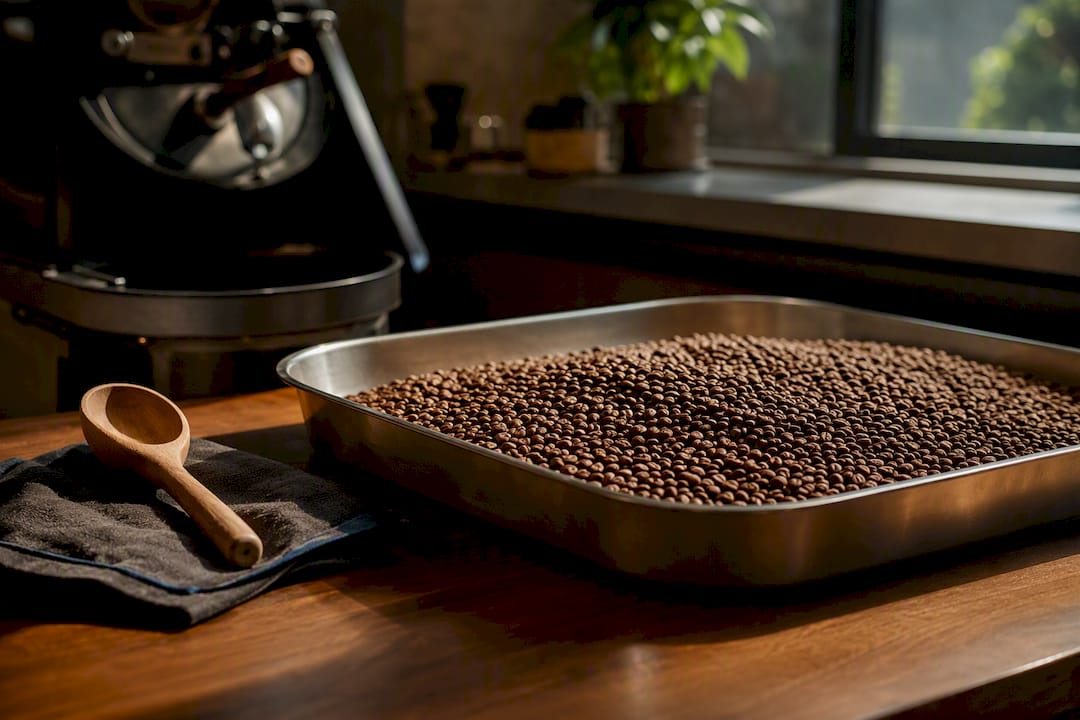
Oxidation is the slower, quieter killer. Once oxygen reaches the beans, whether through a punctured bag or a loosely closed jar, it strips away the volatile aromatic compounds responsible for the fruity, floral, or chocolatey notes you paid for. What’s left tastes flat, woody, or cardboard-like.
Statistic to remember: degassing runs hardest for about 20 days post-roast, which is exactly why the roast date matters more than any printed expiration date. A bag without a roast date leaves you guessing where you actually stand on that curve.
What’s the best way to store coffee beans at home?
Three conditions do most of the work: keep beans away from light, away from air, and away from heat. Get those right and you’ve solved most of the freshness problem without spending a dime on gear.
- Use an opaque container. Clear glass jars look nice on a counter, but light degrades coffee just as surely as oxygen does.
- Make sure the lid is genuinely airtight, not just snug. Metal canisters, ceramic crocks, and opaque food-grade plastic with a rubber gasket all work.
- Minimize headspace. A container that’s mostly empty air holds more oxygen against your beans than one sized closer to your bean volume.
- Keep the container in a cool, dark cabinet, not next to the stove, oven, or a sunny window.
- If your bag has a one-way valve, you can leave beans in it and simply reseal the clip or zip strip after each use.
Expert guidance consistently backs opaque, airtight storage at cool room temperature over anything fancier. Container testing on canisters from brands like Fellow and OXO shows that a real vacuum seal or tight gasket does measurably slow flavor loss compared to a clear jar, but a basic opaque tin with a good lid gets you 90% of the benefit for a fraction of the price.
Pro Tip: If you’re buying beans by the bag rather than by the canister, portioning matters more than the container. A cheap opaque tin refilled weekly beats an expensive vacuum canister that sits open on the counter all day.
Should you freeze or refrigerate coffee beans?
Skip the fridge. Refrigerators are humid, and they’re full of competing odors from everything else stored in there. Coffee is porous and absorbs both moisture and smell fast, which accelerates staling rather than slowing it. Refrigeration is one of the more common storage mistakes people make thinking they’re being careful.
Freezing is different, and it can genuinely help for long-term storage if you do it right:
- Divide beans into small, single-use portions before freezing, not one giant bag you’ll open repeatedly.
- Seal each portion in an airtight, moisture-proof container or bag, pressing out excess air.
- Pull a portion out and let it come fully to room temperature before opening the seal, so condensation doesn’t form on the beans.
- Never refreeze a portion once thawed. Use it and move on.
Frozen beans handled this way can hold reasonable flavor for a couple of months, though they won’t taste quite as vivid as beans in their first two weeks past roast.
Does grinding coffee beans early ruin the flavor?
Whole beans have relatively little surface area exposed to air. Ground coffee has enormous surface area by comparison, which means the same aromatic compounds that took weeks to fade in whole-bean form can escape within minutes to days once ground. That’s the single biggest lever most home drinkers ignore.
- Grind immediately before brewing whenever possible. This one habit change does more for flavor than any storage container.
- If you must pre-grind, for a shared office setup or a busy morning routine, store the ground coffee in a small, opaque, airtight container and use it within a day or two, not a week.
- Espresso needs a finer, more consistent grind and tolerates almost no rest time before extraction suffers. Drip and French press are more forgiving but still benefit from grinding just before brewing.
A basic burr grinder costs less than most people spend on coffee in a month, and it pays that back in flavor almost immediately.
Smarter buying habits that protect freshness
The best storage container in the world can’t fix beans that were already stale when you bought them. Look for a roast date on the bag, not just a “best by” date, and treat the latter with some skepticism. Roast date is the number that actually tells you where a bag sits on the freshness curve.
- Buy only what your household will drink in one to two weeks. A single drinker needs far less than a family of four coffee-drinkers.
- Label opened bags or containers with the date you opened them, and use older stock before newer stock (first in, first out).
- If a bag has no roast date printed anywhere, ask the roaster or seller directly before buying.
Pro Tip: Buying smaller, more frequent batches almost always beats buying one large bag “to save money.” Stale coffee bought in bulk isn’t actually a deal.
Storage mistakes that quietly ruin good coffee
A few habits show up constantly, and they’re worth naming directly so you can drop them for good.
- Storing beans in the refrigerator or freezer door without portioning, exposing them to moisture and odor every time the door opens.
- Keeping beans in a clear glass canister on the counter because it looks good in the kitchen. It looks good and tastes worse by the week.
- Opening one large container daily instead of a smaller portioned one, which lets in fresh oxygen every single day.
- Falling for storage gadgets and pumps that promise miracle preservation. A simple opaque, airtight canister paired with sensible portioning outperforms most gimmicks that experts have actually tested.
A simple freshness checklist
Buy a recent roast, store whole beans in an opaque airtight canister, portion for one to two weeks of drinking, and grind only what you need per brew. That’s the entire system, and it costs nothing extra to follow.
Further detail can be found in guides on how long coffee beans last and why roast date matters to every cup. For those testing new single-origin coffees, a sample-sized order can help with portioning when exploring favorites.
Where this advice comes from
The Specialty Coffee Association covers degassing science, day9.coffee maps the practical freshness timeline, and AboutCoffee details shelf-life realities. Martha Stewart’s roundup adds tested storage tips.
What actually matters most in all this
Most coffee advice buries the useful part under gadget marketing. Vacuum canisters and specialty gaskets help at the margins, but the research is pretty clear that buying the right quantity and checking the roast date does more for your cup than any container upgrade.
Where conventional advice really falls down is timing. People fixate on “best by” dates printed by manufacturers, which are conservative by design, while ignoring the roast date, which is the number that actually tracks flavor decline. A bag can be well within its printed shelf life and still taste tired, because two weeks post-roast and two months post-roast are not remotely the same coffee.
If you take one thing from this article, take the buying habit, not the storage gear. Buy smaller amounts more often, grind per brew instead of in advance, and let an opaque tin with a decent lid handle the rest. The beverage industry’s storage principles echo the same lesson across categories: once you break a seal, the clock starts, and no container fully stops it. Portioning does more than packaging ever will.
— jonathan
Sources
- Coffee Decoded: What is “freshly roasted” coffee? — Specialty Coffee Association
- Storage and shelf life - Beans
- How to store coffee beans